 Indietro
Cell Signaling and Communication: Mechanisms, Feedback, and Regulation
Guida di studio - Note intelligenti
 Appunti personalizzati basati sui tuoi materiali, ampliati con definizioni chiave, esempi e contesto.
Cell Signaling and Communication
Overview of Cell Signaling
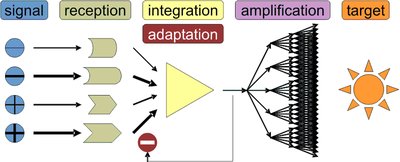
Cell signaling is the process by which cells detect and respond to external and internal signals. This process is essential for maintaining homeostasis, coordinating development, and regulating physiological and behavioral responses in both unicellular and multicellular organisms.
Signal: A molecule (e.g., hormone, neurotransmitter, pheromone) that conveys information.
Reception: The signal is detected by a specific receptor protein on or in the target cell.
Integration: Multiple signals are processed and integrated to determine the appropriate response.
Amplification: The signal is often amplified through intracellular signaling cascades.
Target Response: The cell executes a response, such as gene expression, enzyme activation, or changes in behavior.
Feedback Mechanisms in Homeostasis
Negative and Positive Feedback
Feedback mechanisms are crucial for regulating physiological processes and maintaining dynamic homeostasis.
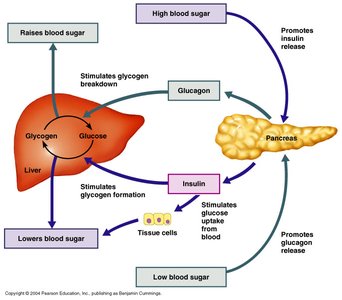
Negative Feedback: Returns a changing condition back to its target set point, stabilizing the system. Examples include regulation of blood glucose, temperature, and water balance.
Positive Feedback: Amplifies a response, moving the system further from its starting state. Examples include labor contractions, lactation, and fruit ripening.
Disruption of Feedback: Alterations can lead to diseases such as diabetes mellitus (impaired glucose regulation), dehydration (low ADH), or hyperthyroidism.
Cell-to-Cell Communication
Types and Purposes of Chemical Signals
Cells communicate using chemical signals both between organisms and within multicellular organisms to coordinate activities such as homeostasis, development, and behavior.
Pheromones: Used by animals to attract mates or trigger behaviors.
Mating Factors: Used by yeast and fungi to signal mating compatibility.
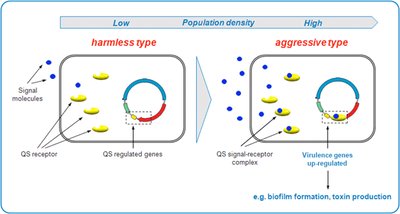
Quorum Sensing: Bacteria use chemical signals to assess population density and coordinate group behaviors (e.g., biofilm formation, toxin production).
Hormones: In multicellular organisms, hormones regulate processes such as blood glucose, calcium levels, and development.
Signal Transduction Pathways
Mechanisms of Signal Transduction
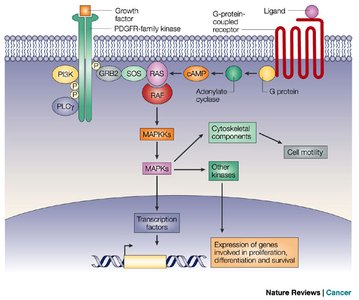
Signal transduction pathways convert extracellular signals into specific cellular responses. These pathways often involve multiple steps, allowing for amplification and regulation of the signal.
Reception: Signal molecules bind to specific receptors (e.g., GPCRs, RTKs, ligand-gated ion channels).
Transduction: The receptor activates intracellular signaling cascades, often involving second messengers (e.g., cAMP, Ca2+, IP3).
Amplification: Each step in the cascade can activate multiple downstream molecules, greatly amplifying the signal.
Response: The final effectors (enzymes or transcription factors) produce the cellular response, such as gene expression or metabolic changes.
Gene Expression and Regulation
Control of Gene Expression
Gene expression is regulated at multiple levels, allowing cells to specialize and respond to environmental cues.
Regulatory Sequences and Genes: DNA elements and regulatory proteins control when and where genes are expressed.
Positive and Negative Control: Both activation and repression mechanisms exist in prokaryotes and eukaryotes.
Signal Transmission: Signals such as hormones or cytokines can induce or repress gene expression, leading to changes in cell function and phenotype.
Timing and Coordination of Events
Temporal Regulation in Growth and Development
Precise timing and coordination of cellular events are essential for normal development and physiological function.
Cell Differentiation: Driven by sequential gene expression and regulated by transcription factors.
Programmed Cell Death (Apoptosis): Essential for development (e.g., formation of fingers and toes) and immune function.
Physiological Cycles: Circadian rhythms, sleep/wake cycles, and seasonal behaviors are regulated by internal and external signals.
Plant Signaling and Responses
Hormonal Regulation and Environmental Responses
Plants use chemical signals (hormones) to coordinate growth, development, and responses to environmental stimuli.
Auxins: Promote growth and differentiation, especially in response to light (phototropism).
Abscisic Acid (ABA): Inhibits growth and promotes dormancy during stress conditions.
Ethylene: Promotes fruit ripening and programmed cell death (positive feedback).
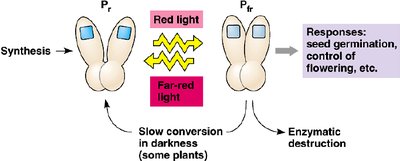
Phytochrome System: Regulates responses to red and far-red light, affecting germination and flowering.
Photoperiodism and Circadian Rhythms
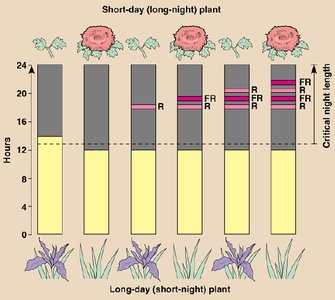
Plants measure the length of uninterrupted darkness to control flowering and other processes. Circadian rhythms are internal clocks that must be synchronized with environmental cues.
Short-day Plants: Flower when nights are long.
Long-day Plants: Flower when nights are short.
Light Interruptions: Flashes of light can reset the plant's perception of night length.
Summary Table: Examples of Feedback and Signal Pathways
Condition | Cells Release | Received By | Action | Result |
|---|---|---|---|---|
High Ca2+ | Thyroid (calcitonin) | Bone, intestine, kidney | Deposit Ca2+ in bone, decrease reabsorption | Lower Ca2+ |
Low Ca2+ | Parathyroid (PTH) | Bone | Break down bone, release Ca2+ | Raise Ca2+ |
High Glucose | Pancreas (insulin) | Liver, muscle | Absorb glucose, convert to glycogen | Lower glucose |
Low Glucose | Pancreas (glucagon) | Liver, muscle | Break down glycogen, release glucose | Raise glucose |
Low O2 | Kidney (EPO) | Bone marrow | Produce more RBCs | Raise O2 |
Key Equations and Concepts
Amplification in Signal Transduction:
Negative Feedback Example (Blood Glucose):
Photoperiodism in Plants:
Conclusion
Cell signaling and communication are fundamental to the regulation of biological processes, from gene expression to organismal behavior. Understanding these mechanisms provides insight into how organisms maintain homeostasis, adapt to their environment, and coordinate complex developmental and physiological events.
