 Indietro
Cell Signaling: Mechanisms and Importance in Biology
Guida di studio - Note intelligenti
 Appunti personalizzati basati sui tuoi materiali, ampliati con definizioni chiave, esempi e contesto.
Cell Signaling
Introduction to Cell Signaling
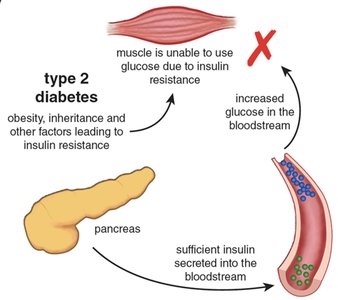
Cell signaling is a fundamental process that allows cells to communicate with each other and respond to their environment. This communication is essential for multicellular organisms to coordinate responses, facilitate development, and maintain homeostasis. Disruptions in cell signaling can lead to diseases such as cancer and diabetes.
Key Point 1: Multicellular organisms rely on cell signaling for nerve impulses, learning, memory, wound healing, hormonal responses, and immune system function.
Key Point 2: Problems in regulating cell signaling can result in disease or death.
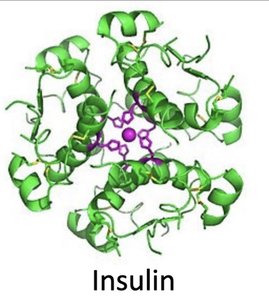
Example: Insulin signaling regulates blood sugar levels; defects can lead to diabetes.
How Cells Communicate
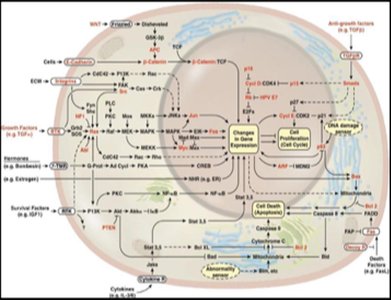
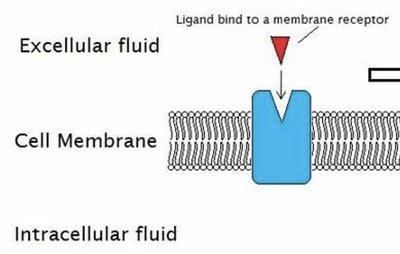
Cells communicate by sending and receiving signals, often in the form of chemical molecules called ligands. These ligands bind to specific cellular receptors, causing conformational changes that initiate biochemical signaling pathways. The signal is relayed to the nucleus, resulting in gene activation or other cellular responses.
Key Point 1: Extracellular signals (ligands) bind to cellular receptors.
Key Point 2: Physical interaction leads to conformational changes and initiates signaling pathways.
Key Point 3: Biochemical reactions carry the signal to the nucleus, activating genes.
The Three Stages of Cell Signaling
Overview of the Stages
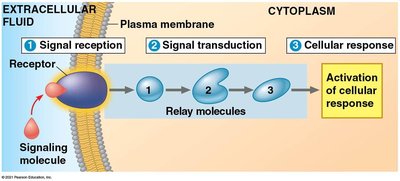
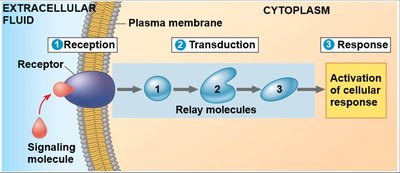
Cell signaling involves three main stages: reception, transduction, and response. Each stage is crucial for the cell to detect, relay, and respond to external signals.
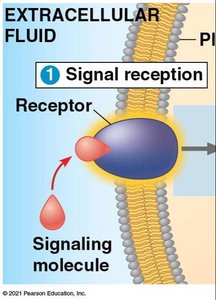
Reception: The cell detects a signaling molecule that binds to a receptor protein on the cell surface.
Transduction: The binding alters the receptor and initiates a signal transduction pathway, often involving multiple steps.
Response: The transduced signal triggers a specific response in the target cell.
Types of Signals and Signaling Molecules
Variety of Signaling Molecules
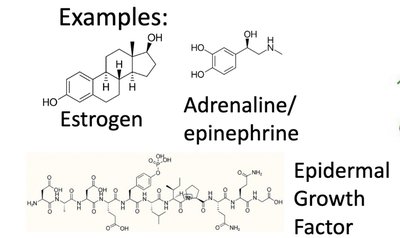
Cells use a wide range of molecules as signals, including proteins, steroids, and small molecules. The nature of the signal determines how it is received and processed by the cell.
Proteins: Examples include insulin and growth factors.
Steroids: Examples include estrogen and testosterone.
Small molecules: Examples include epinephrine (adrenaline).
Local and Long-Distance Signaling
Local Signaling
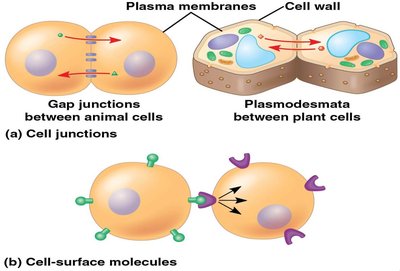
Local signaling occurs between adjacent cells or over short distances. Cells can communicate directly through cell junctions or by releasing signaling molecules that affect nearby cells.
Direct contact: Gap junctions in animal cells and plasmodesmata in plant cells allow cytoplasmic exchange.
Cell-cell recognition: Surface molecules on cells interact directly.
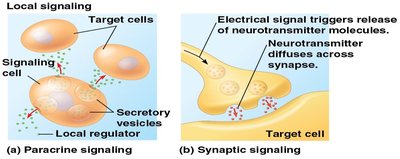
Paracrine signaling: Secreted molecules affect nearby target cells.
Synaptic signaling: Neurotransmitters cross synapses between nerve cells.
Long-Distance Signaling
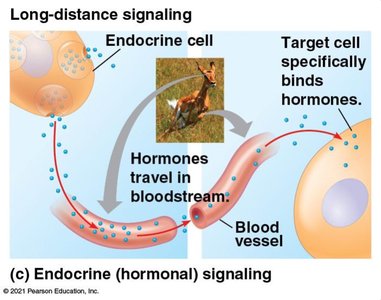
Long-distance signaling involves hormones released by specialized cells that travel through the bloodstream to target cells. The ability of a cell to respond depends on the presence of specific receptors for the hormone.
Hormones: Used by plants and animals for long-distance communication.
Receptor specificity: Only cells with the appropriate receptor can respond to the hormone.
Signal Reception: Receptors and Their Locations
Receptor Locations
Receptors can be located in the plasma membrane, cytoplasm, or nucleus. The location depends on the nature of the signaling molecule.
Membrane receptors: Detect water-soluble (hydrophilic) signals that cannot cross the membrane.
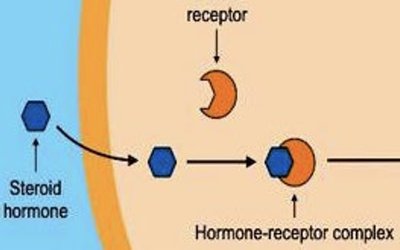
Intracellular receptors: Detect small or hydrophobic signals that can cross the membrane, such as steroid hormones.
Types of Membrane Receptors
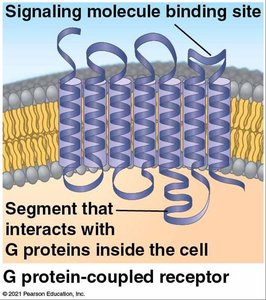
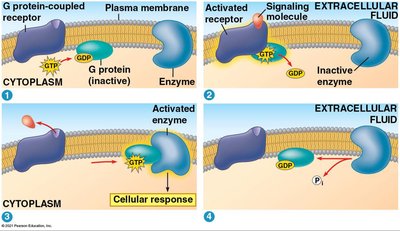
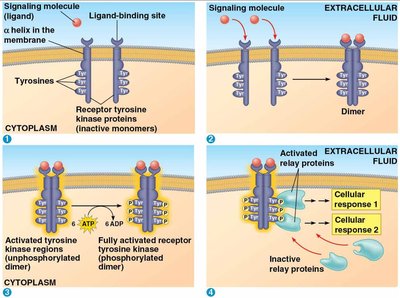
There are three main types of membrane receptors: G protein-coupled receptors (GPCRs), receptor tyrosine kinases (RTKs), and ion channel receptors.
G protein-coupled receptors (GPCRs): Work with the help of G proteins to relay signals.
Receptor tyrosine kinases (RTKs): Catalyze the transfer of phosphate groups from ATP to proteins, triggering multiple pathways.
Ion channel receptors: Act as gates for ions, opening or closing in response to signal binding.
Intracellular Receptors
Intracellular receptors are found in the cytoplasm or nucleus and are activated by small, hydrophobic molecules. The hormone-receptor complex can act as a transcription factor, regulating gene expression.
Examples: Steroid and thyroid hormones.
Function: Regulate gene expression by turning genes on or off.
Signal Transduction
Transduction Pathways
Signal transduction involves relay molecules that transmit the signal from the receptor to target molecules inside the cell. Multistep pathways can amplify the signal and provide opportunities for regulation.
Amplification: A few molecules can produce a large cellular response.
Coordination: Multiple steps allow for regulation and integration of signals.
Second Messengers and Phosphorylation Cascades
Second messengers are small, nonprotein, water-soluble molecules or ions that spread throughout the cell by diffusion. Phosphorylation cascades involve the activation of proteins by the addition of phosphate groups, which relay the signal and regulate protein activity.
Common second messengers: Cyclic AMP (cAMP) and calcium ions (Ca2+).
Phosphorylation: Protein kinases transfer phosphates from ATP to proteins.
Dephosphorylation: Protein phosphatases remove phosphates, acting as a molecular switch.
Process | Enzyme | Effect |
|---|---|---|
Phosphorylation | Protein kinase | Activates protein |
Dephosphorylation | Protein phosphatase | Deactivates protein |
Cellular Response
Types of Cellular Responses
Cell signaling leads to regulation of transcription or cytoplasmic activities. The final response may involve changes in gene expression or alterations in protein activity.
Nuclear response: Regulation of gene expression, synthesis of enzymes or proteins.
Cytoplasmic response: Alteration of protein activity, opening or closing ion channels, changes in metabolic enzyme activity.
Regulation of the Response
Signal Amplification, Specificity, Efficiency, and Termination
Cell signaling is tightly regulated to ensure appropriate responses. Amplification, specificity, efficiency, and termination are key aspects of regulation.
Amplification: Enzyme cascades increase the cell's response.
Specificity: Different cells have unique protein collections, allowing specific responses.
Efficiency: Scaffolding proteins group relay proteins, increasing efficiency.
Termination: Inactivation mechanisms ensure signals are not perpetuated unnecessarily.
Aspect | Description |
|---|---|
Amplification | Enzyme cascades multiply the response |
Specificity | Cell-specific protein collections |
Efficiency | Scaffolding proteins organize relay proteins |
Termination | Signal inactivation and feedback inhibition |
Example: Insulin Signaling
Insulin Receptor and Cellular Response
The insulin receptor is a receptor tyrosine kinase. When insulin binds, it triggers both short-term and long-term cellular responses. Short-term effects include the fusion of vesicles containing glucose transporters with the membrane, allowing glucose uptake. Long-term effects involve transcription of genes related to metabolism.
Short-term: Glucose transporter vesicles fuse with the membrane.
Long-term: Transcription of metabolic genes.
Additional info: Cell signaling is a highly integrated process, with multiple pathways often interacting to produce coordinated responses. Understanding these mechanisms is essential for studying physiology, development, and disease.
