 Indietro
Cell Size, Surface Area to Volume Ratio, and Compartmentalization
Guida di studio - Note intelligenti
 Appunti personalizzati basati sui tuoi materiali, ampliati con definizioni chiave, esempi e contesto.
Cell Size and Its Importance
Introduction to Cell Size
Cell size is a critical factor in cellular function and efficiency. The surface area to volume (SA:V) ratio determines how effectively a cell can exchange materials with its environment, impacting nutrient uptake, waste removal, and thermal regulation.
Surface Area to Volume Ratio (SA:V)
Why SA:V Ratio Matters
Cellular metabolism depends on efficient exchange of materials across the plasma membrane.
As cells grow, their volume increases faster than their surface area, making it harder to regulate material exchange.
Cells must dissipate thermal energy and maintain homeostasis, which is more efficient with a higher SA:V ratio.
Formulas for Calculating SA:V Ratio
Cuboidal Cells:
Surface Area (SA):
Volume (V):
SA:V Ratio:
Spherical Cells:
Surface Area (SA):
Volume (V):
SA:V Ratio:
Practice Problems: Cuboidal Cells
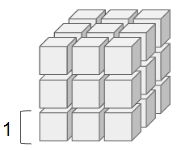
Example 1:
SA: units2
V: units3
SA:V =
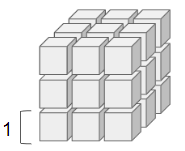
Example 2: , 27 cubes
SA: units2
V: units3
SA:V =
Conclusion: The smaller cubes (option 2) have a higher SA:V ratio and thus better material exchange.
Practice Problems: Spherical Cells
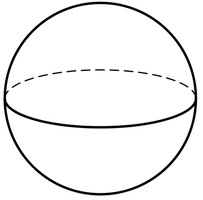
Example 1:
SA: units2
V: units3
SA:V =
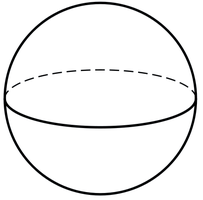
Example 2:
SA: units2
V: units3
SA:V =
Conclusion: The smaller sphere (option 1) has a higher SA:V ratio and thus better material exchange.
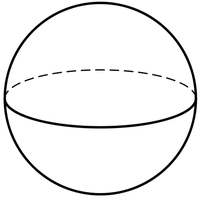
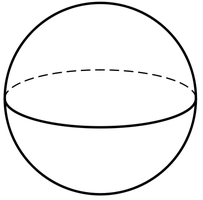
Effect of Radius on SA:V Ratio
As the radius of a spherical cell increases, the SA:V ratio decreases.
This means larger cells are less efficient at exchanging materials with their environment.
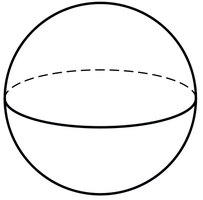
Biological Implications of SA:V Ratio
Why Are Cells Small?
Small cells have a high SA:V ratio, optimizing exchange of materials at the plasma membrane.
Larger cells have a lower SA:V ratio, leading to decreased efficiency in exchanging materials and heat.
The cellular demand for resources increases with size, but the rate of exchange does not keep up.
How Do Large Organisms Compensate?
Large organisms are composed of many small cells, not one large cell, to maintain high SA:V ratios.
The average human has about 30 trillion cells.

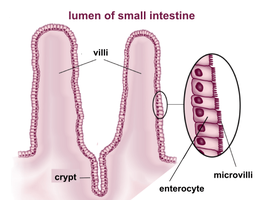
Variation in cell size and shape allows for specialized functions. For example, cells in the small intestine have microvilli to increase surface area and enhance nutrient absorption.
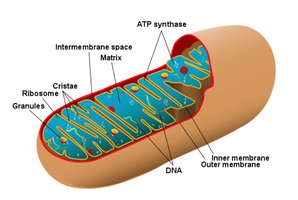
Membrane-bound organelles in eukaryotic cells increase internal surface area, allowing these cells to be larger and still function efficiently.
Compartmentalization in Cells
Role of Compartmentalization
Membrane-bound organelles allow different metabolic reactions to occur in separate locations within the cell.
This increases internal surface area for reactions and prevents interference between incompatible processes.
Analogy: House vs. Studio Apartment
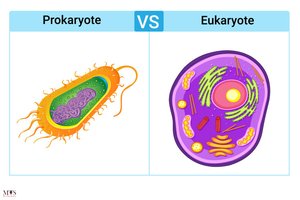
A eukaryotic cell is like a house with separate rooms (organelles), each serving a specific function.


A prokaryotic cell is like a studio apartment—no separate rooms (organelles), but all necessary functions still occur in the same space.

Summary Table: Prokaryotic vs. Eukaryotic Cells
Feature | Prokaryotic Cell | Eukaryotic Cell |
|---|---|---|
Membrane-bound organelles | No | Yes |
Compartmentalization | Absent | Present |
Cell size | Generally smaller | Generally larger |
Example | Bacteria | Animal, plant, fungal cells |
Key Takeaways
Cells are small to maximize their SA:V ratio, ensuring efficient exchange of materials.
Large organisms are multicellular, and their cells may have adaptations (like microvilli or organelles) to increase surface area.
Compartmentalization in eukaryotic cells allows for specialized functions and greater efficiency.
