 Indietro
Cell Structure and Function: A Tour of the Cell
Guida di studio - Note intelligenti
 Appunti personalizzati basati sui tuoi materiali, ampliati con definizioni chiave, esempi e contesto.
Cell Structure and Function
Introduction to Cells
Cells are the fundamental units of life, forming the basis for all living organisms. They exhibit all the properties of life and are the smallest entities capable of independent existence and reproduction. The study of cells is central to understanding biology.
Cell Theory: All living things are composed of cells. Cells are the basic unit of structure and function in organisms. All cells arise from pre-existing cells.
Discovery: The invention of the microscope was crucial for the discovery of cells. Robert Hooke was among the first to observe cells using a microscope with 300x magnification.
Microscopy and Cell Observation
Microscopes are essential tools for studying cells, allowing us to observe structures not visible to the naked eye.
Compound Light Microscope: Uses light to view live specimens at lower magnification and resolution.
Transmission Electron Microscope (TEM): Uses electrons to view internal cell structures in 2-D; cannot view live specimens.
Scanning Electron Microscope (SEM): Uses electrons to view surface structures in 3-D; cannot view live specimens.
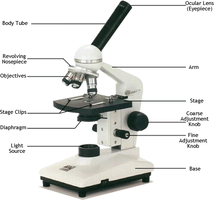
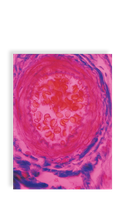
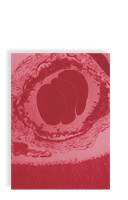
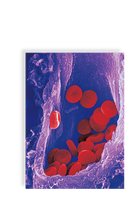
Example: Human red blood cells appear differently under light, TEM, and SEM microscopes, revealing various structural details.
Light micrograph: Shows general shape and arrangement.
TEM: Reveals internal details.
SEM: Shows surface texture and 3D arrangement.
Cell Size and Surface Area
Why Are Most Cells Small?
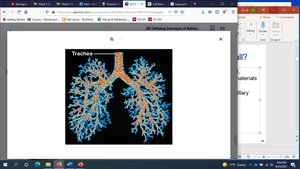
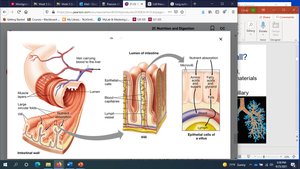
Cells must efficiently exchange materials with their environment. As a cell grows, its volume increases faster than its surface area, limiting the rate of exchange. This principle also applies to organ systems involved in material exchange, such as the lungs and small intestine.
Key Point: The surface area-to-volume ratio limits cell size. Large organisms develop specialized transport networks to overcome this limitation.
Types of Cells
Prokaryotic vs. Eukaryotic Cells
Cells are classified into two main types: prokaryotic and eukaryotic. These types differ in structure, complexity, and the presence of membrane-bound organelles.
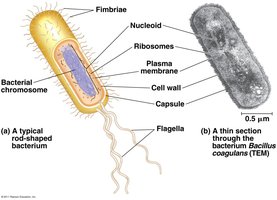
Prokaryotic Cells: Found in Bacteria and Archaea. Lack a nucleus and membrane-bound organelles. DNA is located in the nucleoid region. Typically small and simple in structure.
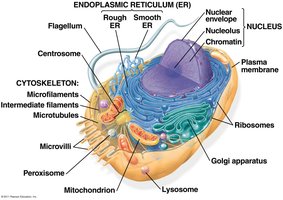
Eukaryotic Cells: Found in plants, animals, fungi, and protists. Have a nucleus that houses DNA and many membrane-bound organelles. Larger and more complex.
Prokaryotic Cell Structure
Cell Wall: Made of peptidoglycan (in bacteria), provides structural support.
Capsule: Sticky outer layer for protection and adherence.
Flagella: Used for movement.
Ribosomes: Sites of protein synthesis.
Nucleoid: Region containing the single, circular DNA molecule.
Shapes: Cocci (spherical), Bacilli (rod-shaped), Spirochetes (spiral).
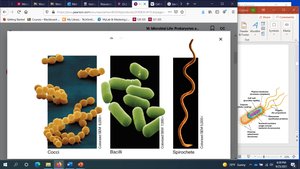
Prokaryotes in Ecosystems
Decomposers: Break down dead organic matter, recycling nutrients.
Nutrient Fixers: Convert inorganic nutrients into organic forms usable by other organisms.
Human Health: Many prokaryotes are essential for digestion and other bodily functions.
Eukaryotic Cell Diversity
Plant Cells: Have a cell wall (cellulose), chloroplasts, and a central vacuole.
Animal Cells: Lack a cell wall; contain centrioles and lysosomes.
Fungal Cells: Cell wall made of chitin.
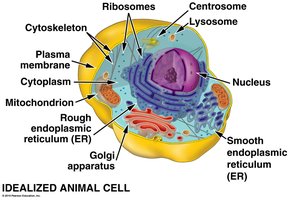
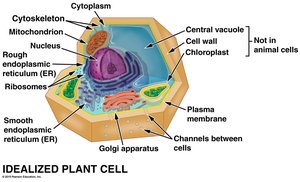
Common Features of All Cells
Plasma Membrane: Surrounds the cell, controlling entry and exit of substances.
Cytoplasm: Semi-fluid substance containing organelles.
DNA: Genetic material.
Ribosomes: Sites of protein synthesis.
Cellular Structures and Their Functions
Plasma Membrane
The plasma membrane is a selectively permeable barrier composed of a phospholipid bilayer with embedded proteins, carbohydrates, and cholesterol. It regulates the movement of substances into and out of the cell.
Structure: Phospholipid bilayer, integral and peripheral proteins, glycoproteins, glycolipids, cholesterol.
Function: Selective permeability, communication, structural support.
Nucleus
The nucleus is the control center of the cell, housing genetic material and coordinating cellular activities.
Structure: Surrounded by a double membrane (nuclear envelope) with nuclear pores. Contains nucleolus (site of ribosome synthesis) and chromatin (DNA and proteins).
Function: Stores genetic information, directs protein synthesis and cell activities.
Ribosomes
Structure: Composed of rRNA and proteins; not membrane-bound.
Function: Protein synthesis.
Location: Free in cytoplasm (for cytoplasmic proteins) or bound to rough ER (for membrane/exported proteins).
Endomembrane System
The endomembrane system is a network of membranes involved in the synthesis, modification, and transport of cellular materials.
Components: Nuclear envelope, endoplasmic reticulum (rough and smooth), Golgi apparatus, lysosomes, vesicles, and vacuoles.
Function: Manufacturing, packaging, and distribution of proteins and lipids.
Energy-Converting Organelles
Mitochondria: Site of aerobic cellular respiration; produces ATP. Double membrane, own DNA and ribosomes.
Chloroplasts: Site of photosynthesis in plants and algae. Double membrane, thylakoid system, own DNA and ribosomes.
Endosymbiont Theory: Mitochondria and chloroplasts originated as free-living prokaryotes engulfed by ancestral eukaryotic cells.
Cytoskeleton
Microtubules: Largest fibers; shape, support, chromosome movement, cilia/flagella structure.
Intermediate Filaments: Support, anchor organelles, resist tension.
Microfilaments (Actin): Support, cell movement, muscle contraction.
Cilia and Flagella
Structure: Both made of microtubules in a 9+2 arrangement.
Function: Movement of cells or substances across cell surfaces.
Cell Junctions
Anchoring (Adhesion) Junctions: Mechanically attach cells; common in tissues subject to stretching (e.g., skin).
Tight Junctions: Create watertight seals; found in digestive tract and kidneys.
Gap Junctions: Allow communication between cells via direct cytoplasmic connections.
Summary Table: Prokaryotic vs. Eukaryotic Cells
Feature | Prokaryotic Cells | Eukaryotic Cells |
|---|---|---|
Nucleus | No | Yes |
Membrane-bound Organelles | No | Yes |
Size | Small (1-10 µm) | Larger (10-100 µm) |
Examples | Bacteria, Archaea | Plants, Animals, Fungi, Protists |
Key Equations
Surface Area to Volume Ratio:
Conclusion
Understanding cell structure and function is foundational to biology. Cells, whether prokaryotic or eukaryotic, share common features but also exhibit specialized structures that enable the diversity of life. Mastery of these concepts is essential for further study in biological sciences.
