 Indietro
Cell Structure and Function: Eukaryotic and Prokaryotic Cells
Guida di studio - Note intelligenti
 Appunti personalizzati basati sui tuoi materiali, ampliati con definizioni chiave, esempi e contesto.
Cell Structure and Function
Differences in Cells
Cells vary in movement, shape, size, and function. The two primary cell types are prokaryotic and eukaryotic cells, each with distinct structural features and organelles.
Movement: Some cells use appendages like flagella or cilia for locomotion.
Shape and Appearance: Determined by cytoskeletal elements and cell wall (if present).
Size: Eukaryotic cells are generally larger than prokaryotic cells.
Function: Specialized organelles allow for compartmentalized functions.
Prokaryotic Cells
Prokaryotic cells, such as bacteria, lack a nucleus and membrane-bound organelles. Their DNA is found in the nucleoid region and often exists as circular, supercoiled plasmids.
Cell Wall: Provides structural support and protection.
Plasma Membrane: Encloses cytoplasm.
Single Chromosome: Contains most genetic material.
Plasmids: Extra-chromosomal, circular DNA molecules.
Ribosomes: Sites of protein synthesis.
Fimbriae: Short, sticky appendages for attachment.
Flagella: Long, hair-like structures for movement.
Eukaryotic Cells
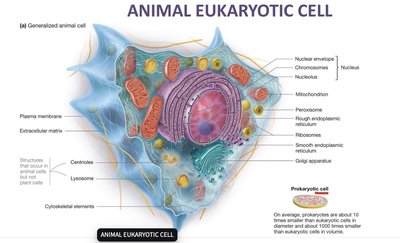
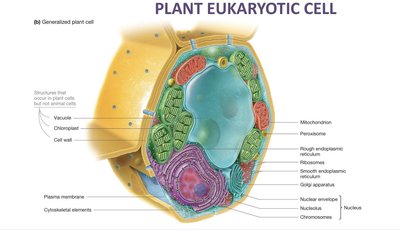
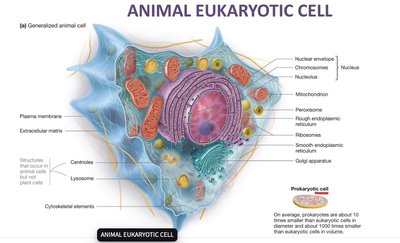
Eukaryotic cells possess a nucleus and various membrane-bound organelles. They are found in animals, plants, fungi, and protists.
Nucleus: Stores genetic information.
Mitochondria: Powerhouse of the cell, generates ATP.
Centrosomes: Microtubule organizing centers; animals have centrioles, plants do not.
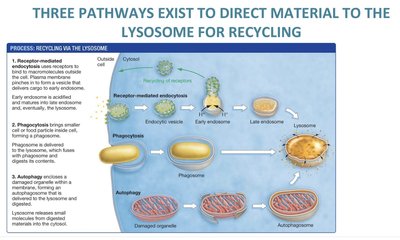
Lysosomes: Recycling centers containing digestive enzymes (hydrolases).
Plant Cells: Have cell walls and chloroplasts; animal cells do not.
Genetic Information in Eukaryotes
Genetic material is stored in the nucleus, mitochondria, and (in plants) chloroplasts. Both mitochondria and chloroplasts contain their own DNA, supporting the endosymbiosis theory.
Nucleus: Main site of DNA storage.
Mitochondria: Contains DNA for energy production.
Chloroplasts (plants): Contains DNA for photosynthesis.
Structure Determines Function
The structure of organelles and cells is closely related to their function. For example, cardiac muscle cells use ATP generated by mitochondria to power heartbeats.
Nuclear Envelope and Transport
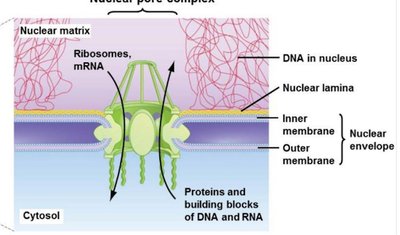
The nuclear envelope consists of two membranes and contains nuclear pores for transport of molecules. The nucleolus is the site for ribosome assembly.
Nuclear Pore Complex: Allows import/export of proteins, RNA, and other molecules.
Nuclear Location Signal (NLS): Directs proteins to the nucleus; a 17-amino acid sequence acts as a molecular zip code.
Endomembrane System
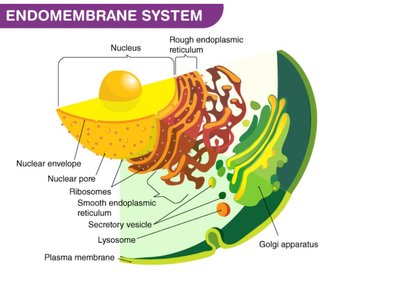
The endomembrane system is a network of organelles involved in producing, processing, and transporting proteins, lipids, and carbohydrates in eukaryotic cells.
Components: Nucleus, endoplasmic reticulum (ER), Golgi apparatus, vesicles, lysosomes, plasma membrane.
Function: Central hub for cellular manufacturing and transport.
Endoplasmic Reticulum (ER)
The ER is divided into rough (with ribosomes) and smooth (without ribosomes) regions. It is essential for protein and lipid synthesis, storage, and transport.
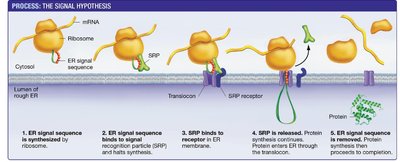
ER Signal Sequence: A 20-amino acid sequence directs growing polypeptides to the ER.
Signal Recognition Particle (SRP): Binds to ER signal sequence and directs ribosome to ER membrane.
Translocon: Channel through which proteins enter the ER.
Golgi Apparatus
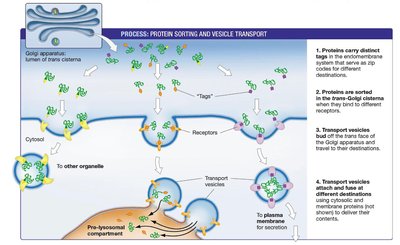
The Golgi apparatus modifies, sorts, and packages proteins and lipids for transport to their final destinations.
Cis Face: Receives vesicles from ER.
Trans Face: Ships vesicles to plasma membrane or other organelles.
Lysosomes and Digestive Enzymes
Lysosomes contain acid hydrolases that digest cellular waste. These enzymes function optimally at low pH, maintained by proton pumps.
Acid Hydrolases: Digestive enzymes active at pH 5.0.
Proton Pumps: Maintain acidic environment inside lysosomes.
Exocytosis: Release of molecules from vesicles by fusion with plasma membrane.
Protein Synthesis and Secretion
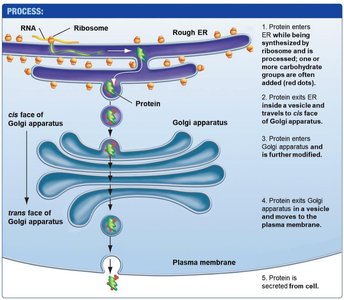
Proteins are synthesized by ribosomes and follow specific pathways for secretion or membrane insertion.
Rough ER
Golgi apparatus
Plasma membrane (via vesicles)
Cell System: Cytoskeleton
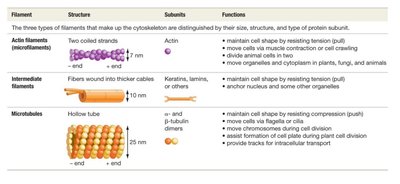
The cytoskeleton is a network of protein filaments that provides structural support, enables movement, and organizes cell contents.
Actin Filaments: Maintain cell shape, enable movement, and are involved in cell division.
Intermediate Filaments: Provide tensile strength and anchor organelles.
Microtubules: Maintain cell shape, move chromosomes, and provide tracks for intracellular transport.
Filament | Structure | Subunits | Functions |
|---|---|---|---|
Actin filaments | Two coiled strands | Actin | Maintain cell shape, move cells, divide animal cells, move organelles |
Intermediate filaments | Fibers wound into thicker cables | Keratin, lamins, others | Maintain cell shape, anchor nucleus and organelles |
Microtubules | Hollow tube | α- and β-tubulin dimers | Maintain cell shape, move cells, move chromosomes, assist cell division, provide tracks for transport |
Summary Table: Key Differences Between Prokaryotic and Eukaryotic Cells
Feature | Prokaryotic Cells | Eukaryotic Cells |
|---|---|---|
Nucleus | Absent | Present |
Organelles | Absent | Present |
DNA Location | Nucleoid | Nucleus, mitochondria, chloroplasts |
Cell Wall | Present | Plants: Present; Animals: Absent |
Size | Smaller | Larger |
Examples | Bacteria, Archaea | Plants, Animals, Fungi, Protists |
Endosymbiosis Theory
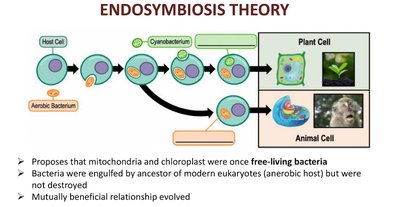
The endosymbiosis theory proposes that mitochondria and chloroplasts originated from free-living bacteria engulfed by ancestral eukaryotic cells. This mutually beneficial relationship led to the evolution of modern eukaryotes.
Mitochondria and Chloroplasts: Once free-living bacteria.
Engulfment: Bacteria were engulfed but not destroyed.
Mutual Benefit: Host cell gained energy production and photosynthesis capabilities.
Key Equations
ATP production in mitochondria:
Photosynthesis in chloroplasts:
Additional info: Academic context was added to clarify cell structure, function, and pathways for protein synthesis and secretion.
