 Indietro
Cell Structure and Function: Eukaryotic and Prokaryotic Cells, Organelles, and Membranes
Guida di studio - Note intelligenti
 Appunti personalizzati basati sui tuoi materiali, ampliati con definizioni chiave, esempi e contesto.
Cell Theory and Basic Attributes
Principles of Cell Theory
The cell theory is a foundational concept in biology, describing the properties and functions of cells. It states:
All living organisms are composed of one or more cells.
The cell is the basic unit of structure and function in organisms.
All cells arise from preexisting cells.
Basic Features of All Cells
Despite diversity, all cells share several key features:
Plasma membrane: Encloses the cell and regulates interactions with the environment.
Cytosol: Semifluid substance within the cell.
Chromosomes: Carry genetic information (DNA).
Ribosomes: Sites of protein synthesis.
Prokaryotic vs. Eukaryotic Cells
Comparison of Cell Types
Cells are classified as prokaryotic or eukaryotic based on structural differences:
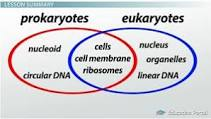
Prokaryotic cells: Smaller, lack membrane-bound organelles, DNA located in a nucleoid, typically have circular DNA.
Eukaryotic cells: Larger, contain membrane-bound organelles (such as nucleus, mitochondria), DNA located in the nucleus, typically have linear DNA.
Both cell types possess a plasma membrane, cytosol, chromosomes, and ribosomes.
Cellular Membranes
Structure and Function of the Plasma Membrane
The plasma membrane is a dynamic structure composed primarily of phospholipids, proteins, and carbohydrates. It regulates the movement of substances into and out of the cell and facilitates communication with the environment.
Phospholipid bilayer: Provides a semi-permeable barrier.
Proteins: Serve as channels, receptors, and enzymes.
Carbohydrates: Involved in cell recognition and signaling.
Eukaryotic Cell Structure
Nucleus
The nucleus is the control center of the cell, housing genetic material and coordinating cellular activities.
Nuclear envelope: Double membrane with nuclear pores for molecular transport.
Chromatin: DNA and associated proteins.
Nucleolus: Site of ribosome synthesis.
Nuclear lamina: Protein network maintaining nuclear shape.
Ribosomes
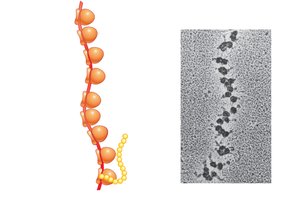
Ribosomes are complexes of ribosomal RNA (rRNA) and proteins, responsible for protein synthesis. They can be found free in the cytosol or bound to the endoplasmic reticulum (ER).
Polyribosomes: Multiple ribosomes translating a single mRNA simultaneously.
Endomembrane System
The endomembrane system is a group of interconnected organelles that regulate protein traffic and perform metabolic functions.
Nuclear envelope
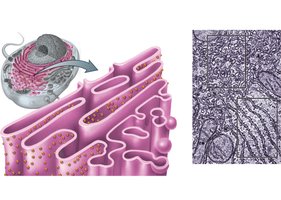
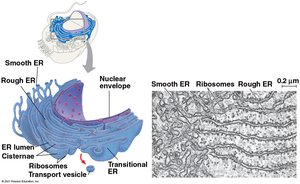
Endoplasmic reticulum (ER): Rough ER (with ribosomes) synthesizes proteins; smooth ER synthesizes lipids and detoxifies substances.
Golgi apparatus: Modifies, sorts, and packages proteins and lipids.
Lysosomes: Digestive organelles containing hydrolytic enzymes.
Vacuoles: Storage and transport.
Plasma membrane
Endoplasmic Reticulum
The ER is a network of membranes involved in synthesis and transport:
Rough ER: Studded with ribosomes; synthesizes proteins and phospholipids.
Smooth ER: Lacks ribosomes; synthesizes lipids, detoxifies drugs, stores calcium ions.
Golgi Apparatus
The Golgi apparatus modifies, sorts, and packages proteins and lipids received from the ER. It synthesizes polysaccharides for plant cell walls and packages molecules into vesicles for transport.
Protein Manufacturing and Export
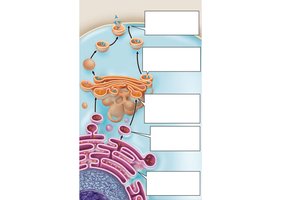
Proteins are synthesized on ribosomes, processed in the ER, modified in the Golgi, and exported via vesicles.
Lysosomes and Food Vacuoles
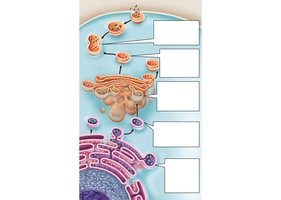
Lysosomes are membrane-bound sacs containing hydrolytic enzymes for digestion. They fuse with food vacuoles to digest macromolecules. Lysosomal enzymes are synthesized in the rough ER and processed in the Golgi.
Vacuoles
Vacuoles are membrane-bound compartments with diverse functions:
Food vacuoles: Formed by phagocytosis.
Contractile vacuoles: Pump excess water out of cells.
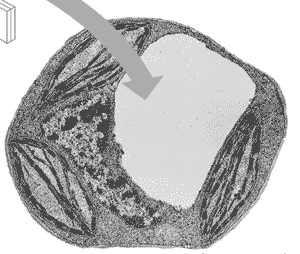
Central vacuole: Found in plant cells; stores ions and contributes to cell growth.
Mitochondria and Chloroplasts
Endosymbiont Theory
Mitochondria and chloroplasts are energy-related organelles with similarities to bacteria, supporting the endosymbiont theory:
Both have double membranes.
Both contain their own DNA and ribosomes.
Both reproduce independently within the cell.
Mitochondria
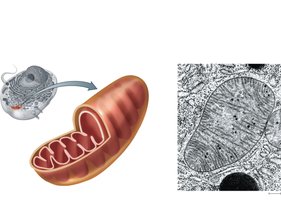
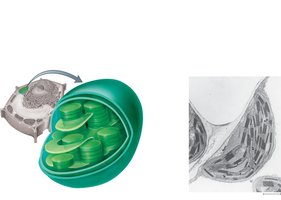
Mitochondria extract energy from food molecules through cellular respiration. They have an outer and inner membrane, with the inner membrane folded into cristae.
Chloroplasts
Chloroplasts capture solar energy for photosynthesis. They contain thylakoids, stacked into grana, and a fluid called stroma.
Peroxisomes
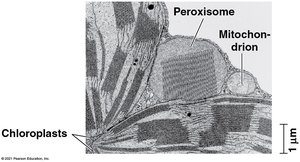
Peroxisomes are single-membrane organelles that carry out oxidative reactions, producing hydrogen peroxide (H2O2) and converting it to water. They also break down fatty acids and detoxify harmful substances.
Cytoskeleton
Roles and Components
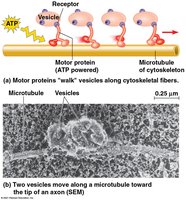
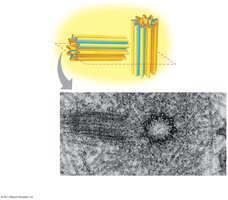
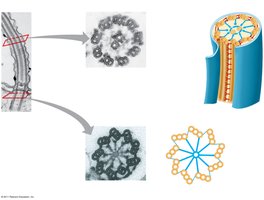
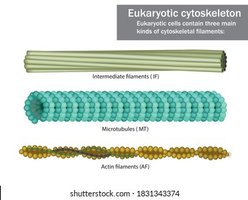
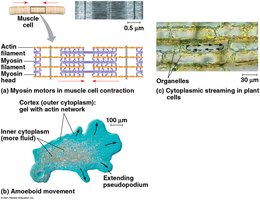
The cytoskeleton is a network of protein filaments that maintains cell shape, enables movement, and organizes cellular activities.
Microtubules: Thickest, hollow rods; involved in cell shape, organelle movement, and chromosome separation.
Intermediate filaments: Provide structural support and fix organelles in place.
Microfilaments (actin filaments): Thinnest, solid rods; bear tension and support cell movement.
Extracellular Components and Cell Junctions
Extracellular Matrix (ECM) and Cell Walls
Cells synthesize extracellular structures for support and communication:
Plant cell walls: Provide protection, shape, and regulate water.
ECM in animal cells: Composed of glycoproteins (collagen, proteoglycans, fibronectin); binds to integrins for support, adhesion, movement, and regulation.
Cell Junctions
Cell junctions facilitate adhesion, interaction, and communication between neighboring cells:
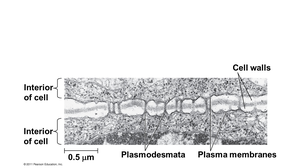
Plasmodesmata: Channels in plant cell walls for transport of water, solutes, proteins, and RNA.
Tight junctions: Seal neighboring cells to prevent leakage.
Desmosomes: Anchor cells together into strong sheets.
Gap junctions: Provide cytoplasmic channels for communication.
Summary and Study Recommendations
Review textbook chapters 6.2-6.8 for detailed explanations and figures.
Complete concept questions and activities for each figure.
Utilize Mastering Biology homework, quizzes, and study modules for practice.
Attend office hours and review notes and PowerPoint slides for clarification.
