 Indietro
Cell Structure and Function: Organelles, Cytoskeleton, and Cell Junctions
Guida di studio - Note intelligenti
 Appunti personalizzati basati sui tuoi materiali, ampliati con definizioni chiave, esempi e contesto.
Organelles of the Endomembrane System
Rough Endoplasmic Reticulum (Rough ER)
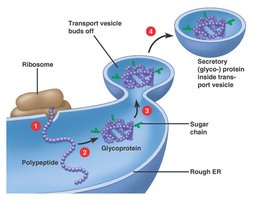
The rough ER is a membranous organelle studded with ribosomes, responsible for protein synthesis and membrane production. Proteins synthesized by ribosomes are either inserted into the ER membrane, pushed into the ER lumen, or transported in vesicles to other organelles.
Protein Synthesis: Ribosomes attached to the rough ER synthesize polypeptides.
Membrane Production: The rough ER contributes to the formation of new cellular membranes.
Protein Processing: Proteins are modified (e.g., glycosylation) and sorted for transport.
Transport: Proteins are packaged into vesicles for delivery to the Golgi apparatus or other destinations.
Example: Secretory proteins are synthesized and exported from the cell.
Golgi Apparatus
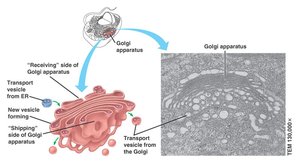
The Golgi apparatus is a stack of membranous sacs located near the nucleus. It modifies, sorts, packages, and ships cell products received from the ER.
Modification: Proteins and lipids are chemically modified as they pass through the Golgi.
Sorting and Packaging: The Golgi sorts and packages molecules into vesicles for transport.
Shipping: Vesicles deliver products to other organelles or the cell surface for export.
Example: Glycoproteins are processed and sent to the plasma membrane.
Lysosomes
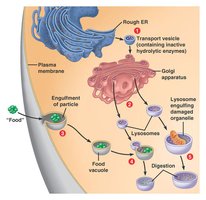
Lysosomes are membrane-bound sacs containing digestive enzymes. They play a key role in breaking down ingested substances, damaged organelles, and cellular debris.
Digestion: Lysosomes fuse with food vacuoles or damaged organelles to digest them.
Defense: White blood cells use lysosomes to destroy bacteria.
Recycling: Lysosomes recycle cellular components.
Clinical Relevance: Abnormal lysosomes can cause diseases such as Tay Sachs.
Example: Lysosomes are involved in metamorphosis (e.g., tadpole to frog).
Vacuoles
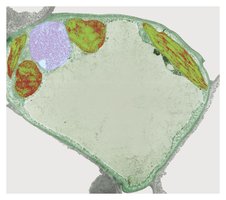
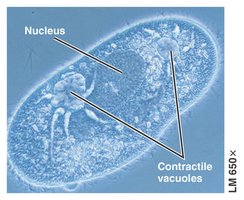
Vacuoles are membrane-bound containers for storage and digestion. Plant cells have a large central vacuole, while some protists possess contractile vacuoles to expel excess water.
Storage: Vacuoles store food, waste, and water.
Digestion: Central vacuole in plants aids in digestion and storage.
Osmoregulation: Contractile vacuoles in protists regulate water balance.
Example: Paramecium uses contractile vacuoles to maintain osmotic balance.
Structural and Functional Interconnection
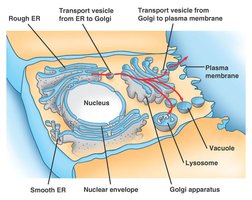
The organelles of the endomembrane system are interconnected both structurally and functionally, facilitating the flow of materials and information within the cell.
Integration: The ER, Golgi, lysosomes, and vacuoles work together to process and transport cellular products.
Example: Vesicles shuttle materials between organelles.
Energy-Converting Organelles
Chloroplasts
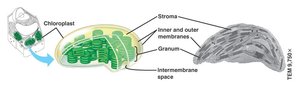
Chloroplasts are organelles found in plants and some protists, responsible for converting solar energy into chemical energy through photosynthesis.
Photosynthesis: Chloroplasts synthesize glucose from sunlight, water, and carbon dioxide.
Genetic Autonomy: Chloroplasts contain their own DNA and can reproduce independently.
Example: Chloroplasts are essential for plant growth and energy production.
Mitochondria
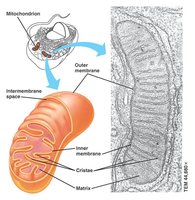
Mitochondria are found in all eukaryotic cells and are responsible for cellular respiration, converting food into ATP for cellular work.
Cellular Respiration: Mitochondria break down glucose to produce ATP.
Genetic Autonomy: Mitochondria have their own DNA, RNA, and ribosomes, and can reproduce independently.
Maternal Inheritance: Mitochondrial DNA is inherited maternally.
Example: Mitochondria power muscle contraction and other energy-demanding processes.
Other Plastids
Plastids are a group of organelles in plant cells, including chromoplasts (pigment storage) and amyloplasts (starch storage).
Chromoplasts: Store pigments such as xanthophyll and carotene.
Amyloplasts: Store starch for energy.
The Cytoskeleton and Related Structures
Cytoskeletal Elements
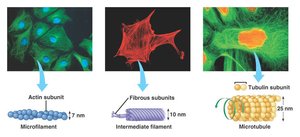
The cytoskeleton is a network of protein filaments that provides structural support, enables movement, and anchors organelles.
Microfilaments: Composed of actin, enable cell shape changes and movement.
Intermediate Filaments: Provide mechanical support and anchor organelles.
Microtubules: Provide rigidity, serve as tracks for organelle movement, and form cilia, flagella, and centrioles.
Cilia and Flagella
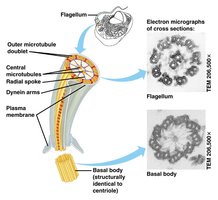
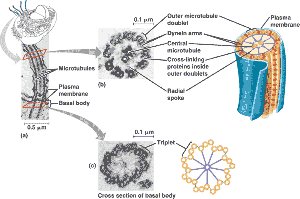
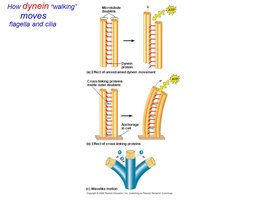
Cilia and flagella are locomotor organelles composed of microtubule clusters. Their movement is driven by the bending of microtubules.
Function: Cilia move substances across cell surfaces; flagella propel cells.
Structure: Cilia and flagella have a "9+2" microtubule arrangement; centrioles and basal bodies have a "9+3" arrangement.
Example: Cilia in the airway remove dust and debris.
Cell Surfaces and Junctions
Plant Cell Surfaces
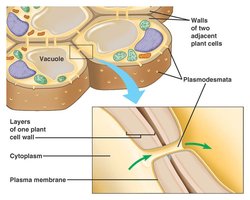
Plant cells are supported by rigid cell walls made largely of cellulose and are connected by plasmodesmata, which are channels allowing cytoplasmic exchange.
Cell Wall: Provides structural support and protection.
Plasmodesmata: Enable communication and transport between plant cells.
Animal Cell Surfaces and Junctions
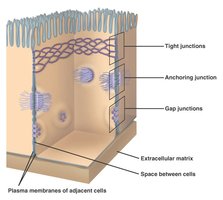
Animal cells are embedded in an extracellular matrix that binds cells together into tissues. There are three main types of cell junctions:
Tight Junctions: Bind cells into leakproof sheets (e.g., intestine).
Anchoring Junctions: Link cells into strong tissues (e.g., skin).
Gap Junctions: Allow substances to flow from cell to cell (e.g., heart muscle).
Summary Table: Eukaryotic Organelles and Their Functions
Table: Eukaryotic Organelles and Their Functions
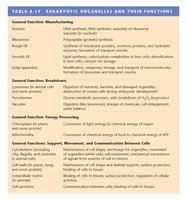
This table summarizes the main functions of eukaryotic organelles, classified by their general roles in the cell.
Organelle | General Function | Specific Function |
|---|---|---|
Nucleus | Manufacturing | DNA synthesis, RNA synthesis, assembly of ribosomal subunits |
Rough ER | Manufacturing | Synthesis of membrane proteins, secretory proteins, and hydrolytic enzymes; formation of transport vesicles |
Smooth ER | Manufacturing | Lipid synthesis, detoxification, calcium ion storage |
Golgi apparatus | Manufacturing | Modification, temporary storage, and transport of macromolecules; formation of lysosomes and transport vesicles |
Lysosomes | Breakdown | Digestion of nutrients, bacteria, and damaged organelles |
Vacuoles | Breakdown | Digestion and storage |
Chloroplasts | Energy Processing | Conversion of light energy to chemical energy of sugars |
Mitochondria | Energy Processing | Conversion of chemical energy in food to chemical energy of ATP |
Cytoskeleton | Support, Movement, Communication | Maintenance of cell shape, movement of organelles, cell movement |
Plasma membrane | Support, Movement, Communication | Encloses cell, regulates movement of materials in/out |
Cell wall | Support, Movement, Communication | Support and protection; binding of cells in tissues |
The Endosymbiont Theory and Origin of Eukaryotes
Endosymbiont Theory
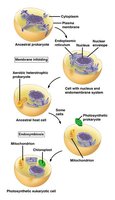
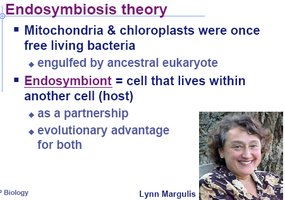
The endosymbiont theory explains the origin of mitochondria and chloroplasts as descendants of prokaryotes that were engulfed by ancestral eukaryotic cells. This symbiotic relationship led to the evolution of modern eukaryotes.
Evidence: Mitochondria and chloroplasts are similar to bacteria in size, contain circular DNA, reproduce by binary fission, and have prokaryotic-like ribosomes.
Dependence: These organelles rely on host nuclear genes for some protein synthesis.
Example: Some prokaryotes live inside eukaryotes today, supporting the theory.
Additional info:
The notes cover topics from Chapter 4 (A Tour of the Cell), Chapter 5 (The Working Cell), and Chapter 10 (Molecular Biology of the Gene), as well as relevant content from Chapter 6 (How Cells Harvest Chemical Energy) and Chapter 7 (Photosynthesis: Using Light to Make Food).
All images included are directly relevant to the explanation of the adjacent paragraph and reinforce the educational content.
