 Indietro
Cell Structure and Function: Prokaryotic and Eukaryotic Cells
Guida di studio - Note intelligenti
 Appunti personalizzati basati sui tuoi materiali, ampliati con definizioni chiave, esempi e contesto.
Organization — The Hierarchy of Life
Cell Types and Domains
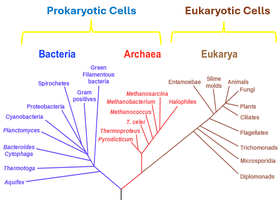
All living organisms are composed of cells, which are classified as either prokaryotic or eukaryotic. The three domains of life—Bacteria, Archaea, and Eukarya—are distinguished by their cellular organization.
Prokaryotic cells: Found in Bacteria and Archaea; lack a nucleus and membrane-bound organelles.
Eukaryotic cells: Found in Protists, Fungi, Animals, and Plants; possess a nucleus and membrane-bound organelles.
Basic Features of All Cells
Universal Cellular Components
Despite differences, all cells share four fundamental features:
Plasma membrane: A phospholipid bilayer that encloses the cell.
Cytosol: Semifluid substance within the cell.
Chromosomes: Carry genetic information (DNA).
Ribosomes: Sites of protein synthesis.
Prokaryotic vs. Eukaryotic Cells
Structural Differences
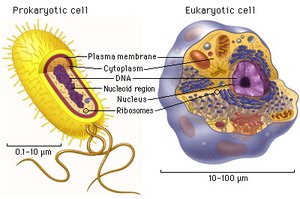
Prokaryotic and eukaryotic cells differ in size, complexity, and internal organization.
Prokaryotic cells:
No nucleus; DNA is located in the nucleoid region.
No membrane-bound organelles.
Cytoplasm is bound by the plasma membrane.
Generally smaller (0.1–10 μm).
Eukaryotic cells:
DNA is enclosed within a nucleus (double membrane).
Contains membrane-bound organelles (e.g., mitochondria, ER).
Cytoplasm is the region between the plasma membrane and nucleus.
Larger (10–100 μm).
Exploring Eukaryotic Cells
Common Organelles and Features
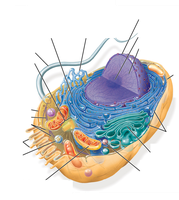
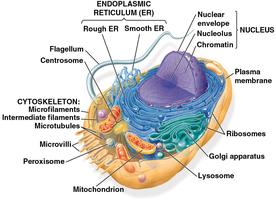
Eukaryotic cells, though specialized, share several internal structures known as organelles. These include the nucleus, ribosomes, cytoskeleton, endomembrane system, and independent organelles.
The Nucleus and Ribosomes
Nucleus: Information Central
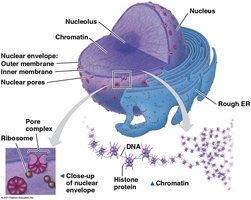
The nucleus houses most of the cell’s genetic material and is surrounded by a double membrane called the nuclear envelope. The envelope contains nuclear pores that regulate molecular traffic. DNA is organized into chromosomes, which are composed of chromatin (DNA and proteins). The nucleolus within the nucleus is the site of ribosomal RNA (rRNA) synthesis.
Ribosomes: Protein Factories
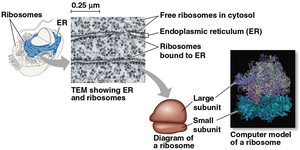
Ribosomes are complexes of rRNA and protein, produced in the nucleolus. They are responsible for protein synthesis and exist in two forms:
Free ribosomes: Synthesize proteins for use within the cell.
Bound ribosomes: Attached to the endoplasmic reticulum; synthesize proteins for secretion or membrane insertion.
The Endomembrane System
Components and Functions
The endomembrane system is a network of membranes within eukaryotic cells, involved in synthesis, transport, and processing of cellular materials. It includes:
Plasma membrane
Nuclear envelope
Endoplasmic reticulum (ER)
Golgi apparatus
Lysosomes
The Plasma Membrane
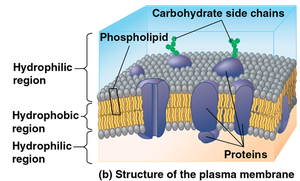
The plasma membrane is a phospholipid bilayer that separates the cell from its environment and regulates the movement of substances in and out of the cell. The fluid mosaic model describes its dynamic arrangement of lipids and proteins.
The Endoplasmic Reticulum (ER)
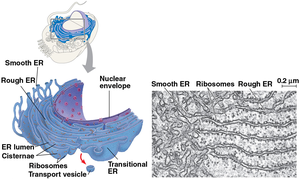
The ER is continuous with the nuclear envelope and exists in two forms:
Smooth ER: Lacks ribosomes; synthesizes lipids, detoxifies drugs, and stores calcium ions.
Rough ER: Studded with ribosomes; synthesizes glycoproteins, distributes transport vesicles, and produces membrane material.
The Golgi Apparatus
The Golgi apparatus consists of stacked, flattened sacs called cisternae. It modifies, sorts, and packages products from the ER for secretion or use within the cell.
Modifies ER products
Manufactures macromolecules
Sorts and packages materials into vesicles
Lysosomes
Lysosomes are membrane-bound organelles containing digestive enzymes. They break down old molecules, food particles, and pathogens through phagocytosis and autophagy.
Independent Organelles
Mitochondria: The Site of Cellular Respiration
Mitochondria are double-membraned organelles responsible for cellular respiration and ATP production. They contain their own DNA and are self-replicating. The inner membrane forms cristae, increasing surface area for ATP synthesis.
Outer membrane: Smooth
Inner membrane: Folded (cristae)
Compartments: Intermembrane space and mitochondrial matrix
Peroxisomes: Oxidation Compartments
Peroxisomes are single-membrane organelles containing enzymes that transfer hydrogen to oxygen, forming hydrogen peroxide (H2O2). They break down fatty acids and detoxify harmful substances.
Glyoxysomes (in plants): Convert fatty acids to sugars for seedling growth
Plant Cell Specializations
Vacuoles: Maintenance Compartments
Vacuoles are large vesicles with diverse functions:
Food vacuoles: Formed by phagocytosis
Contractile vacuoles: Pump excess water out (in protists)
Central vacuoles: Store sap and maintain turgor pressure (in plants)
Chloroplasts: Capture of Light Energy
Chloroplasts are plant organelles responsible for photosynthesis. They contain chlorophyll and have three membrane systems: outer, inner, and thylakoid membranes. The stroma is the fluid between the inner membrane and thylakoids.
Intermembrane space
Stroma
Thylakoid space
Energy Conversion in Cells
Mitochondria and Chloroplasts
Both mitochondria and chloroplasts convert energy from one form to another:
Mitochondria: Convert food energy into ATP via cellular respiration
Chloroplasts: Convert light energy into sugars via photosynthesis (plants only)
Example Questions
What four basic biological features are shared by all cells, whether prokaryotic or eukaryotic?
What is the structural difference between plant and animal cells regarding the outer boundary?
What is the primary function of lysosomes in cellular waste management and recycling?
True or False: Chloroplasts are found in both animal cells and plant cells to carry out cellular respiration.
What structural model best describes the dynamic arrangement of lipids and proteins in the plasma membrane?
What major network of protein fibers provides structural support, anchors organelles, and facilitates cellular motility?
What cellular structure stores water, nutrients, and waste, helping maintain turgor pressure in plant cells?
According to the endosymbiotic theory, which two organelles originated as free-living prokaryotic organisms before being engulfed by ancestral eukaryotic cells?
How do tight junctions, desmosomes, and gap junctions differ in their roles in intercellular communication and adhesion in animal tissues?
