 Indietro
Cell Structure and Function: Study Guide for General Biology
Guida di studio - Note intelligenti
 Appunti personalizzati basati sui tuoi materiali, ampliati con definizioni chiave, esempi e contesto.
Cell Structure and Function
Cell Theory and Basic Cell Structures
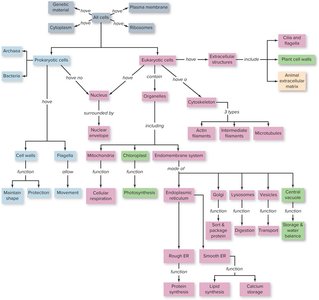
The cell theory is a foundational concept in biology, stating that all living organisms are composed of one or more cells, and all cells arise from pre-existing cells. Cells are the basic structural and functional units of life.
Cytoplasm: The semifluid matrix that surrounds organelles in all cells.
Nucleoid region (prokaryotes) or nucleus (eukaryotes): Location of genetic material (DNA).
Ribosomes: Sites of protein synthesis found in all cells.
Plasma membrane: The boundary that regulates the movement of substances in and out of the cell.
Types of Cells
Eukaryotic Cells
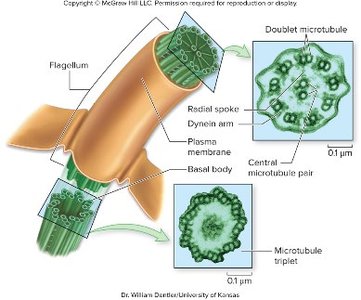
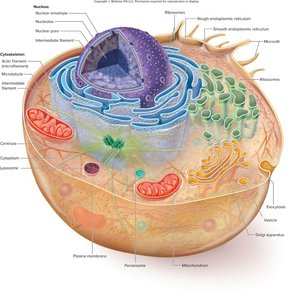
Eukaryotic cells are characterized by the presence of a nucleus and specialized membrane-bound organelles. Their DNA is tightly packaged within the nucleus. Eukaryotic cells can move using cilia and flagella, which are composed of microtubules in a 9 + 2 arrangement.
Nucleus: Contains chromosomal DNA and is surrounded by a nuclear envelope.
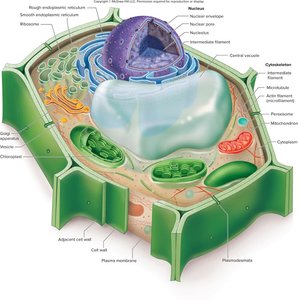
Organelles: Specialized structures such as mitochondria, chloroplasts (in plants), endoplasmic reticulum, and Golgi apparatus.
Cytoskeleton: Provides structural support and facilitates movement.
Cilia and Flagella: Enable movement and are involved in processes such as cell crawling and environmental sensing.
Metastasis: Cancer cells use cell crawling to spread from the primary tumor to other parts of the body.
Prokaryotic Cells
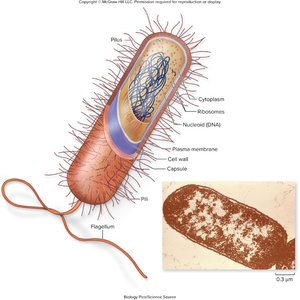
Prokaryotic cells, including bacteria and archaea, are generally smaller and lack compartmentalization. Their genetic material is not membrane-bound and is found in the nucleoid region. Bacterial chromosomes are circular and lack histones.
Flagella: Responsible for movement.
Cell wall: Composed of peptidoglycan, providing structural support.
Cell membrane: Carries out functions such as respiration and energy production, which are performed by mitochondria in eukaryotes.
Ribosomes: Present for protein synthesis.
Cellular Structures and Their Functions
Nucleus and Nucleolus
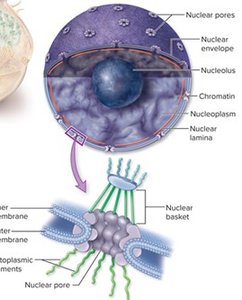
The nucleus is the control center of the cell, containing genetic material. The nucleolus, found within the nucleus, is responsible for ribosome production and assembly. Nuclear pores regulate the movement of molecules in and out of the nucleus.
Nuclear envelope: Double membrane surrounding the nucleus.
Nuclear pores: Allow passage of RNA and proteins.
Ribosomes
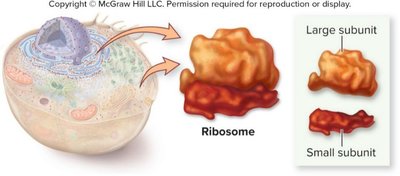
Ribosomes are complexes of protein and rRNA that synthesize proteins. They are found in both prokaryotic and eukaryotic cells and are abundant in cells that export proteins.
Structure: Composed of large and small subunits.
Function: Translate mRNA into polypeptides.
Endoplasmic Reticulum (ER)
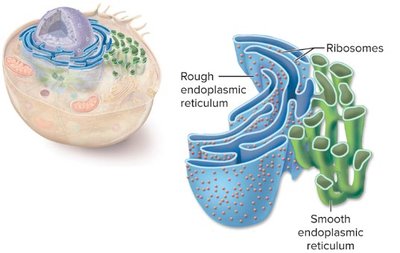
The ER is a network of membranes involved in protein and lipid synthesis. The rough ER (RER) is studded with ribosomes and synthesizes proteins, while the smooth ER (SER) is involved in lipid synthesis and detoxification.
Rough ER: Protein synthesis.
Smooth ER: Lipid synthesis and detoxification.
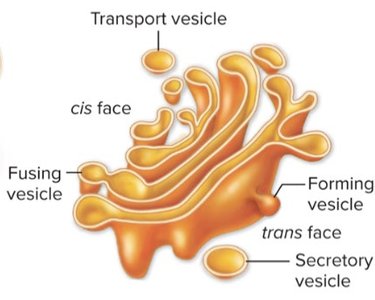
Golgi Apparatus
The Golgi apparatus modifies, sorts, and packages proteins and lipids for transport. It receives materials on the cis face and exports them on the trans face.
Function: Protein and lipid modification, sorting, and packaging.
Transport vesicles: Carry materials to and from the Golgi.
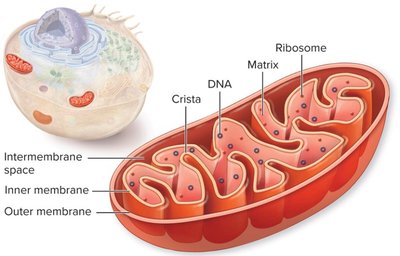
Mitochondria
Mitochondria are the sites of cellular respiration and ATP production. They have a double membrane and contain their own DNA and ribosomes.
Function: Convert glucose and oxygen into ATP.
Structure: Inner and outer membranes, cristae, matrix.
Chloroplasts
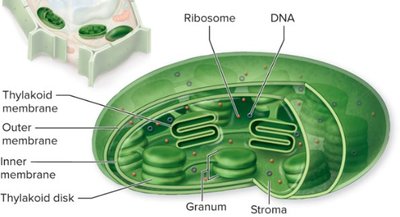
Chloroplasts are found in plant cells and are responsible for photosynthesis. They contain the pigment chlorophyll and have their own DNA.
Structure: Thylakoid membranes, grana, stroma.
Function: Convert light energy into chemical energy (glucose).
Vacuoles
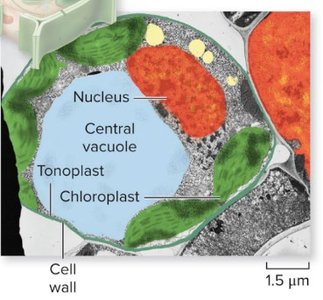
Plant cells typically have a large central vacuole that stores water, salts, and other molecules, helping maintain cell structure and turgor pressure.
Microbodies and Peroxisomes
Microbodies are single-membrane organelles involved in metabolism. Peroxisomes break down fatty acids, uric acid, amino acids, and hydrogen peroxide.
Cytoskeleton
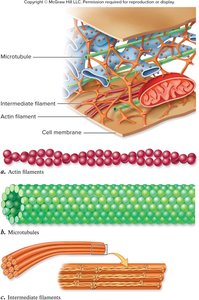
The cytoskeleton provides structural support and is composed of microfilaments (actin filaments), microtubules, and intermediate filaments.
Microfilaments: Made of actin, involved in cell movement and shape.
Microtubules: Hollow tubes of tubulin, involved in organelle movement and cell division.
Intermediate filaments: Provide mechanical support.
Centrioles
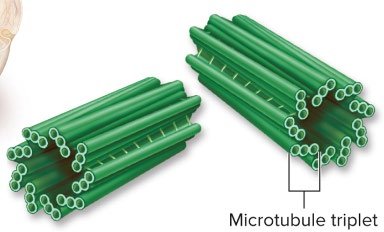
Centrioles are barrel-shaped organelles made of tubulin, involved in organizing microtubules, forming centrosomes, and assembling cilia and flagella. They duplicate during cell division.
Cell Walls
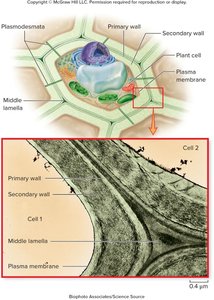
Cell walls provide structural support and are found in plants, fungi, and bacteria. Plant cell walls are made of cellulose, while bacterial cell walls are made of peptidoglycan.
Animal Cells and the Extracellular Matrix (ECM)
Key Characteristics of Animal Cells
Animal cells lack cell walls, allowing for greater flexibility and shape variation. They are surrounded by a plasma membrane that regulates substance exchange.
Extracellular Matrix (ECM)
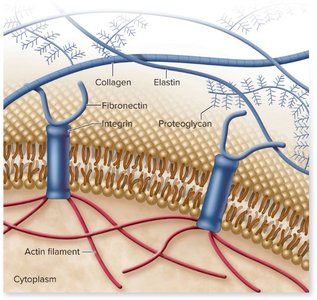
The ECM is a network of proteins and carbohydrates that provides structural and biochemical support to cells. It includes glycoproteins, proteoglycans, and collagen.
Glycoproteins: Proteins with carbohydrate groups, important for cell communication and adhesion.
Collagen: Provides tensile strength and structural integrity.
Integrins: Transmembrane receptors that connect the ECM to the cytoskeleton and mediate signal transduction.
Cellular Communication and Junctions
Types of Cell Junctions
Cells communicate and adhere to each other through specialized junctions, each with distinct structures and functions.
Tight Junctions (Occluding Junctions): Seal cells together, preventing passage of molecules between them. Example: Bladder lining.
Plasmodesmata: Channels connecting plant cells, allowing movement of water, ions, and small molecules.
Adherens Junctions (Anchoring Junctions): Connect actin cytoskeletons of adjacent cells, providing mechanical strength.
Gap Junctions (Communicating Junctions): Channels for direct communication between animal cells, allowing passage of ions and small molecules. Example: Cardiac muscle coordination.
Desmosomes: Connect cells via intermediate filaments, providing strong adhesion in tissues subject to mechanical stress (e.g., skin, heart).
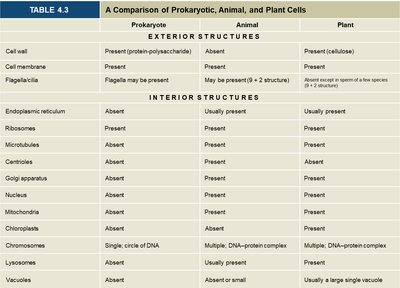
Comparative Cell Structure
Comparison of Prokaryotic, Animal, and Plant Cells
The following table summarizes the presence or absence of key structures in prokaryotic, animal, and plant cells.
Structure | Prokaryote | Animal | Plant |
|---|---|---|---|
Cell wall | Present (protein-polysaccharide) | Absent | Present (cellulose) |
Cell membrane | Present | Present | Present |
Flagella/cilia | Flagella may be present | May be present (9+2 structure) | May be present in some |
Endoplasmic reticulum | Absent | Usually present | Usually present |
Ribosomes | Present | Present | Present |
Microtubules | Absent | Present | Present |
Centrioles | Absent | Present | Absent |
Golgi apparatus | Absent | Present | Present |
Nucleus | Absent | Present | Present |
Mitochondria | Absent | Present | Present |
Chloroplasts | Absent | Absent | Present |
Lysosomes | Absent | Usually present | Rare |
Vacuoles | Absent | Absent or small | Usually a large single vacuole |
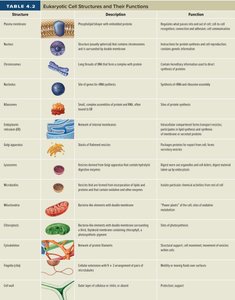
Summary Table: Eukaryotic Cell Structures and Their Functions
Structure | Description | Function |
|---|---|---|
Plasma membrane | Phospholipid bilayer with embedded proteins | Regulates entry and exit of substances |
Nucleus | Double-membrane structure containing DNA | Genetic control center |
Nucleolus | Dense region within nucleus | Ribosome production |
Ribosome | Complex of rRNA and protein | Protein synthesis |
Endoplasmic reticulum | Network of membranes (rough and smooth) | Protein and lipid synthesis |
Golgi apparatus | Stack of flattened membranes | Modification, sorting, and packaging of proteins/lipids |
Lysosome | Membrane-bound vesicle with digestive enzymes | Breakdown of macromolecules |
Mitochondrion | Double-membrane organelle with own DNA | ATP production via cellular respiration |
Chloroplast | Double-membrane organelle with chlorophyll | Photosynthesis |
Vacuole | Large membrane-bound sac (plants) | Storage and structural support |
Cytoskeleton | Network of protein filaments | Structural support, movement |
Key Equations and Concepts
Surface Area to Volume Ratio: As cells increase in size, their volume grows faster than their surface area, limiting cell size due to the need for efficient exchange of materials.
ATP Production (Cellular Respiration):
Photosynthesis (in chloroplasts):
