 Indietro
Cell Structure and Membrane Function: A Tour of the Cell
Guida di studio - Note intelligenti
 Appunti personalizzati basati sui tuoi materiali, ampliati con definizioni chiave, esempi e contesto.
Cell Structure and Function
The Cell: Basic Unit of Life
Cells are the fundamental units of life, forming the basis of all living organisms. Organisms are classified into domains based on cell type: Bacteria and Archaea are prokaryotic, while Protists, Fungi, Plants, and Animals are eukaryotic.
Prokaryotic cells: Lack a nucleus and membrane-bound organelles.
Eukaryotic cells: Possess a nucleus and various membrane-bound organelles.
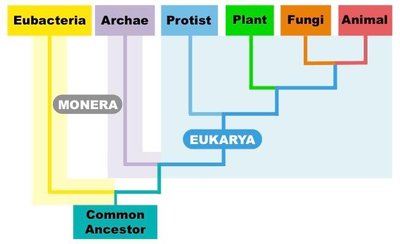
Comparing Prokaryotic and Eukaryotic Cells
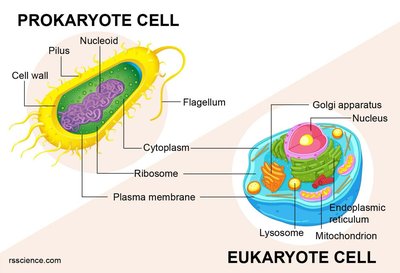
All cells share certain features: a plasma membrane, cytosol, chromosomes, and ribosomes. However, their organization differs significantly.
Prokaryotic cells have DNA in a region called the nucleoid, lack membrane-bound organelles, and are generally smaller.
Eukaryotic cells have DNA enclosed in a nucleus, contain various organelles, and are typically larger.
Cell Size and Surface Area-to-Volume Ratio
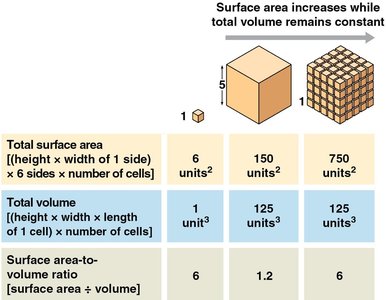
Cell size is limited by the need to efficiently exchange materials with the environment. As a cell grows, its volume increases faster than its surface area, reducing the surface area-to-volume ratio and limiting efficient exchange.
Small cells have a higher surface area-to-volume ratio, facilitating efficient transport of materials.
Cell Membranes
Structure of the Plasma Membrane
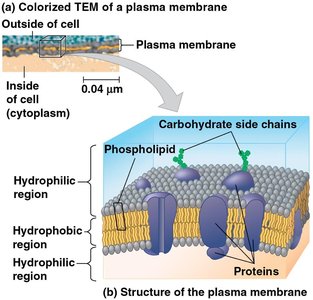
The plasma membrane is a selectively permeable barrier composed mainly of a phospholipid bilayer with embedded proteins and carbohydrates. It regulates the movement of substances into and out of the cell.
Phospholipids are amphipathic, with hydrophilic heads and hydrophobic tails, forming a bilayer.
Proteins serve various functions, including transport, signaling, and structural support.
Carbohydrates are involved in cell recognition and adhesion.
Genetic Material and Protein Synthesis
Nucleus and Chromatin
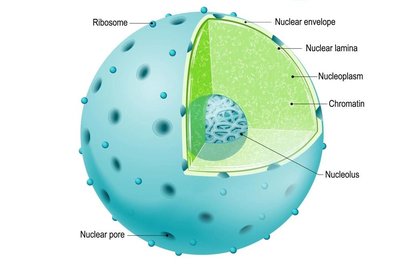
The nucleus houses most of the cell's genetic material in the form of DNA, organized into chromosomes. DNA is associated with proteins to form chromatin, which condenses into chromosomes during cell division.
Nucleolus: Site of ribosomal RNA (rRNA) synthesis and ribosome assembly.
Nuclear envelope: Double membrane with pores regulating molecular traffic.
Protein Synthesis: From DNA to Protein
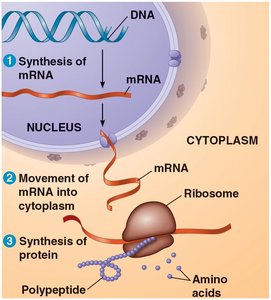
Protein synthesis involves two main steps: transcription and translation.
Transcription: DNA is transcribed into messenger RNA (mRNA) in the nucleus.
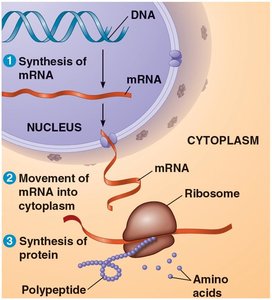
Translation: mRNA exits the nucleus and is translated by ribosomes in the cytoplasm to synthesize polypeptides (proteins).
Ribosomes
Structure and Function
Ribosomes are complexes of rRNA and protein that synthesize proteins. They can be free in the cytosol or bound to the endoplasmic reticulum (ER).
Free ribosomes: Synthesize proteins for use within the cytosol.
Bound ribosomes: Synthesize proteins for membranes, organelles, or secretion.
Endomembrane System
Components and Functions
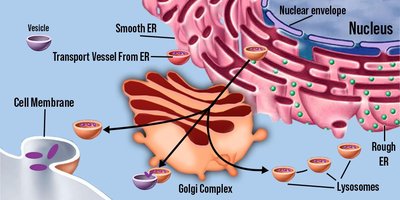
The endomembrane system includes the nuclear envelope, endoplasmic reticulum (ER), Golgi apparatus, lysosomes, vesicles, and plasma membrane. It is responsible for the synthesis, modification, and transport of proteins and lipids.
Rough ER: Studded with ribosomes; synthesizes and folds proteins.
Smooth ER: Lacks ribosomes; synthesizes lipids, detoxifies chemicals, and stores calcium ions.
Golgi apparatus: Modifies, sorts, and packages proteins and lipids for transport.
Lysosomes: Contain hydrolytic enzymes for digestion of macromolecules.
Vesicles: Transport materials within the cell.
Energy-Related Organelles
Mitochondria and Chloroplasts
Mitochondria are the sites of cellular respiration, generating ATP from organic molecules. Chloroplasts, found in plants and algae, are the sites of photosynthesis, converting solar energy into chemical energy.
Both organelles contain their own DNA and ribosomes, supporting the endosymbiont theory of their origin.
Cytoskeleton
Structure and Function
The cytoskeleton is a network of protein fibers that provides structural support, maintains cell shape, and facilitates cell movement and transport of materials.
Microtubules: Hollow rods that shape the cell, guide organelle movement, and separate chromosomes during cell division.
Microfilaments (Actin filaments): Thin rods involved in cell movement and muscle contraction.
Intermediate filaments: Provide mechanical support and anchor organelles.
Cell Walls and Extracellular Structures
Plant Cell Walls
Plant cells have a rigid cell wall composed mainly of cellulose, providing structural support and protection. Other organisms, such as fungi and some protists, also have cell walls of different compositions.
Extracellular Matrix (ECM) in Animal Cells
Animal cells lack cell walls but are surrounded by an extracellular matrix composed of glycoproteins like collagen, which provides structural support and mediates cell signaling.
Membrane Transport
Selective Permeability
The plasma membrane is selectively permeable, allowing some substances to cross more easily than others. Hydrophobic molecules pass through easily, while hydrophilic molecules require transport proteins.
Types of Transport
Passive Transport: Movement down a concentration gradient without energy input (e.g., diffusion, osmosis, facilitated diffusion).
Active Transport: Movement against a concentration gradient, requiring energy (e.g., sodium-potassium pump).
Bulk Transport: Movement of large molecules via vesicles (e.g., endocytosis, exocytosis).
Metabolism and Enzymes
Metabolic Pathways
Metabolism encompasses all chemical reactions in a cell, organized into metabolic pathways. Catabolic pathways break down molecules and release energy, while anabolic pathways build molecules and consume energy.
Enzyme Function
Enzymes are biological catalysts that speed up reactions by lowering activation energy. They are highly specific for their substrates and can be regulated by various factors, including inhibitors and allosteric regulators.
Energy and Thermodynamics
First Law of Thermodynamics: Energy cannot be created or destroyed, only transformed.
Second Law of Thermodynamics: Every energy transfer increases the entropy of the universe.
Gibbs Free Energy (ΔG): Determines whether a reaction is spontaneous ().
ATP: The Energy Currency
ATP (adenosine triphosphate) stores and transfers energy for cellular work. Hydrolysis of ATP releases energy, which is used to drive endergonic reactions.
