 Indietro
Cell Structure, Function, and the Endomembrane System: Study Notes for General Biology
Guida di studio - Note intelligenti
 Appunti personalizzati basati sui tuoi materiali, ampliati con definizioni chiave, esempi e contesto.
Cell Structure and Function
The Cell as the Fundamental Unit of Life
Cells are the basic structural and functional units of all living organisms. Life’s properties emerge from the collaboration of internal structures within a cell, each contributing to the cell’s overall function.
Unicellular organisms consist of a single cell, while multicellular organisms are composed of many specialized cells.
Complex processes such as metabolism, maintenance, and reproduction originate within the cell.
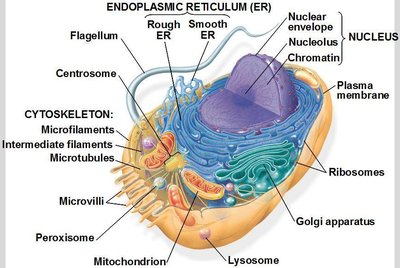
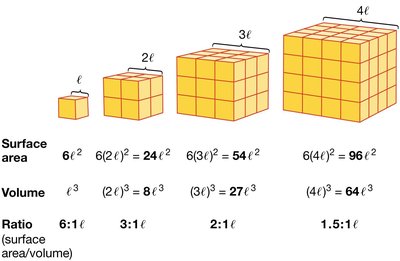
Cell Size and Surface Area-to-Volume Ratio
Cell size is limited by the surface-area-to-volume (SA/V) ratio, which affects the efficiency of material exchange.
Surface area determines the rate at which materials can enter or exit the cell.
Volume determines the amount of metabolic activity the cell can perform.
As cells increase in size, their SA/V ratio decreases, making material exchange less efficient.
Formulas:
Surface area of a cube:
Volume of a cube:
SA/V ratio:
Adaptations to Increase SA/V Ratio
Eukaryotic cells, which are larger than prokaryotic cells, have evolved adaptations to increase their SA/V ratio:
Shape: Cells may be flat or disk-shaped to maximize surface area.
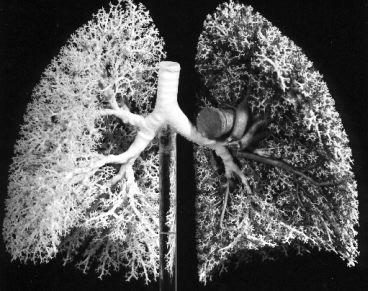
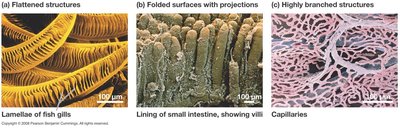
Structure: Tissues may have protrusions, folding, or branching to increase surface area.
Organelles: Membrane-bound compartments break up large cell volume into smaller, specialized areas.
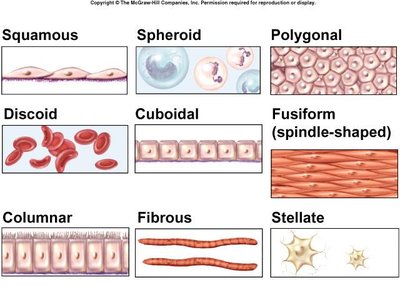
Specialized Cells and Tissues in Multicellular Organisms
Multicellular organisms have specialized cells and tissues adapted for specific functions, particularly in systems requiring efficient material exchange.
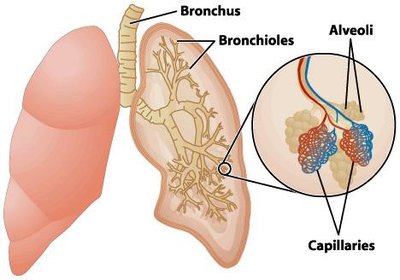
Respiratory system: Trachea (ciliated columnar cells), bronchi (cuboidal cells), alveoli (simple squamous cells).
Gills: Flattened structures for gas exchange.
Villi: Protrusions in the intestine for nutrient absorption.
Capillaries: Highly branched structures for exchange of gases, nutrients, and waste.
Prokaryotic vs. Eukaryotic Cells
Comparison of Cell Types
Cells are classified as prokaryotic or eukaryotic based on their internal structure.
Prokaryotic cells: Small, lack membrane-bound organelles, have a large SA/V ratio, efficient diffusion.
Eukaryotic cells: Larger, contain membrane-bound organelles, have a smaller SA/V ratio, less efficient diffusion but compensated by internal compartmentalization.
Comparison of Plant and Animal Cells
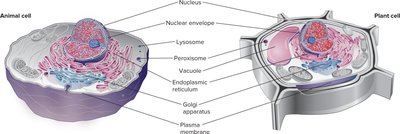
Both plant and animal cells are eukaryotic, but they differ in certain organelles and structures.
Plant cells: Have a cell wall, chloroplasts, and large central vacuole.
Animal cells: Lack cell wall and chloroplasts, have lysosomes and centrioles.
Membrane-Bound Organelles and Their Functions
Importance of Organelles
Organelles are specialized compartments within eukaryotic cells that perform distinct functions.
Storage/transport centers: Vacuoles, vesicles.
Production centers: Endoplasmic reticulum, Golgi apparatus.
Increase SA/V ratio: Internal membranes provide more surface area for reactions.
Separate incompatible reactions: Compartmentalization prevents interference between different metabolic pathways.
Increase efficiency: Grouping enzymes and substrates together enhances reaction rates.
Nucleus Structure and Function
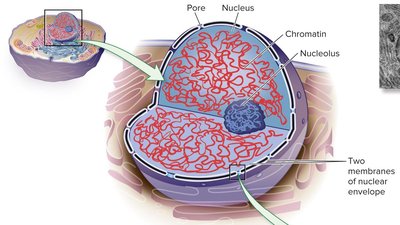
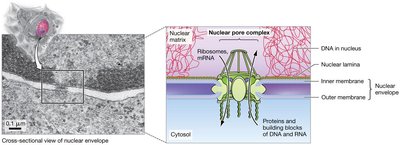
The nucleus is the control center of the cell, containing genetic material and regulating gene expression.
Nuclear envelope: Double membrane surrounding the nucleus.
Nuclear pores: Allow selective movement of molecules in and out of the nucleus.
Nucleolus: Site of ribosome synthesis.
Chromatin: DNA and associated proteins.
The Endomembrane System
Overview and Key Organelles
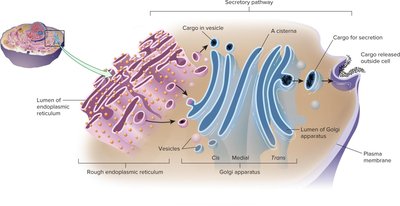
The endomembrane system is a network of membranes within eukaryotic cells that coordinates the synthesis, modification, and transport of proteins and lipids.
Key organelles: Endoplasmic reticulum (ER), Golgi apparatus, lysosomes, vesicles, plasma membrane.
Functions: Protein sorting, secretion (exocytosis), and uptake (endocytosis).
Exocytosis: The Secretory Pathway
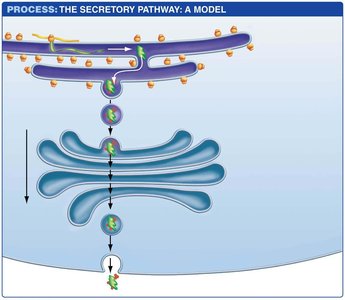
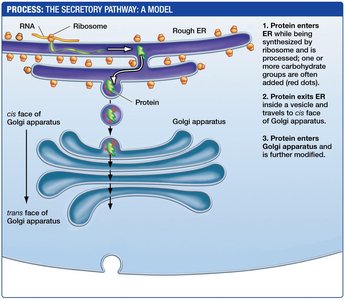
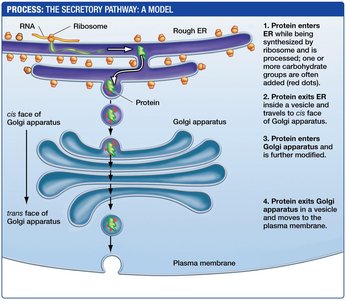
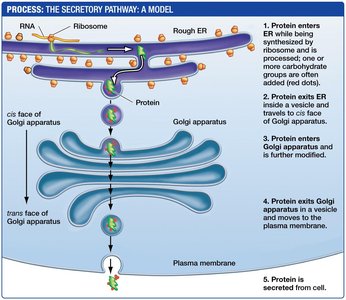
Exocytosis is the process by which cells secrete proteins and other molecules. The pathway involves several steps:
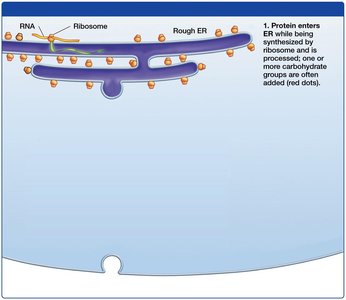
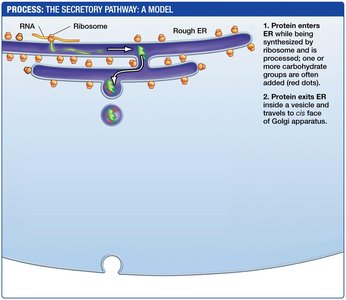
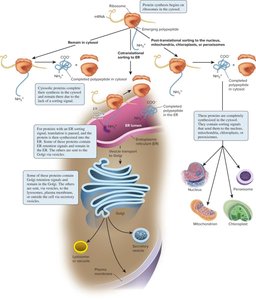
Protein enters the rough ER while being synthesized by ribosomes.
Protein exits the ER in a vesicle and travels to the cis face of the Golgi apparatus.
Protein enters the Golgi apparatus and is further modified.
Protein exits the Golgi in a vesicle and moves to the plasma membrane.
Protein is secreted from the cell.
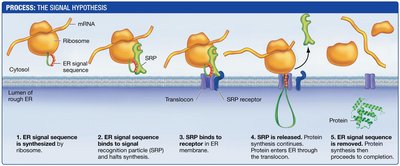
Protein Sorting and Vesicle Transport
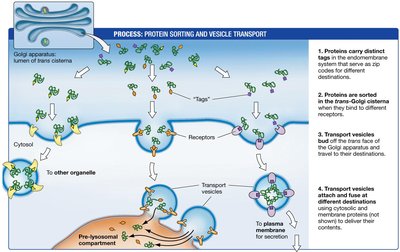
Proteins are sorted and transported to their correct destinations within the cell or outside it.
Proteins carry distinct tags in the endomembrane system for sorting.
Transport vesicles deliver proteins to the plasma membrane or other organelles.
Exocytosis and Endocytosis
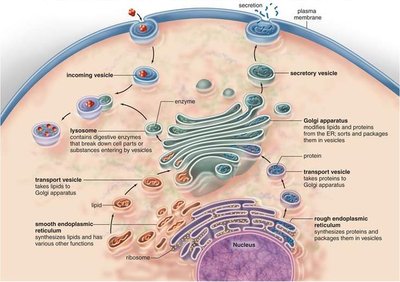
Cells use exocytosis to secrete molecules and endocytosis to bring in nutrients, digest old components, or destroy invaders.
Exocytosis: Vesicles fuse with the plasma membrane to release contents outside the cell.
Endocytosis: Plasma membrane engulfs material to bring it into the cell.
Lysosome Function
Lysosomes are organelles containing digestive enzymes that break down cellular waste and foreign material.
Enzymes are synthesized in the ER, processed in the Golgi, and delivered to lysosomes.
Lysosomes digest old cellular components and destroy invaders.
Biological Molecules: Macromolecules
Polymer Formation and Breakdown
Macromolecules are large biological molecules formed by joining smaller units called monomers.
Polymerization: Formation of polymers by dehydration (condensation) reactions, which remove water to join monomers.
Hydrolysis: Breakdown of polymers by adding water, splitting them into monomers.
Carbohydrates
Carbohydrates are organic molecules with the general formula Cn(H2O)n. They serve as energy sources, structural components, and molecular tags.
Pentoses: Five-carbon sugars (e.g., ribose, deoxyribose).
Hexoses: Six-carbon sugars (e.g., glucose).
Disaccharides: Formed by dehydration reactions; broken apart by hydrolysis.
Four Major Types of Macromolecules
Living organisms contain four major types of macromolecules, each with distinct structures and functions.
Type | Structure | Key Functions | Examples |
|---|---|---|---|
Carbohydrates | Cn(H2O)n | Energy source, storage, structural role, molecular tags | Glucose, starch, cellulose |
Lipids | Nonpolar, mainly C and H | Membrane structure, hormones, energy storage, insulation | Phospholipids, triglycerides, steroids |
Proteins | Polypeptides (amino acid chains) | Cell structure, gene regulation, enzymes, transport, defense | Enzymes, structural proteins, transporters |
Nucleic acids | Linear nucleotide sequences; DNA is double-stranded | Genetic information storage and access | DNA, RNA |
Additional info: These macromolecules are covered in detail in General Biology chapters on carbohydrates, lipids, proteins, and nucleic acids.
----------------------------------------
