 Indietro
Cell Structure, Membrane Function, and Cell Communication: Study Guide for General Biology
Guida di studio - Note intelligenti
 Appunti personalizzati basati sui tuoi materiali, ampliati con definizioni chiave, esempi e contesto.
Chapter 6 — A Tour of the Cell
Cell Theory and Universal Cell Features
Cell theory is a foundational concept in biology, stating that all living organisms are composed of cells, cells are the basic functional units of life, and all cells arise from preexisting cells. Every cell, whether prokaryotic or eukaryotic, possesses a plasma membrane, cytoplasm, DNA, and ribosomes.
Cell Theory: All living organisms consist of one or more cells; cells are the basic units of life; cells arise from preexisting cells.
Universal Features: Plasma membrane, cytoplasm, DNA, ribosomes.
Surface Area-to-Volume Ratio
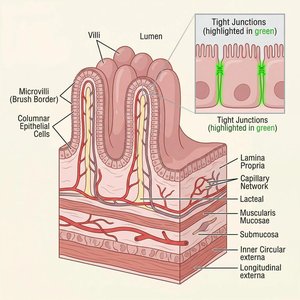
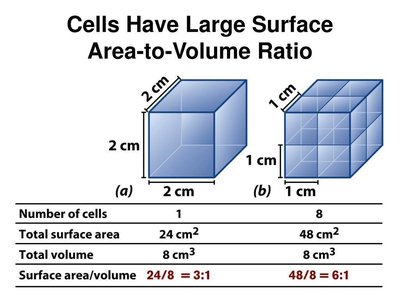
Cells are typically small to maximize their surface area-to-volume ratio, which facilitates efficient nutrient uptake and waste removal. As cells grow, their volume increases faster than their surface area, limiting exchange efficiency. Adaptations such as microvilli increase surface area without significantly increasing volume.
High SA:V Ratio: Essential for efficient exchange of materials.
Adaptations: Elongation, membrane folds, microvilli.
Prokaryotes vs. Eukaryotes
Prokaryotic cells lack a membrane-bound nucleus and organelles, while eukaryotic cells possess these features. Eukaryotes are generally larger and more complex.
Prokaryotes: No nucleus, DNA in nucleoid, smaller size, lack membrane-bound organelles.
Eukaryotes: True nucleus, membrane-bound organelles, larger size.
Cellular Structures: Shared and Unique
Shared by All Cells: Plasma membrane, cytoplasm, DNA, ribosomes.
Unique to Prokaryotes: Nucleoid, plasmids, pili, fimbriae, capsules/slime layers.
Unique to Plant Cells: Cell wall (cellulose), chloroplasts, large central vacuole, plasmodesmata, plastids.
Unique to Animal Cells: Lysosomes, centrioles.
Organelle Functions
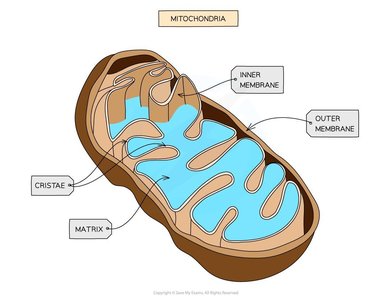
Mitochondria: ATP production via aerobic respiration.
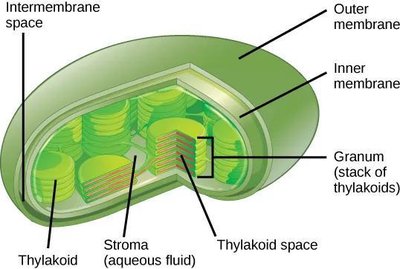
Chloroplasts: Photosynthesis (plants/algae).
Ribosomes: Protein synthesis.
Endoplasmic Reticulum (ER): Rough ER for protein processing; Smooth ER for lipid synthesis and detoxification.
Golgi Apparatus: Modifies, sorts, and packages proteins/lipids.
Vacuoles: Storage of water, nutrients, pigments, wastes; turgor pressure in plants.
Cytoskeleton: Shape, support, movement (microtubules, microfilaments).
Plasma Membrane: Selective barrier.
Endosymbiotic Theory
The endosymbiotic theory proposes that mitochondria and chloroplasts originated from free-living prokaryotes that became symbiotic within ancestral eukaryotic cells. Evidence includes their own circular DNA, prokaryotic-type ribosomes, division similar to bacteria, and similarities in size and membrane structure.
Key Evidence: Own DNA, bacterial ribosomes, binary fission, size/membrane similarities.
Endomembrane System
The endomembrane system includes the nuclear envelope, ER, Golgi apparatus, lysosomes, vacuoles, plasma membrane, and transport vesicles. These structures work together to process and transport materials within the cell.
Independent Structures: Peroxisomes, mitochondria, chloroplasts (not part of endomembrane system).
Cell Junctions
Tight Junctions: Seal spaces between animal cells, forming an impermeable barrier.
Gap Junctions: Allow communication between animal cells.
Desmosomes: Provide strong attachment points.
Plasmodesmata: Connect plant cells for communication.
Chapter 7 — Membrane Structure and Transport
Plasma Membrane Structure and Function
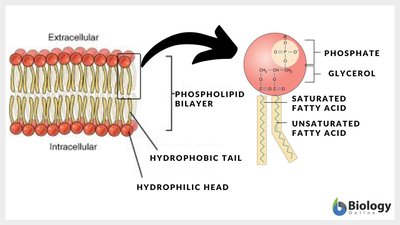
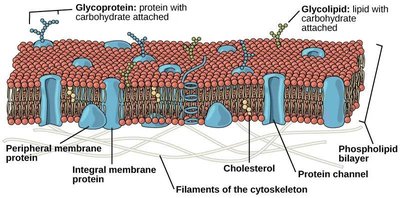
The plasma membrane is a selectively permeable barrier composed of a phospholipid bilayer with embedded proteins, cholesterol, glycolipids, and glycoproteins. It regulates entry and exit of substances, protects the cell, and facilitates communication.
Phospholipids: Amphipathic molecules with hydrophilic heads and hydrophobic tails.
Fluid Mosaic Model: Describes the dynamic, flexible nature of the membrane with a mosaic of proteins and lipids.
Membrane Fluidity
Membrane fluidity is influenced by the composition of phospholipids and cholesterol. Unsaturated fatty acids increase fluidity at low temperatures, while cholesterol buffers fluidity by preventing excessive rigidity or fluidity.
Unsaturated Fatty Acids: Double bonds create kinks, preventing tight packing.
Cholesterol: Interacts with both hydrophilic and hydrophobic regions, stabilizing membrane.
Membrane Proteins
Integral Proteins: Amphipathic, often span the bilayer (transmembrane).
Peripheral Proteins: Loosely attached to membrane surfaces.
Carrier Proteins: Bind specific solutes and change shape to transport them.
Selective Permeability and Transport Mechanisms
The plasma membrane is selectively permeable, allowing some substances to pass while restricting others. Transport mechanisms include passive and active transport, diffusion, osmosis, facilitated diffusion, and various forms of endocytosis and exocytosis.
Passive Transport: No energy required; includes simple diffusion and facilitated diffusion.
Active Transport: Requires energy (usually ATP); moves substances against concentration gradients.
Osmosis: Water movement toward higher solute concentration.
Tonicity: Effects of solution concentration on cell volume (hypertonic, isotonic, hypotonic).
Key Transport Definitions
Simple Diffusion: Movement down gradient directly through bilayer.
Facilitated Diffusion: Movement down gradient via channel/carrier proteins.
Active Transport: Movement against gradient, requires ATP.
Osmosis: Water movement across membrane.
Endocytosis: Uptake of materials via vesicles.
Exocytosis: Release of materials via vesicle fusion.
Phagocytosis: Engulfment of large particles.
Pinocytosis: Nonspecific uptake of fluid.
Receptor-Mediated Endocytosis: Selective uptake via receptors.
Cotransport: Coupled transport of two substances.
Tonicity and Effects on Cells
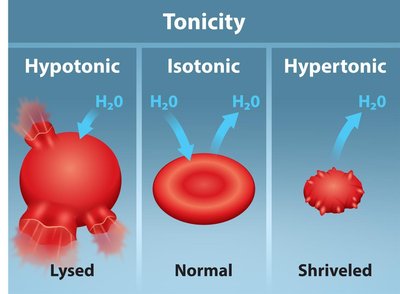
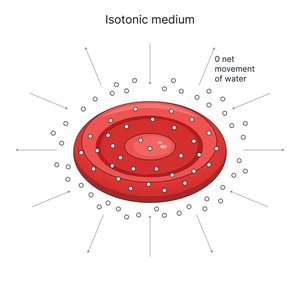
Tonicity describes the effect of extracellular solute concentration on cell volume. Hypertonic solutions cause cells to lose water and shrink; hypotonic solutions cause cells to gain water and swell; isotonic solutions result in no net water movement.
Hypertonic: Water exits cell; cell shrinks (crenation in animal cells, plasmolysis in plant cells).
Hypotonic: Water enters cell; cell swells and may burst (hemolysis in animal cells, turgid in plant cells).
Isotonic: No net water movement; cell remains normal size.
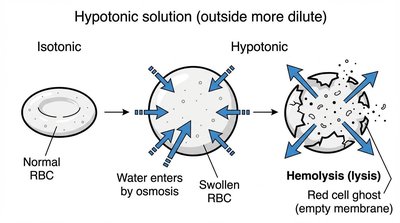
Sodium-Potassium Pump
The sodium-potassium pump is an active transport mechanism that maintains cellular ion gradients by exporting three sodium ions and importing two potassium ions per cycle, using ATP.
Cycle: 3 Na+ out, 2 K+ in, requires ATP.
Chapter 11 — Cell Communication
Cell Signaling Overview
Cell communication involves the transmission, reception, transduction, and response to signals. Cells use various signaling strategies, including direct contact, paracrine, synaptic, and endocrine signaling.
Signal Transmission: Ligand produced and sent by signaling cell.
Signal Reception: Ligand binds to receptor on target cell.
Signal Transduction: Signal converted and amplified inside cell.
Response: Cell changes activity or function.
Types of Chemical Signaling
Direct Contact: Adjacent cells communicate via junctions.
Paracrine: Local signaling to nearby cells (e.g., growth factors).
Synaptic: Neurons release neurotransmitters to target cells.
Endocrine: Hormones travel through bloodstream to distant cells.
Signal Transduction and Amplification
Signal transduction converts extracellular signals into intracellular responses, often involving phosphorylation cascades. Amplification allows a small number of signaling molecules to produce a large cellular response.
Amplification: One signal activates many intracellular proteins.
Receptor Specificity
Only cells with specific receptors for a hormone or signaling molecule will respond to it, ensuring targeted communication.
Receptor Requirement: Target cells must have matching receptors.
Tables and Comparisons
Comparison of Cell Types
Feature | Prokaryote | Eukaryote |
|---|---|---|
Nucleus | No | Yes |
Organelles | No | Yes |
Size | Small | Larger |
Examples | Bacteria, Archaea | Animals, Plants, Fungi, Protists |
Membrane Transport Comparison
Feature | Facilitated Diffusion | Active Transport |
|---|---|---|
Energy | No ATP required | ATP required |
Direction | High → Low | Low → High |
Transport Proteins | Yes | Yes |
Example | Glucose carrier | Sodium-potassium pump |
Tonicity Effects
Solution | Net Water Movement | Animal Cell Effect | Plant Cell Effect |
|---|---|---|---|
Hypertonic | Out | Shrinks (crenation) | Plasmolysis |
Isotonic | None | Unchanged | No net water gain |
Hypotonic | In | Swells / may burst | Turgid |
Key Equations
Surface Area of a Cube:
Volume of a Cube:
Surface Area-to-Volume Ratio:
Summary of Key Concepts
Cell theory and universal cell features
Surface area-to-volume ratio and adaptations
Prokaryote vs. eukaryote structure
Organelle functions and endosymbiotic theory
Membrane structure, fluidity, and transport mechanisms
Tonicity and effects on cells
Cell communication and signal transduction
Additional info: Some definitions (e.g., group translocation, transcription factors) were inferred or expanded for completeness based on standard academic context.
