 Indietro
Cell–Cell Interactions: Structure, Communication, and Signaling in Multicellular Organisms
Guida di studio - Note intelligenti
 Appunti personalizzati basati sui tuoi materiali, ampliati con definizioni chiave, esempi e contesto.
Cell–Cell Interactions
Introduction to Cell–Cell Interactions
Cells in multicellular organisms must communicate and cooperate to maintain the structure and function of tissues. This chapter explores how cells modify their environment and interact with one another through various physical and chemical mechanisms.
The Cell Surface
Structure of the Plasma Membrane
The plasma membrane is a phospholipid bilayer embedded with proteins. These proteins can be integral (spanning the membrane) or peripheral (attached to the surface). Membrane proteins regulate the transport of substances, maintain distinct internal environments, and connect to both cytoskeletal elements and extracellular structures.
The Extracellular Matrix (ECM) in Animals
Most animal cells secrete a fiber composite called the extracellular matrix (ECM), which provides structural support. The ECM consists of:
Fibrous component: Mainly collagen, which forms strong fibrils from triple helix structures.
Ground substance: Made of proteoglycans—proteins with many attached polysaccharides, giving tissues like cartilage their rubbery consistency.
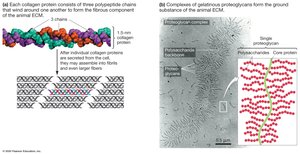
The amount and composition of ECM vary among tissues. For example, elastin allows lung tissue to stretch. Integrins are membrane proteins that connect the ECM to the plasma membrane and anchor the cytoskeleton to the ECM via cross-linking proteins like laminins.
How Do Adjacent Cells Connect and Communicate?
Cell–Cell Attachments in Multicellular Organisms
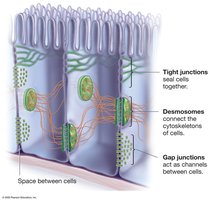
Direct physical connections between cells are essential for maintaining tissue structure and function. These attachments are especially important in epithelia, which line surfaces and organs. The main types of cell–cell attachments in animal cells are:
Tight junctions
Desmosomes
Gap junctions
Tight Junctions
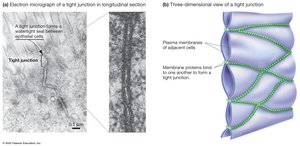
Tight junctions are composed of membrane proteins in adjacent animal cells that line up and bind to each other, forming a watertight seal. They are dynamic and can open or close in response to environmental changes, regulating the passage of substances between cells.
Desmosomes
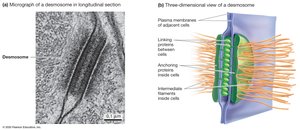
Desmosomes provide strong cell–cell adhesion, especially in epithelial and muscle cells. They consist of linking proteins and cytosolic anchoring proteins, with cytoskeletal intermediate filaments reinforcing the structure. Desmosomes ensure tissue integrity under mechanical stress.
Gap Junctions
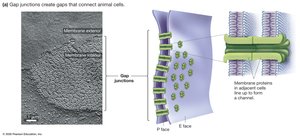
Gap junctions connect adjacent animal cells by forming protein channels that allow the flow of ions and small molecules. These communication portals help coordinate cellular activities and enable rapid passage of regulatory signals.
Cell–Cell Adhesion Proteins
Specific proteins mediate cell–cell adhesion. Cadherins are linking proteins in desmosomes that bind only to cadherins of the same type, ensuring that cells of the same type attach specifically to each other.
How Do Distant Cells Communicate?
Cell–Cell Signaling in Multicellular Organisms
Cells not in direct contact can communicate via signaling molecules such as neurotransmitters and hormones. Hormones are secreted into the body and act on target cells far from their origin, carrying information to regulate physiological processes.
Signal Reception
Signal molecules deliver messages by binding to receptor proteins, which change shape and activity upon binding. Only cells with the appropriate receptors respond to a specific signaling molecule. Receptors can be located in the cytoplasm (for lipid-soluble signals) or on the cell surface (for lipid-insoluble signals).
Lipid-Soluble vs. Lipid-Insoluble Signals
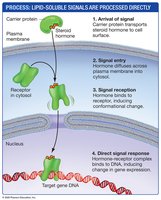
Lipid-soluble signals (e.g., steroid hormones) diffuse across the plasma membrane and bind to cytoplasmic receptors.
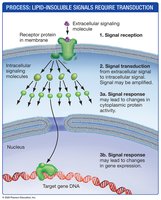
Lipid-insoluble signals cannot cross the membrane and bind to receptors on the cell surface.
Processing Lipid-Soluble Signaling Molecules
After a lipid-soluble hormone enters the cell, it binds to its receptor in the cytosol. The hormone–receptor complex is transported to the nucleus, where it triggers changes in gene expression, leading to the production of new proteins.
Processing Lipid-Insoluble Signaling Molecules
Lipid-insoluble signals bind to cell surface receptors, initiating signal transduction—the conversion of an extracellular signal into an intracellular one. This process often involves the production of second messengers and the activation of intracellular signaling pathways.
Signal Transduction Pathways
Amplification and Diversification of Signals
Signal transduction pathways can amplify and diversify the original message. Two major types of signal transduction systems are:
G-protein-coupled receptors (GPCRs): Initiate the production of intracellular second messengers.
Enzyme-linked receptors: Phosphorylate proteins inside the target cell, often triggering a phosphorylation cascade.
Signal Transduction via G-Protein-Coupled Receptors
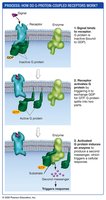
G proteins are peripheral membrane proteins that, when activated by a receptor, trigger the production of second messengers. These messengers amplify the signal and can activate protein kinases, which add phosphate groups to other proteins, altering their activity.
Signal Transduction via Enzyme-Linked Receptors
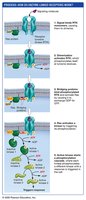
Enzyme-linked receptors, such as receptor tyrosine kinases (RTKs), directly catalyze reactions inside the cell. RTK signaling involves dimerization, autophosphorylation, and the activation of a phosphorylation cascade, often involving mitogen-activated protein kinases (MAPKs) that regulate cell division.
Signal Deactivation and Crosstalk
Signal Deactivation
Cells have mechanisms to rapidly deactivate signals, such as phosphatases that remove phosphate groups from proteins. This ensures that cells remain sensitive to new signals and can quickly adapt to changing conditions.
Crosstalk Between Signaling Pathways
Signal transduction pathways often intersect, allowing cells to integrate multiple signals. Crosstalk can result in one pathway inhibiting or stimulating another, providing flexibility and coordination in cellular responses.
c
