 Indietro
Cells and Living Things: Structure, Classification, and Diversity
Guida di studio - Note intelligenti
 Appunti personalizzati basati sui tuoi materiali, ampliati con definizioni chiave, esempi e contesto.
Levels of Biological Organization
Hierarchy of Life
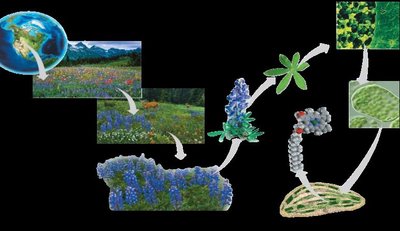
The biological world is organized into a hierarchy, from the largest scale (biosphere) to the smallest (molecules). Understanding these levels helps us appreciate the complexity and interconnectedness of living systems.
Biosphere: The global sum of all ecosystems.
Ecosystems: Communities of living organisms interacting with their physical environment.
Communities: Groups of different species living together in a particular area.
Populations: Individuals of the same species living in a specific area.
Organisms: Individual living entities.
Organs: Structures composed of tissues that perform specific functions.
Tissues: Groups of similar cells working together.
Cells: Basic units of life.
Organelles: Specialized structures within cells.
Molecules: Chemical components that make up organelles and cells.
Classification of Living Things
Domains and Kingdoms
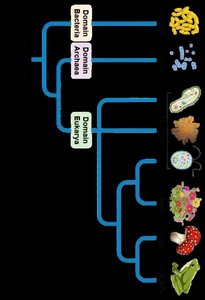
Biologists classify life based on structural, functional, and genetic similarities. Modern classification uses DNA sequence comparisons to refine relationships among organisms. All life is grouped into three domains:
Bacteria: Prokaryotic, unicellular organisms.
Archaea: Prokaryotic, often extremophilic organisms.
Eukarya: Eukaryotic organisms, divided into four kingdoms: Plantae, Fungi, Animalia, and Protists.
Each kingdom contains multiple phyla/divisions and a vast diversity of species.
Cell Discovery and Microscopy
Historical Perspective
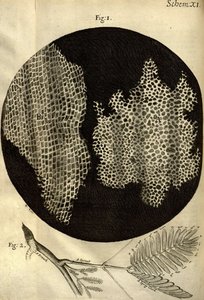
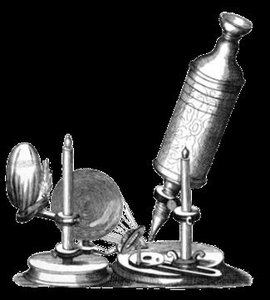
The concept of the cell originated in the 17th century. Robert Hooke first used the term "cell" in 1665 after observing cork under a primitive microscope. Anton van Leeuwenhoek improved microscopes and observed living cells, establishing microscopy as a central tool in biology.
Robert Hooke: Observed dead plant cells (cork).
Anton van Leeuwenhoek: Observed living cells, advancing cell biology.
Cell Theory
Fundamental Principles
The cell theory, developed in the 1800s, is foundational to biology. It states:
All living things are composed of cells.
Cells are the basic units of structure and function for living things.
All cells come from pre-existing cells.
Key contributors include Matthias Schleiden (plants), Theodore Schwann (animals), and Rudolph Virchow (cell division).
Cell Diversity
Variation in Structure and Function
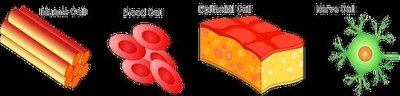
Cells vary greatly in size, shape, and internal organization, reflecting their specialized functions. The shape of a cell is adapted to its role in the organism.
Muscle cells: Elongated for contraction.
Blood cells: Disc-shaped for transport.
Epithelial cells: Flat for lining surfaces.
Nerve cells: Branched for communication.
Surface Area-to-Volume Ratio
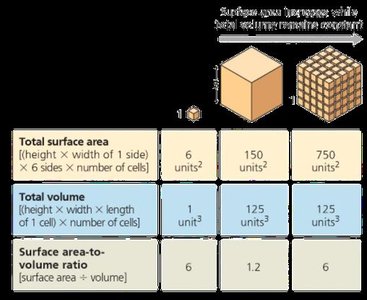
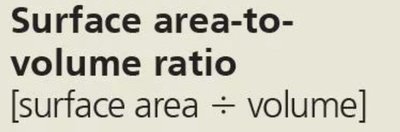
The size of a cell is limited by its surface area-to-volume ratio. As cells grow, their volume increases faster than their surface area, restricting efficient exchange of materials.
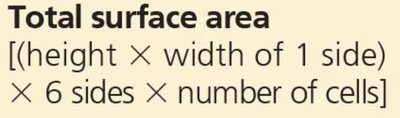
Formula for surface area:
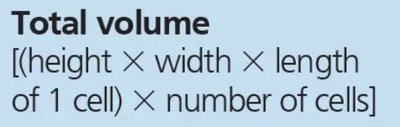
Formula for volume:
Surface area-to-volume ratio:
Cell Types
Universal Features of Cells
All cells share four basic characteristics:
Bounded by a plasma membrane.
Contain cytosol (cytoplasm).
Have chromosomes (DNA).
Possess ribosomes for protein synthesis.
Prokaryotes vs Eukaryotes
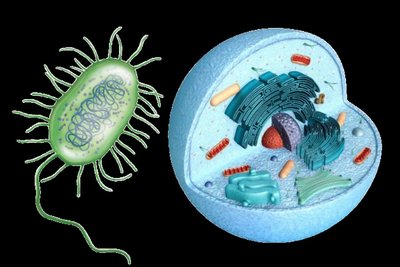
Cells are classified as prokaryotic or eukaryotic based on the presence of a nucleus and membrane-bound organelles.
Prokaryotes: No nucleus, no membrane-bound organelles, DNA in cytoplasm, cell wall present. Includes Bacteria and Archaea.
Eukaryotes: Nucleus present, membrane-bound organelles, larger and more complex. Includes plants, fungi, animals, and protists.
Organelles in Eukaryotic Cells
Overview of Major Organelles
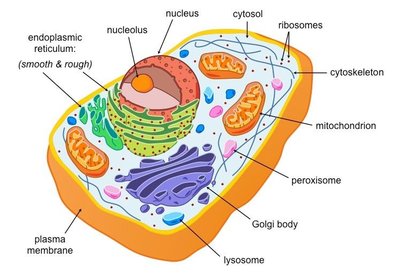
Eukaryotic cells contain specialized organelles that perform distinct functions. These include:
Nucleus: Control center, contains DNA organized into chromosomes. Nuclear envelope separates nucleus from cytoplasm.
Nucleolus: Produces and assembles ribosomes; site of ribosomal RNA transcription.
Ribosomes: Sites of protein synthesis; found free in cytoplasm or attached to endoplasmic reticulum.
Endoplasmic Reticulum (ER): Intracellular highway; rough ER (with ribosomes) synthesizes proteins, smooth ER (without ribosomes) synthesizes lipids.
Golgi Apparatus: Modifies, sorts, and stores proteins; sends them to other destinations.
Vesicles: Small sacs for transport, digestion (lysosomes), and oxidation (peroxisomes).
Lysosomes: Contain digestive enzymes; break down macromolecules and recycle cell components.
Peroxisomes: Centers for oxidation reactions; detoxify harmful substances and break down fatty acids.
Mitochondria: Powerhouse of the cell; site of cellular respiration and ATP production.
Vacuole: Storage area for water, salts, proteins, carbohydrates.
Cytoskeleton: Network of protein fibers (microfilaments, microtubules) for shape and organization.
Centrioles: Organize microtubules for cell division.
Cell Membrane: Regulates passage of materials; composed of lipids and proteins.
Plant Cell Specializations
Cell Wall
The cell wall surrounds the plasma membrane in plant cells, providing strength, protection, and turgor pressure. Made primarily of cellulose.
Chloroplasts
Site of photosynthesis; contain chlorophyll, the green pigment responsible for capturing light energy.
Central Vacuole
Large, fluid-filled compartment for storage and maintaining turgor pressure. Swelling of the vacuole helps maintain plant structure; loss of water leads to wilting.
Summary Table: Prokaryotic vs Eukaryotic Cells
Feature | Prokaryotic Cells | Eukaryotic Cells |
|---|---|---|
Nucleus | No | Yes |
Membrane-bound Organelles | No | Yes |
Size | Smaller | Larger |
Examples | Bacteria, Archaea | Plants, Fungi, Animals, Protists |
Additional info:
Cell theory and cell diversity are foundational to understanding all biological processes.
Surface area-to-volume ratio is a key constraint on cell size and function.
Organelles allow compartmentalization and specialization within eukaryotic cells.
