 Indietro
Cells: The Basic Unit of Life – Structure, Diversity, and Common Features
Guida di studio - Note intelligenti
 Appunti personalizzati basati sui tuoi materiali, ampliati con definizioni chiave, esempi e contesto.
Cells: The Basic Unit of Life
Introduction to Cell Theory
Cells are the fundamental units of life, forming the basis for all living organisms. The cell theory is a cornerstone of biology, describing the properties and significance of cells in living systems.
All organisms are composed of one or more cells.
The cell is the simplest and smallest unit of life.
All cells arise from the division of pre-existing cells.
This theory suggests that life evolved once, and all cells today are descendants of an original ancestral cell.
Classification of Life: The Three Domains
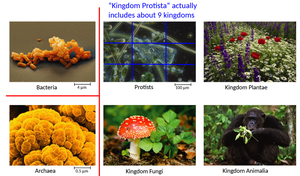
Bacteria, Archaea, and Eukarya
All life is classified into three domains based on cellular structure and genetic information: Bacteria, Archaea, and Eukarya. The primary distinction between these domains is the presence or absence of a nucleus and differences in their DNA organization.
Prokaryotes ("before the nucleus"): Bacteria and Archaea, which lack a membrane-bound nucleus.
Eukaryotes ("after the nucleus"): Eukarya, which possess a true nucleus.
Common Characteristics of All Cells
Universal Molecular Components
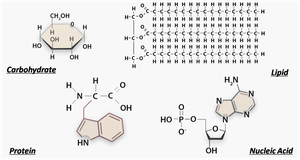
Despite their diversity, all cells share four major types of biological macromolecules:
Proteins: Polymers of amino acids; perform most cellular functions.
Nucleic Acids: Polymers of nucleotides; store and transmit genetic information (DNA and RNA).
Carbohydrates: Polymers of monosaccharides; provide energy, carbon sources, and structural support.
Lipids: Composed of fatty acids; form membranes, store energy, and act as signaling molecules.
Cell Structure and Organization
Prokaryotic Cell Structure
Prokaryotic cells, such as those in Bacteria and Archaea, are generally small (about 1 micrometer in diameter) and lack membrane-bound organelles. Their DNA is typically organized in a single circular chromosome located in a region called the nucleoid. Prokaryotes may also contain plasmids—small, independently replicating DNA molecules.
Plasma Membrane: A phospholipid bilayer that encloses the cell, maintaining a stable internal environment.
Cytoplasm (Cytosol): Gel-like fluid containing water, nutrients, salts, and proteins.
Ribosomes: Structures that synthesize proteins by translating mRNA; present in all cells.
Cell Wall: Provides structural support and protection; in bacteria, composed of peptidoglycan.
Flagella: Protein structures used for movement; can also be involved in DNA transfer and host infection.
Eukaryotic Cell Structure
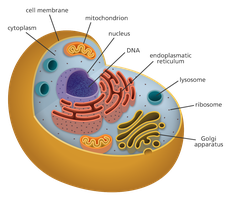
Eukaryotic cells are typically larger (10–100 micrometers) and contain membrane-bound organelles, including a nucleus that houses their DNA. Organelles such as mitochondria, endoplasmic reticulum, Golgi apparatus, and lysosomes compartmentalize cellular functions.
Genetic Information and the Flow of Information
DNA, RNA, and the Genetic Code
All cells use DNA as the hereditary material. The information in DNA is transcribed into messenger RNA (mRNA), which is then translated into proteins by ribosomes. The genetic code is universal and specifies how sequences of nucleotides (codons) correspond to amino acids.
There are 61 codons that code for 20 amino acids (some amino acids are specified by more than one codon).
Three codons serve as "stop" signals, and one as a "start" signal for translation.
Transfer RNA (tRNA) molecules bring the correct amino acids to the ribosome during protein synthesis.
Cell Size and Diversity
Variation in Cell Size
Most cells are extremely small, but there is significant variation:
Prokaryotic cells: ~1 micrometer (μm)
Animal cells: ~10 μm
Plant cells: 20–100 μm
There are exceptions, such as the largest single-celled organisms and specialized cells with unique functions.
Specialized Prokaryotes
Examples of Prokaryotic Diversity
Escherichia coli (E. coli): A model organism in research and a common inhabitant of the human gut.
Pseudomonas syringae: Causes frost damage to crops and is used to generate artificial snow due to its ice-nucleating proteins.
Ideonella sakaiensis: Capable of degrading plastic waste.
Arthrobacter globiformis: Found in toxic waste dumps, capable of degrading pollutants.
Cell Walls and Movement in Bacteria
Structure and Function
Cell Wall: Made of peptidoglycan in bacteria; provides rigidity and protection.
Flagella: Enable motility; can be adapted for DNA transfer or host infection.
Chemosensing/Quorum Sensing: Bacteria use chemical sensors to detect food and communicate with each other.
Summary Table: Key Features of Prokaryotic and Eukaryotic Cells
Feature | Prokaryotic Cells | Eukaryotic Cells |
|---|---|---|
Nucleus | Absent | Present |
DNA Structure | Circular chromosome, plasmids | Linear chromosomes in nucleus |
Organelles | Absent (except ribosomes) | Present (mitochondria, ER, etc.) |
Cell Wall | Usually present (peptidoglycan in bacteria) | Present in plants/fungi (cellulose/chitin), absent in animals |
Size | ~1 μm | 10–100 μm |
Conclusion
Cells are the foundational units of life, sharing common molecular components and basic structures. The diversity of cell types and their adaptations underlie the complexity of life on Earth. Understanding cell structure, function, and genetic information flow is essential for all further study in biology.
