 Indietro
Cellular Components and Membrane Transport: Structure, Function, and Mechanisms
Guida di studio - Note intelligenti
 Appunti personalizzati basati sui tuoi materiali, ampliati con definizioni chiave, esempi e contesto.
Cellular Organelles and the Endomembrane System
Lysosomes: Structure and Function
Lysosomes are membrane-enclosed sacs containing digestive enzymes, primarily found in animal cells. They play a crucial role in breaking down large molecules and recycling cellular components.
Digestive Enzymes: Lysosomes contain enzymes capable of degrading proteins, polysaccharides, fats, nucleic acids, old organelles, and even bacteria.
Developmental Role: Lysosomes participate in developmental processes, such as digesting the webbing between fingers and toes during embryonic development.
Lysosomal Storage Disease: Disorders can arise when lysosomes fail to break down certain substances, leading to cellular dysfunction.
Example: Lysosomes merge with vesicles containing damaged organelles, digesting their contents for recycling. 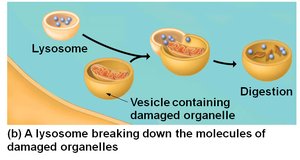
Vacuoles: Structure and Function
Vacuoles are large membrane-bound sacs that bud off from the endoplasmic reticulum, Golgi apparatus, or cell membrane. Their functions vary by cell type.
Food Vacuoles: Formed by endocytosis, they contain ingested food particles.
Contractile Vacuoles: Found in protists like Paramecium, these vacuoles pump out excess water to maintain osmotic balance.
Example: Contractile vacuoles in Paramecium fill with water and then contract to expel it. 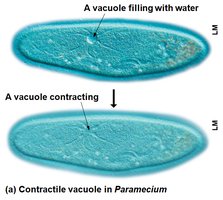
Lysosomes and Food Vacuoles: Cooperation in Digestion
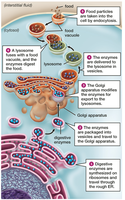
Many animal cells and protists ingest food by endocytosis, forming food vacuoles. Lysosomes then merge with these vacuoles to digest the contents.
Endocytosis: Cells engulf food particles, enclosing them in vacuoles.
Digestion: Lysosomes fuse with food vacuoles, releasing enzymes to break down the food.
Central Vacuole in Plant Cells
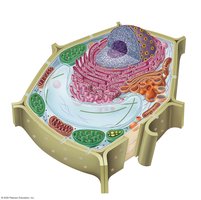
The central vacuole is a large, versatile organelle unique to plant cells, often occupying more than half the cell's volume.
Storage: Stores organic nutrients and water.
Pigments and Defense: Contains pigments that attract pollinators and toxins that deter herbivores.
Cell Membrane Structure and Function
Membrane Proteins: Classes and Functions
The cell membrane is a dynamic structure composed of a phospholipid bilayer and embedded proteins. These proteins serve various functions:
Transport Proteins: Form channels or carriers to facilitate the movement of specific molecules across the membrane.
Receptor Proteins: Bind messenger molecules, triggering cellular responses.
Membrane Enzymes: Catalyze chemical reactions at the membrane surface.
Connection Proteins: Anchor cells to each other and to the extracellular matrix.
Recognition Proteins: Serve as identification tags, helping the immune system distinguish self from non-self.
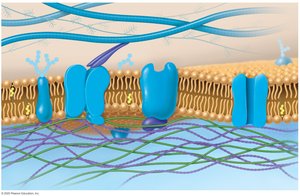
Transport Proteins: Channels and Carriers
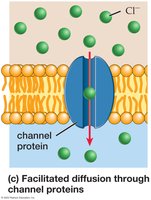
Channel Proteins: Provide passageways for molecules like ions to move across the membrane.
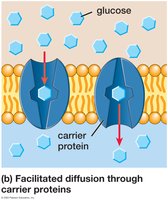
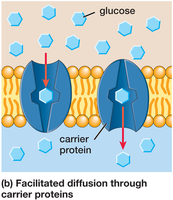
Carrier Proteins: Change shape to transport molecules such as glucose.
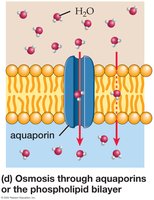
Aquaporins: Specialized channel proteins for water transport.
Receptor Proteins
Receptor proteins have binding sites for messenger molecules. When a molecule binds, the receptor changes shape, leading to various cellular responses, such as opening channels or signaling the nucleus. 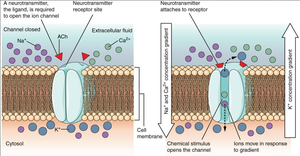
Membrane Enzymes
Membrane enzymes facilitate chemical reactions without being consumed. Examples include respiratory complexes in mitochondria and photosystems in chloroplasts. 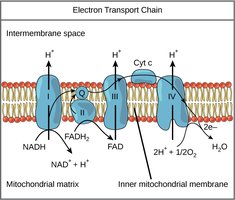
Connection Proteins
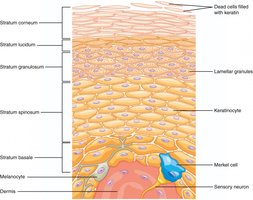
Connection proteins anchor cells together and to the extracellular matrix, maintaining tissue structure.
Collagen: Provides strength and support.
Keratin: Contributes to the integrity of skin.
Recognition Proteins
Recognition proteins are glycoproteins that serve as identification tags, allowing the immune system to recognize self cells. 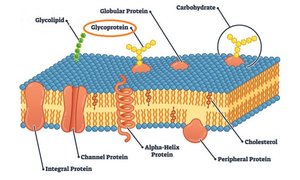
Recognition Protein Example: Cancer Immunotherapy
Drugs like Tagrisso® teach the immune system to target cancer cells by identifying unique glycoprotein shapes. 
Membrane Transport: Diffusion and Osmosis
Phospholipid Bilayer and Selective Permeability
The cell membrane is composed of an amphipathic phospholipid bilayer, creating a selectively permeable barrier.
Selective Permeability: Only certain molecules can pass through, depending on size and polarity.
Passive Transport: Movement of molecules without energy input (ATP).
Molecule Movement and Brownian Motion
Molecules are in constant motion due to Brownian motion, moving randomly and tending toward equilibrium.
Entropy: The tendency toward disorder drives diffusion.

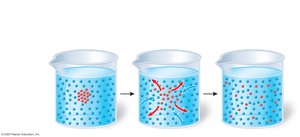
Diffusion: Movement Down Concentration Gradients
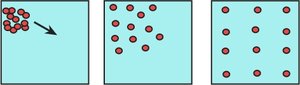
Diffusion is the net movement of molecules from areas of higher concentration to lower concentration, resulting in equilibrium.
Gradient: Difference in concentration across a space.
Net Movement: Primary direction of molecule movement.
Membranes and Concentration Gradients
Membranes maintain concentration gradients, preventing equilibrium and allowing cells to regulate internal conditions.
Types of Passive Transport
Simple Diffusion: Small, nonpolar molecules (e.g., O2) pass directly through the lipid bilayer.
Facilitated Diffusion: Larger or polar molecules use transport proteins to cross the membrane.
Osmosis: Water moves across the membrane toward higher solute concentrations.
Dialysis: Solutes move across the membrane toward higher water concentrations.
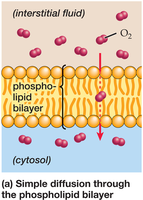
Concentration Terminology
Hypertonic: Higher solute concentration.
Hypotonic: Lower solute concentration.
Isotonic: Equal solute concentration.
Summary Table: Types of Membrane Transport
Type | Mechanism | Energy Required | Example |
|---|---|---|---|
Simple Diffusion | Direct passage through lipid bilayer | No | O2 movement |
Facilitated Diffusion | Transport proteins (channels/carriers) | No | Glucose, ions |
Osmosis | Water movement | No | Water via aquaporins |
Dialysis | Solute movement | No | Electrolytes |
Additional info: Academic context was added to clarify the mechanisms and functions of cellular organelles and membrane transport, as well as to provide definitions and examples for key terms.
