 Indietro
Cellular Energetics: Cellular Respiration and Photosynthesis
Guida di studio - Note intelligenti
 Appunti personalizzati basati sui tuoi materiali, ampliati con definizioni chiave, esempi e contesto.
Cellular Energetics
Introduction to Cellular Energetics
All living cells require energy to perform essential functions. This energy is stored in organic molecules such as carbohydrates, lipids, and proteins. Organisms can be classified based on how they obtain energy: autotrophs (producers) synthesize carbohydrates via photosynthesis, while heterotrophs (consumers) obtain energy by consuming other organisms. Both groups break down carbohydrates to produce ATP, the universal energy currency of the cell.
Anabolic reactions: Build large molecules from smaller ones (e.g., photosynthesis); these are endergonic (energy enters the system).
Catabolic reactions: Break down large molecules into smaller ones (e.g., cellular respiration); these are exergonic (energy exits the system).
General equations:
Photosynthesis:
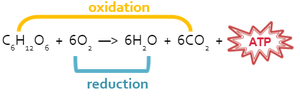
Cellular Respiration:
Generating Heat and Thermoregulation
One byproduct of cellular respiration is heat. Organisms regulate their body temperature in different ways:
Endotherms: Generate heat internally; require high food intake and have high metabolic rates.
Ectotherms: Rely on external sources for heat; have lower metabolic rates.
Homeotherms: Maintain a stable internal body temperature.
Poikilotherms: Body temperature varies with the environment.
Example: Brown bears are endothermic poikilotherms; they generate heat but their body temperature drops during hibernation.

Redox Reactions in Cellular Respiration
Oxidation and Reduction
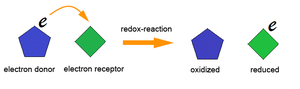
Energy is transferred in cells through the movement of electrons, often as part of hydrogen atoms. The breakdown of food molecules involves redox reactions:
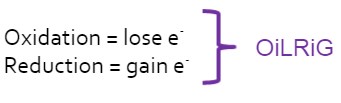
Oxidation: Loss of electrons (often with the loss of hydrogen or gain of oxygen); releases energy; exergonic.
Reduction: Gain of electrons (often with the gain of hydrogen or loss of oxygen); stores energy; endergonic.
Mnemonic: OIL RIG – Oxidation Is Loss, Reduction Is Gain (of electrons).
Electron Carriers
Electron carriers such as NAD+ and FAD shuttle electrons (as hydrogen atoms) during cellular respiration:
NAD+ + 2e- + 2H+ → NADH + H+
FAD + 2e- + 2H+ → FADH2
These carriers help establish a proton (H+) gradient used to generate ATP.
ATP: The Energy Currency of the Cell
Structure and Function of ATP
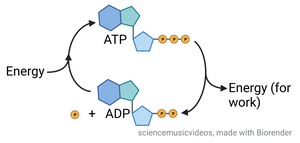
Adenosine triphosphate (ATP) consists of adenine, ribose, and three phosphate groups. The bond between the second and third phosphate is high-energy; breaking it releases energy and forms ADP (adenosine diphosphate).
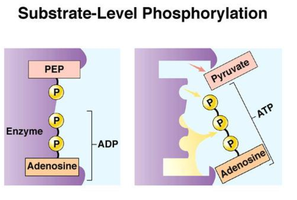
Phosphorylation: The transfer of a phosphate group to another molecule, transferring energy.
ATP Synthase and Chemiosmosis
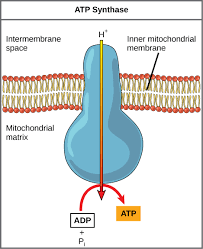
ATP synthase is an enzyme embedded in the inner mitochondrial membrane. It synthesizes ATP from ADP and inorganic phosphate (Pi) as protons flow through it, driven by the proton gradient established by the electron transport chain.
Phosphorylation in Active Transport
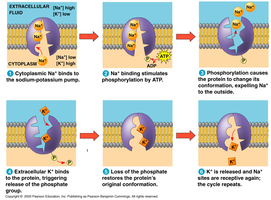
Protein pumps, such as the sodium-potassium pump, use ATP to change shape and transport ions across membranes. This process is essential for maintaining cellular homeostasis.
Cellular Respiration
Mitochondrial Structure
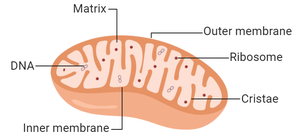
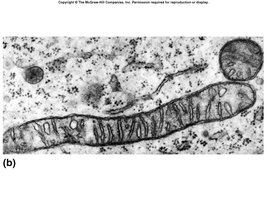
The mitochondrion is the site of aerobic cellular respiration. It has a double membrane:
Outer membrane: Smooth and permeable to small molecules.
Inner membrane: Highly folded into cristae, increasing surface area for reactions.
Matrix: The innermost compartment containing enzymes, DNA, and ribosomes.
Overview of Cellular Respiration Pathway
Cellular respiration is a catabolic pathway that breaks down glucose in a series of steps, transferring electrons to oxygen and generating ATP. The main stages are:
Glycolysis
Pyruvate Oxidation
Krebs (Citric Acid) Cycle
Electron Transport Chain (ETC) and Oxidative Phosphorylation
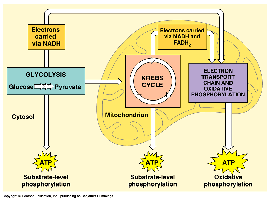
Glycolysis
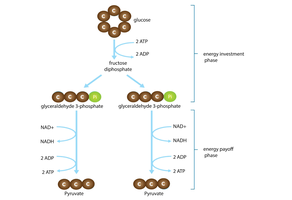
Glycolysis occurs in the cytoplasm and does not require oxygen. It splits one glucose (6C) into two pyruvate (3C) molecules, producing a net gain of 2 ATP and 2 NADH. Glycolysis is believed to be an ancient metabolic pathway.
Energy investment phase: 2 ATP are used to phosphorylate glucose and rearrange it.
Energy payoff phase: 4 ATP and 2 NADH are produced as glucose is converted to pyruvate.
Fermentation vs. Aerobic Respiration
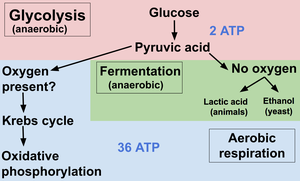
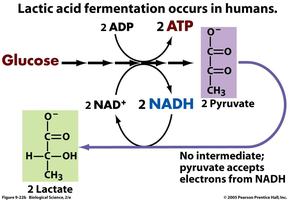
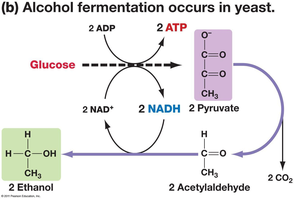
When oxygen is absent, cells regenerate NAD+ via fermentation, allowing glycolysis to continue. Two main types:
Lactic acid fermentation: Pyruvate is reduced to lactate (e.g., in muscle cells, some bacteria).
Alcohol fermentation: Pyruvate is converted to ethanol and CO2 (e.g., in yeast).
Pyruvate Oxidation and Krebs Cycle
Pyruvate Oxidation
If oxygen is present, pyruvate enters the mitochondrial matrix and is converted to acetyl CoA. This process produces CO2, NADH, and a two-carbon acetyl group attached to coenzyme A.
Krebs (Citric Acid) Cycle
The Krebs cycle occurs in the mitochondrial matrix. Acetyl CoA combines with oxaloacetate to form citrate, which is then oxidized in a series of steps. The cycle produces:
2 ATP (by substrate-level phosphorylation)
6 NADH and 2 FADH2 (electron carriers)
CO2 as a waste product
The cycle regenerates oxaloacetate, allowing it to continue as long as acetyl CoA is available.
Electron Transport Chain and Oxidative Phosphorylation
Electron Transport Chain (ETC)
The ETC is located in the inner mitochondrial membrane (cristae). Electrons from NADH and FADH2 are transferred through a series of protein complexes, releasing energy used to pump protons into the intermembrane space, creating a proton gradient.
Oxygen is the final electron acceptor, forming water.
The proton gradient drives ATP synthesis via ATP synthase (chemiosmosis).
Summary Table: Cellular Respiration Pathways
Stage | Location | Oxygen Required? | Main Products |
|---|---|---|---|
Glycolysis | Cytoplasm | No | 2 ATP, 2 NADH, 2 Pyruvate |
Pyruvate Oxidation | Mitochondrial Matrix | Yes | 2 NADH, 2 Acetyl CoA, 2 CO2 |
Krebs Cycle | Mitochondrial Matrix | Yes | 2 ATP, 6 NADH, 2 FADH2, 4 CO2 |
ETC & Oxidative Phosphorylation | Inner Mitochondrial Membrane | Yes | 26-28 ATP, H2O |
Additional info:
All macromolecules (carbohydrates, fats, proteins) can be used as fuel for cellular respiration, entering the pathway at different points.
ATP yield varies depending on the cell type and conditions, but aerobic respiration is much more efficient than fermentation.
