 Indietro
Cellular Energetics: Enzymes, Photosynthesis, and Cellular Respiration
Guida di studio - Note intelligenti
 Appunti personalizzati basati sui tuoi materiali, ampliati con definizioni chiave, esempi e contesto.
Cellular Energetics
Introduction
Cellular energetics encompasses the processes by which living organisms obtain, transform, and utilize energy to maintain life. This includes the roles of enzymes, metabolic pathways, photosynthesis, and cellular respiration. Understanding these processes is fundamental to General Biology.
Enzymes
Structure and Function of Enzymes
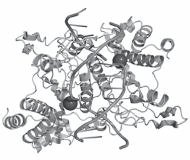
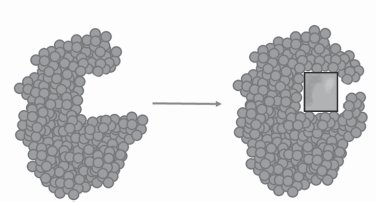
Enzymes are biological catalysts, primarily proteins, that accelerate chemical reactions by lowering activation energy. Their structure is crucial for their function, as the active site must be compatible with the substrate.
Enzyme: A protein that catalyzes biochemical reactions.
Active Site: The region of the enzyme where substrate binding occurs.
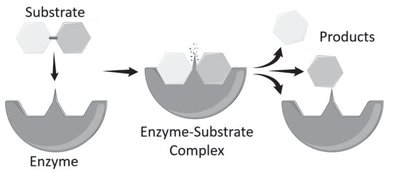
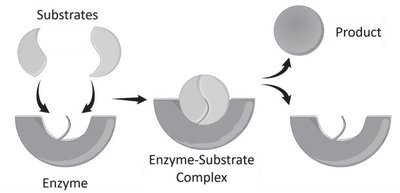
Enzyme-Substrate Complex: Temporary association between enzyme and substrate during catalysis.
Enzyme Naming: Enzymes are often named for their substrate or reaction type, ending in '-ase' (e.g., amylase).
Enzyme Specificity: Only substrates with compatible shape and charge can bind to the active site.
Enzyme Consumption: Enzymes are not consumed in reactions; they are reusable.
Macromolecule Class: Enzymes belong to the protein class of macromolecules.

Enzyme Function and Catalysis
Enzymes speed up reactions by bringing substrates together and orienting them for bond formation or breakage. They lower the activation energy required for reactions to proceed.
Activation Energy: The minimum energy required to start a reaction.
Catalyst: A substance that increases the rate of a reaction without being consumed.
Enzyme Cofactors
Some enzymes require cofactors for activity. Cofactors can be metallic ions or small organic molecules (coenzymes).
Cofactor: Non-protein molecule that assists enzyme function.
Coenzyme: Organic cofactor, often derived from vitamins.
Environmental Impacts on Enzyme Function
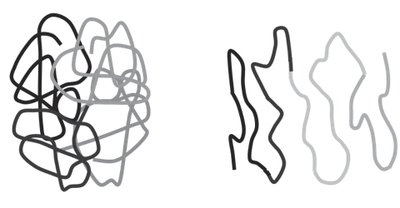
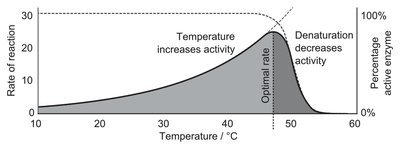
Enzyme activity is affected by environmental factors such as temperature, pH, and chemical environment. Denaturation occurs when these factors disrupt the enzyme's structure, leading to loss of function.
Denaturation: Loss of enzyme structure and function due to environmental changes.
Optimal Conditions: Each enzyme has optimal temperature and pH for activity.
Reversibility: Some denaturation is reversible if the primary structure remains intact.
Substrate Concentration and Enzyme Activity
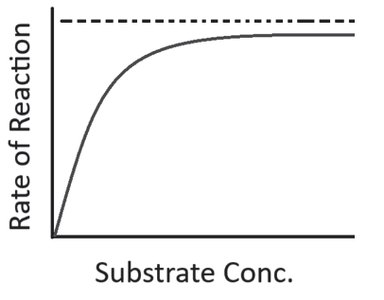
Reaction rate increases with substrate concentration until enzymes become saturated.
Saturation: Maximum rate achieved when all enzyme active sites are occupied.
Enzyme Regulation
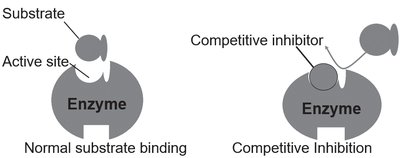
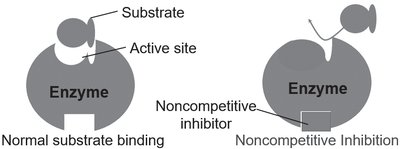
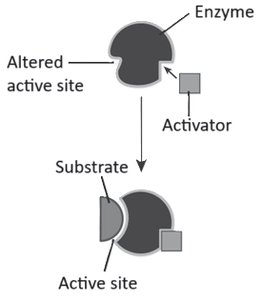
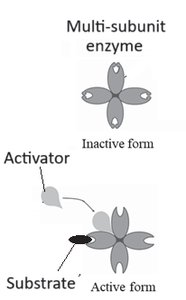
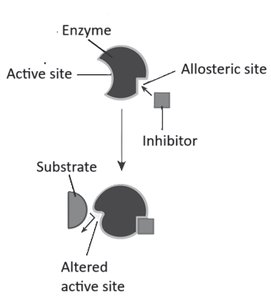
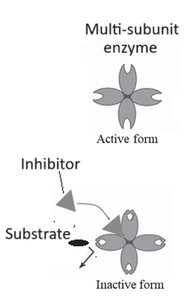
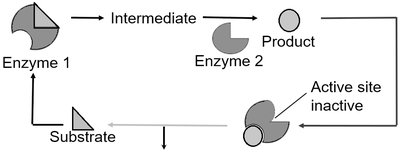
Enzyme activity can be regulated by inhibitors and allosteric modulators.
Competitive Inhibitor: Binds to active site, blocking substrate.
Noncompetitive Inhibitor: Binds to allosteric site, changing enzyme shape.
Allosteric Regulation: Molecules bind to sites other than the active site, affecting activity.
Cellular Energy and Metabolism
Energy in Living Systems
Living systems require constant energy input to maintain order and drive cellular processes. Energy is transferred and transformed through metabolic pathways.
Kinetic Energy: Energy of motion.
Potential Energy: Stored energy.
Chemical Energy: Potential energy in chemical bonds.
Metabolism: Sum of all chemical reactions in a cell.
Metabolic Pathways: Series of linked reactions; product of one is reactant for next.
Catabolic Pathways: Breakdown of complex molecules; releases energy.
Anabolic Pathways: Building complex molecules; requires energy.





Laws of Thermodynamics
Energy transformations in biological systems are governed by the laws of thermodynamics.
First Law: Energy cannot be created or destroyed, only transformed.
Second Law: Energy transformations increase entropy (disorder); some energy is lost as heat.
ATP: The Energy Currency
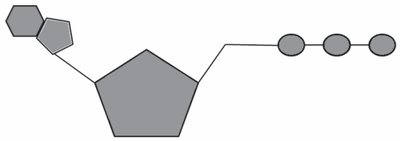
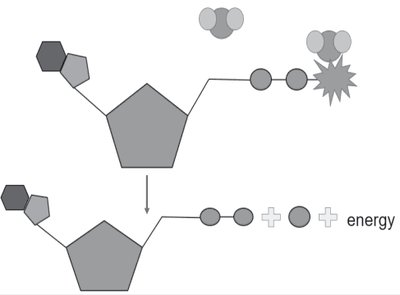
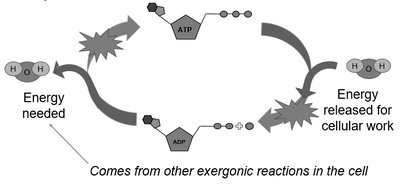
ATP (adenosine triphosphate) is the primary energy carrier in cells. Energy is released by hydrolysis of ATP and used to drive endergonic reactions.
ATP Structure: Adenine, ribose, and three phosphate groups.
ATP Hydrolysis:
Phosphorylation: Transfer of phosphate group to another molecule, making it more reactive.
ATP Cycle: ATP is regenerated from ADP and inorganic phosphate.
Photosynthesis
Overview and Evolution
Photosynthesis is the process by which autotrophs convert light energy into chemical energy, producing glucose and oxygen. It first evolved in prokaryotic organisms, such as cyanobacteria.
Autotrophs: Organisms that produce their own food from simple substances.
Heterotrophs: Organisms that consume other organisms for food.
Primary Producers: Organisms that form the base of the food chain by producing organic molecules.
Chloroplast Structure
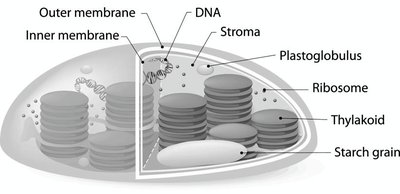
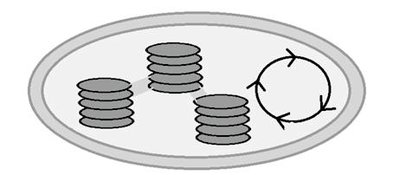
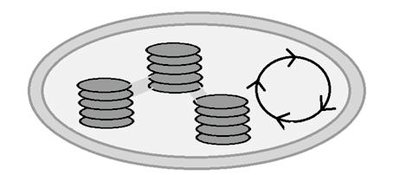
Photosynthesis occurs in the chloroplasts, which contain stroma and thylakoids. Thylakoids are organized into stacks called grana.
Stroma: Fluid inside chloroplast; site of Calvin cycle.
Thylakoid: Membrane-bound sacs containing chlorophyll; site of light reactions.
Grana: Stacks of thylakoids.
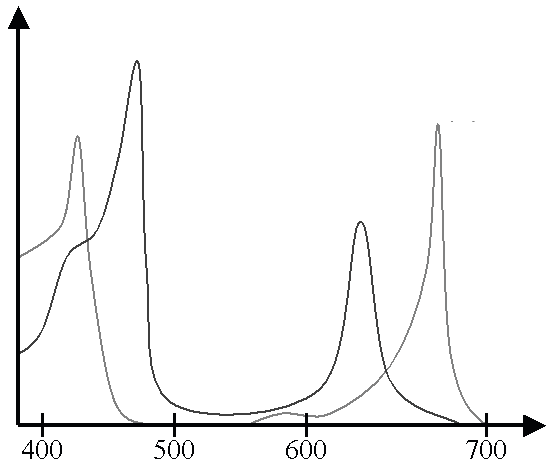
Pigments: Molecules that absorb light energy; chlorophyll a is primary pigment.
Photosynthesis Formula and Redox Process
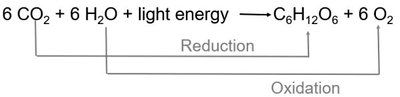
The overall equation for photosynthesis is:
Redox Reactions: Involve oxidation (loss of electrons) and reduction (gain of electrons).
Light and Pigments
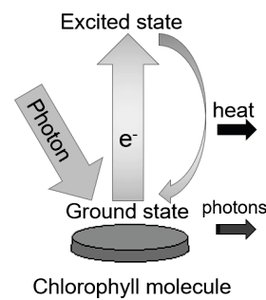
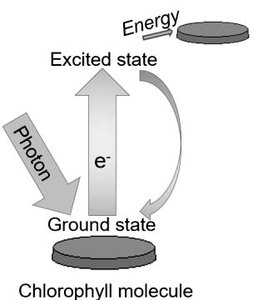
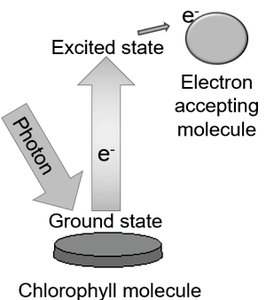
Light is electromagnetic energy, composed of photons. Pigments absorb specific wavelengths, boosting electrons to higher energy levels.
Photon: Particle of light energy.
Wavelength: Distance between crests of waves; determines energy.
Visible Spectrum: 380 nm to 750 nm.
Light Reactions
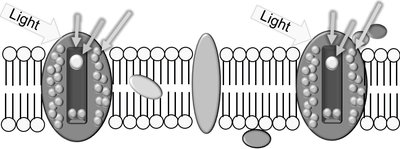
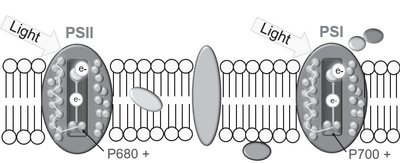
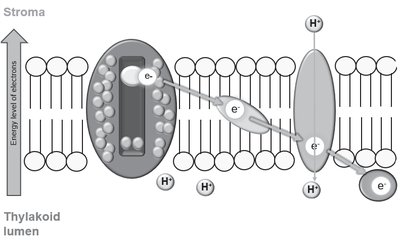
Light reactions occur in the thylakoid membrane, converting solar energy to chemical energy (ATP and NADPH).
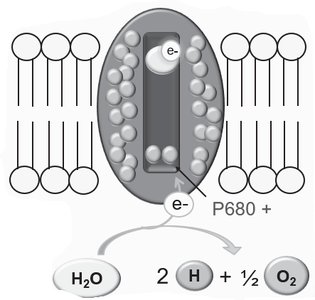
Photosystem II (PSII): Absorbs light at 680 nm; splits water to replace lost electrons.
Photosystem I (PSI): Absorbs light at 700 nm; transfers electrons to NADP+ to form NADPH.
Electron Transport Chain (ETC): Transfers electrons, pumps H+ to create gradient.
Chemiosmosis: H+ flows through ATP synthase, producing ATP.
Calvin Cycle
The Calvin cycle uses ATP and NADPH to produce G3P (a sugar) from CO2. It consists of three phases: carbon fixation, reduction, and regeneration of RuBP.
Carbon Fixation: CO2 is attached to RuBP by rubisco.
Reduction: ATP and NADPH convert 3-PGA to G3P.
Regeneration: G3P is used to regenerate RuBP.
Photorespiration and Plant Adaptations
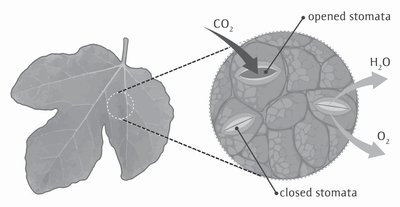
Photorespiration occurs when stomata close, leading to decreased CO2 and increased O2. Rubisco binds O2, wasting energy and producing no sugar. C4 and CAM plants have adaptations to minimize photorespiration.
C4 Plants: Spatial separation of steps; CO2 fixed in mesophyll cells, released in bundle sheath cells.
CAM Plants: Temporal separation; CO2 fixed at night, used during the day.
Cellular Respiration
Overview
Cellular respiration is the process by which cells harvest energy from organic molecules to generate ATP. It consists of glycolysis, pyruvate oxidation, citric acid cycle, and oxidative phosphorylation.
Overall Equation:
Catabolic Pathway: Breaks down glucose, releasing energy.
Stages of Cellular Respiration
Glycolysis: Occurs in cytosol; splits glucose into 2 pyruvate, yields 2 ATP and 2 NADH.
Pyruvate Oxidation: Pyruvate enters mitochondria, oxidized to acetyl-CoA, releases CO2, produces NADH.
Citric Acid Cycle (Krebs Cycle): Occurs in mitochondrial matrix; acetyl-CoA is oxidized, releases CO2, produces ATP, NADH, FADH2.
Oxidative Phosphorylation: ETC and chemiosmosis; electrons transferred to oxygen, H+ gradient drives ATP synthesis.
Electron Transport Chain and Chemiosmosis
The ETC is located in the inner mitochondrial membrane. NADH and FADH2 deliver electrons, which are transferred through a series of carriers, creating a proton gradient. ATP synthase uses this gradient to produce ATP.
Final Electron Acceptor: Oxygen.
ATP Yield: About 26-28 ATP per glucose.
Anaerobic Respiration and Fermentation
In the absence of oxygen, cells can produce ATP via anaerobic respiration or fermentation.
Anaerobic Respiration: Uses other electron acceptors (e.g., sulfate, nitrate).
Fermentation: Extension of glycolysis; recycles NAD+, produces alcohol or lactic acid.
Photosynthesis and Cellular Respiration: The Connection
Interdependence
Photosynthesis and cellular respiration are interconnected. The products of photosynthesis (glucose and oxygen) are used in cellular respiration, while the products of respiration (CO2 and water) are used in photosynthesis. This cycle maintains energy balance and atmospheric gas levels.
Tables
Enzyme Activity at Different pH Levels
This table compares the activity of ptyalin and pepsin at various pH levels, illustrating optimal conditions for each enzyme.
pH | Ptyalin Activity (units/s) | Pepsin Activity (units/s) |
|---|---|---|
1 | 0 | 55 |
2 | 0 | 100 |
5 | 21 | 21 |
7 | 100 | 0 |
8 | 35 | 0 |
10 | 0 | 0 |
Additional info: Optimal pH for ptyalin is 7; for pepsin is 2. This matches their locations: ptyalin in saliva (neutral pH), pepsin in stomach (acidic pH).
Comparison of Photosynthesis and Cellular Respiration
Process | Location | Reactants | Products | Energy Conversion |
|---|---|---|---|---|
Photosynthesis | Chloroplast | CO2, H2O, Light | Glucose, O2 | Light to Chemical |
Cellular Respiration | Mitochondria | Glucose, O2 | CO2, H2O, ATP | Chemical to Usable (ATP) |
Summary
Cellular energetics is central to life, involving the interplay of enzymes, metabolic pathways, photosynthesis, and cellular respiration. These processes are highly regulated and interconnected, ensuring efficient energy transfer and utilization in living systems.
