 Indietro
2 Cellular Metabolism and Energy: ATP, Enzymes, and Biological Work
Guida di studio - Note intelligenti
 Appunti personalizzati basati sui tuoi materiali, ampliati con definizioni chiave, esempi e contesto.
Cellular Metabolism and Energy
Introduction to Metabolism
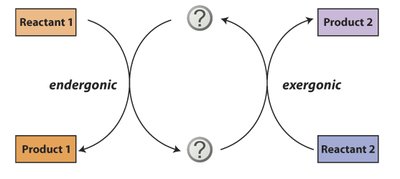
Metabolism encompasses all chemical reactions that occur within living organisms to sustain life. These reactions involve the transformation and transfer of energy, which is essential for cellular processes. Energy exists in various forms, including kinetic, thermal, potential, and chemical energy. The spontaneity of these reactions is determined by changes in free energy, allowing us to classify reactions as exergonic (energy-releasing) or endergonic (energy-consuming).
Exergonic reactions: Release free energy and occur spontaneously.
Endergonic reactions: Require an input of energy and are nonspontaneous.
Cells maintain life by coupling exergonic and endergonic reactions, often using ATP as the energy mediator.
Types of Cellular Work
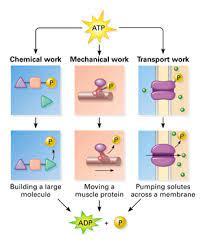
Cells perform three main types of work to maintain homeostasis and support life:
Chemical work: Drives endergonic reactions, such as the synthesis of macromolecules.
Transport work: Moves substances across membranes against their concentration gradients.
Mechanical work: Involves movement, such as muscle contraction or movement of organelles within cells.
ATP: The Energy Currency of the Cell
Structure and Function of ATP
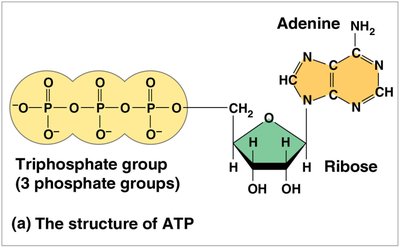
Adenosine triphosphate (ATP) is the primary energy carrier in cells. It consists of three main components: a ribose sugar, an adenine base, and three phosphate groups. The bonds between the phosphate groups, especially the terminal phosphate bond, store significant potential energy.
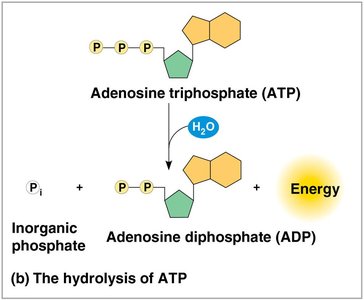
ATP hydrolysis (breaking the terminal phosphate bond) releases energy that can be used for cellular work.
The structure of ATP allows it to efficiently transfer energy to other molecules via phosphorylation.
ATP Hydrolysis and Energy Coupling
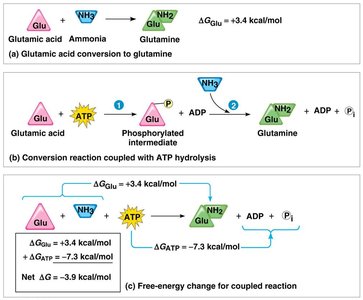
The hydrolysis of ATP to ADP and inorganic phosphate (Pi) is an exergonic reaction that releases free energy. This energy is used to drive endergonic reactions in the cell by transferring a phosphate group to a reactant, forming a phosphorylated intermediate with higher free energy.
ATP + H2O → ADP + Pi + energy
Phosphorylation increases the reactivity of molecules, enabling cellular work.
The ATP Cycle
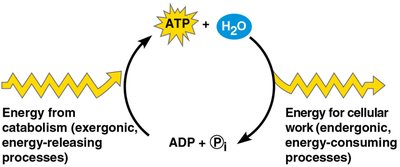
Cells continuously regenerate ATP from ADP and Pi using energy derived from catabolic (exergonic) reactions. This cycle ensures a constant supply of ATP for cellular processes.
Energy from catabolism (exergonic processes) is used to phosphorylate ADP, forming ATP.
ATP hydrolysis provides energy for cellular work (endergonic processes).
Enzymes and Catalysis in Metabolism
Role of Enzymes
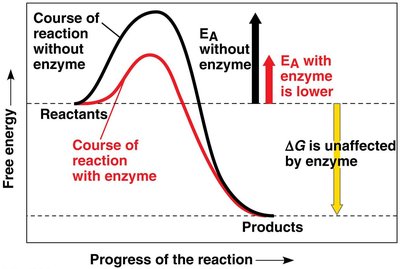
Enzymes are biological catalysts, usually proteins, that speed up chemical reactions without being consumed. They lower the activation energy required for reactions, allowing metabolic processes to occur rapidly and efficiently at physiological temperatures.
Enzymes are highly specific for their substrates.
They facilitate the formation and breaking of chemical bonds by stabilizing the transition state.
Mechanism of Enzyme Action
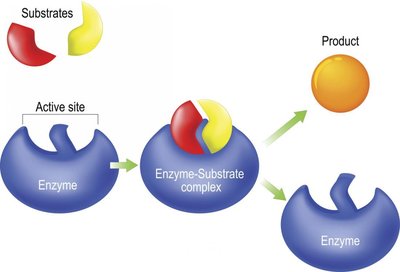
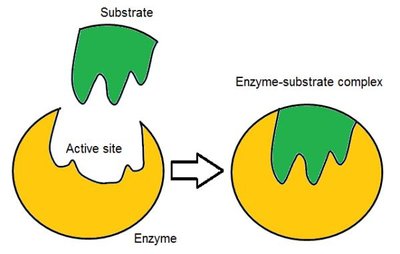
Enzymes bind to their substrates at the active site, forming an enzyme-substrate complex. The active site is highly specific and may change shape to better fit the substrate, a process known as induced fit.
Substrates are held in the active site by weak interactions (e.g., hydrogen bonds).
The enzyme orients substrates, strains bonds, and provides a favorable microenvironment for the reaction.
After the reaction, products are released, and the enzyme is free to catalyze another reaction.
Enzyme Regulation and Saturation
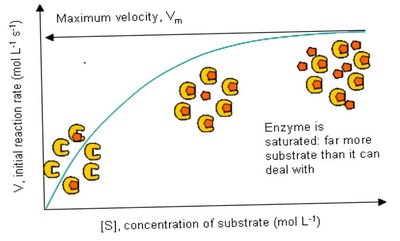
The rate of enzyme-catalyzed reactions depends on substrate concentration. When all enzyme active sites are occupied, the enzyme is saturated, and the reaction rate reaches its maximum. Increasing enzyme concentration can further increase the rate.
Enzyme activity can be regulated by factors such as temperature, pH, and the presence of inhibitors or activators.
Summary Table: Key Concepts in Cellular Metabolism
Concept | Definition | Example |
|---|---|---|
Exergonic Reaction | Releases free energy; spontaneous | Cellular respiration |
Endergonic Reaction | Requires energy input; nonspontaneous | Photosynthesis |
ATP | Main energy currency of the cell | Muscle contraction, active transport |
Enzyme | Biological catalyst that lowers activation energy | Sucrase, DNA polymerase |
Key Equations
ATP Hydrolysis:
Free Energy Change:
Summary
Cells balance endergonic and exergonic reactions through energy coupling, primarily using the ATP cycle.
ATP provides energy for chemical, transport, and mechanical work.
Enzymes catalyze metabolic reactions by lowering activation energy, ensuring efficient cellular function.
