 Indietro
Cellular Metabolism & Enzyme Regulation: Study Notes
Guida di studio - Note intelligenti
 Appunti personalizzati basati sui tuoi materiali, ampliati con definizioni chiave, esempi e contesto.
Cellular Metabolism & Energy
Overview of Cellular Metabolism
Cellular metabolism encompasses all chemical reactions that occur within cells to sustain life. These reactions are organized into metabolic pathways, which are regulated to balance energy input and output. Cells utilize energy coupling to link endergonic (energy-requiring) and exergonic (energy-releasing) reactions, primarily through the ATP cycle. Enzymes play a central role as biological catalysts, enabling cells to perform chemical, transport, and mechanical work efficiently.
Role of Enzymes in Metabolism
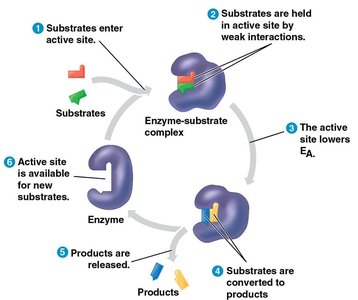
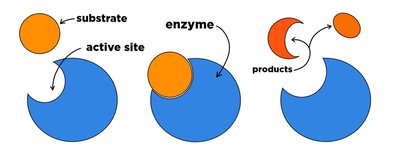
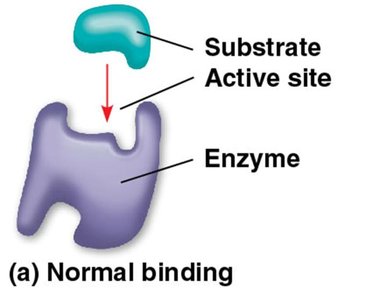
Enzymes are proteins that accelerate biochemical reactions by lowering the activation energy required for reactions to proceed. They bind to specific molecules called substrates at their active sites, forming an enzyme-substrate complex. This interaction facilitates the conversion of substrates into products, after which the enzyme is free to catalyze additional reactions.
Activation Energy (EA): The energy barrier that must be overcome for a reaction to proceed.
Transition State: A high-energy intermediate state during the reaction.
Regulation of Enzyme Activity
Environmental Effects on Enzyme Activity
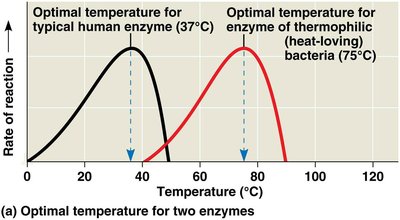
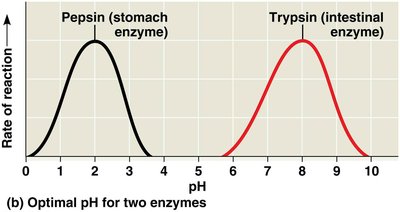
Enzyme activity is highly sensitive to environmental factors such as temperature and pH. Each enzyme has optimal conditions under which it functions most efficiently.
Optimal Temperature: The temperature at which an enzyme's catalytic activity is at its peak. For human enzymes, this is typically 30–40°C, while enzymes from thermophilic bacteria may have much higher optima.
Denaturation: Loss of enzyme structure and function at temperatures above the optimum.
Optimal pH: The pH at which an enzyme exhibits maximum activity. For example, pepsin (stomach enzyme) is most active at acidic pH, while trypsin (intestinal enzyme) is most active at basic pH.
Cofactors and Coenzymes
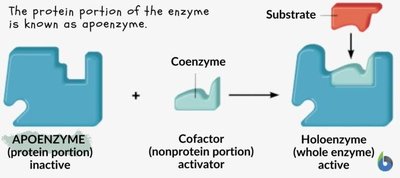
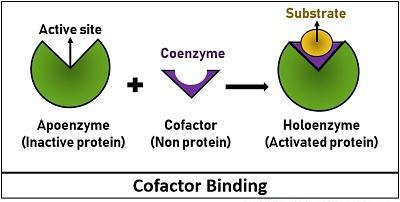
Many enzymes require nonprotein helpers called cofactors to function. Cofactors may be inorganic ions (e.g., Mg2+, Fe2+) or organic molecules known as coenzymes (e.g., NAD+, FAD).
Apoenzyme: The protein portion of an enzyme, inactive without its cofactor.
Holoenzyme: The active enzyme with its cofactor bound.
Enzyme Inhibition
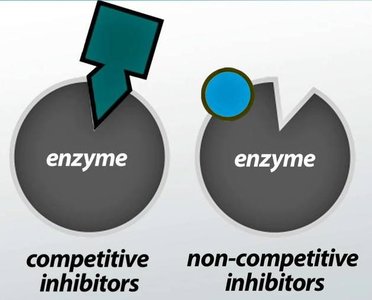
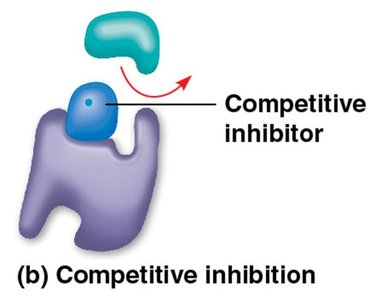
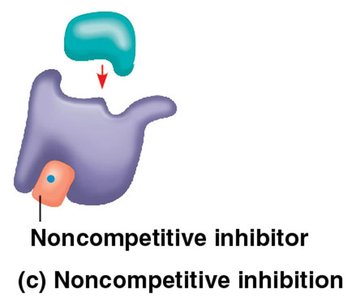
Enzyme activity can be reduced or blocked by inhibitors. Inhibitors may bind reversibly (via weak interactions) or irreversibly (via covalent bonds) to enzymes.
Competitive Inhibitors: Resemble the substrate and compete for binding at the active site, reducing enzyme activity.
Noncompetitive Inhibitors: Bind to a site other than the active site, causing a conformational change that reduces enzyme effectiveness.
Enzyme Evolution and Genetic Regulation
Genetic Basis of Enzyme Function
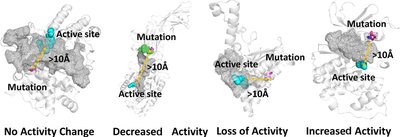
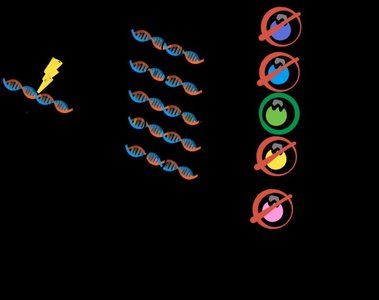
Enzymes are encoded by genes, and mutations in these genes can alter enzyme structure and function. Changes in the amino acid sequence, especially in the active site, can result in new substrate specificity or altered activity.
Mutation: A change in the DNA sequence that may affect enzyme function.
Natural Selection: Beneficial mutations are favored and spread in populations, while harmful mutations are eliminated.
Mechanisms of Enzyme Regulation
Allosteric Regulation
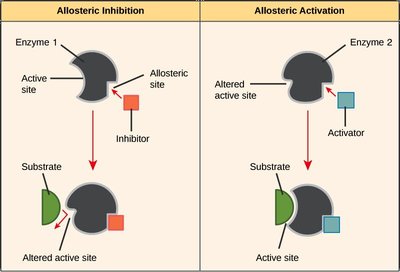
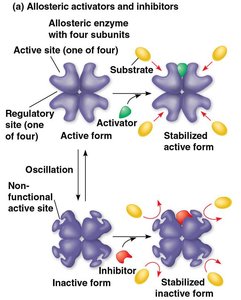
Allosteric regulation involves the binding of regulatory molecules at sites other than the active site, causing conformational changes that affect enzyme activity. Allosteric activators stabilize the active form, while allosteric inhibitors stabilize the inactive form.
Allosteric Site: A site on the enzyme where a regulatory molecule can bind.
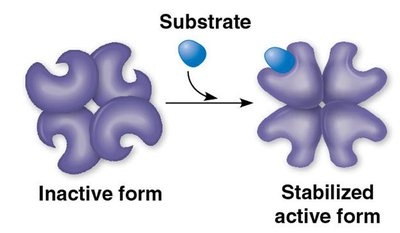
Cooperativity: A form of allosteric regulation where substrate binding to one active site increases the activity at other active sites.
Feedback Inhibition
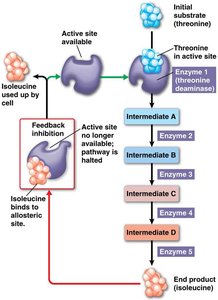
Feedback inhibition is a regulatory mechanism in which the end product of a metabolic pathway inhibits an enzyme involved earlier in the pathway. This prevents the overproduction of the end product and conserves cellular resources.
Example: The amino acid isoleucine inhibits the first enzyme in its biosynthetic pathway when present in sufficient quantities.
Cellular Localization of Enzymes
Compartmentalization
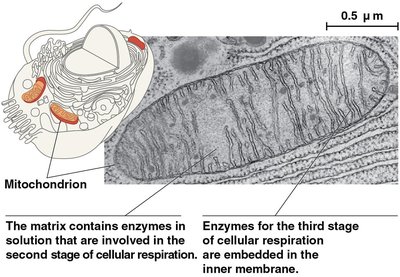
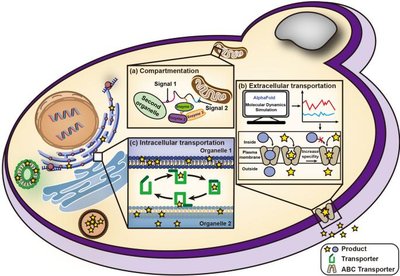
Cells organize enzymes within specific compartments or organelles to optimize metabolic efficiency and regulation. Some enzymes are fixed in certain locations, while others are part of multi-enzyme complexes or structural assemblies.
Example: Enzymes for DNA replication are found in the nucleus; enzymes for cellular respiration are located in mitochondria.
Summary Table: Types of Enzyme Regulation
Regulation Type | Mechanism | Effect | Example |
|---|---|---|---|
Competitive Inhibition | Inhibitor binds active site | Blocks substrate binding | Drugs inhibiting bacterial enzymes |
Noncompetitive Inhibition | Inhibitor binds allosteric site | Alters enzyme shape | Heavy metal poisoning |
Allosteric Regulation | Regulator binds allosteric site | Activates or inhibits enzyme | Phosphofructokinase in glycolysis |
Feedback Inhibition | End product inhibits pathway | Prevents overproduction | Isoleucine biosynthesis |
Key Equations
Activation Energy Lowering:
Michaelis-Menten Equation (for enzyme kinetics):
Summary
Cellular metabolism relies on the precise regulation of enzyme activity to maintain homeostasis and respond to environmental changes. Enzymes are regulated by environmental factors, cofactors, inhibitors, allosteric mechanisms, and feedback inhibition. Compartmentalization within cells further enhances metabolic efficiency and control.
