 Indietro
Cellular Reproduction and the Cell Cycle: Mitosis and Chromosome Dynamics
Guida di studio - Note intelligenti
 Appunti personalizzati basati sui tuoi materiali, ampliati con definizioni chiave, esempi e contesto.
Cellular Reproduction: Growth and Division
Genetic Replication and Cell Division
Cellular growth and development require the production of many cells, each containing identical genetic material. This process is achieved through genetic replication (mitosis) and cell division. - Mitosis is the mechanism by which a single cell divides to produce two genetically identical daughter cells. - This process is essential for growth, repair, and asexual reproduction in multicellular organisms.
Functions of Mitotic Cell Division
Mitotic cell division serves three primary functions:
Replacement of damaged or lost cells
Growth of tissues and organs
Asexual reproduction in certain organisms
Asexual vs. Sexual Reproduction
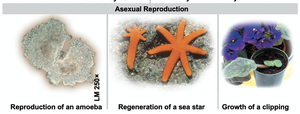
- Asexual reproduction produces clones—genetically identical individuals from a single parent, without fertilization. - Sexual reproduction produces genetically unique offspring, requiring fertilization of an egg by sperm (two parents). Growth of the zygote is achieved by mitosis, while gamete production involves meiosis. 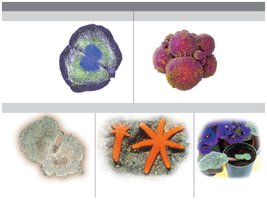
Chromosome Structure and Replication
DNA Packing and Histones
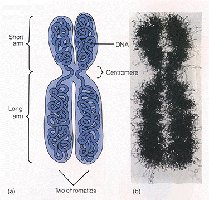
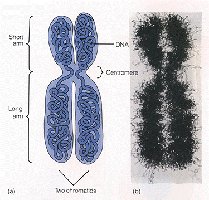
Chromosomes are composed of DNA tightly packed around proteins called histones. This packing allows the long DNA molecules to fit within the cell nucleus and facilitates their replication and distribution during cell division. 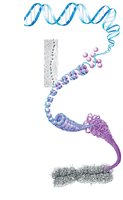
Replication and Distribution of Chromosomes
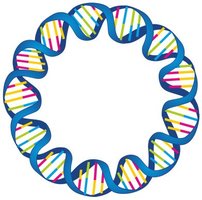
- Each chromosome consists of a double helix of DNA, which is copied precisely from end to end during replication. - Identical copies, called sister chromatids, are held together by a protein structure known as the centromere. - During mitosis, sister chromatids are separated and distributed to daughter cells, ensuring genetic conservation. 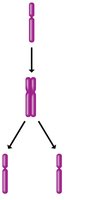
Structure of Replicated Chromosomes
- Replicated chromosomes consist of pairs of sister chromatids with identical DNA sequences. - The centromere is the region where chromatids are tightly associated, and the kinetochore is a protein structure attached to the centromere, essential for chromosome movement during mitosis. 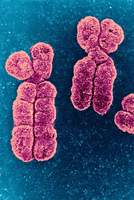
Ploidy and Chromosome Number
Ploidy: Definition and Types
Ploidy refers to the number of sets of chromosomes in a cell. - Diploid (2n): Two sets, one from each parent (humans: 2 × 23 = 46 chromosomes) - Haploid (1n): One set (egg and sperm cells) - Other ploidy levels exist in plants and some animals (e.g., tetraploid, decaploid). 
Human Karyotype and Homologous Chromosomes
- Human chromosomes are organized into pairs called homologous pairs (homologs), each containing the same set of genes. - The 23rd pair determines sex: XX (female), XY (male). Only the father can contribute a Y chromosome. 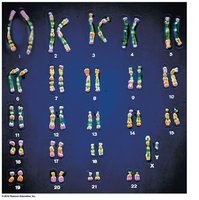
Conservation of Genetic Information
Mechanisms of Conservation
Cells conserve their genetic information during division by:
Precisely replicating DNA
Separating sister chromatids to opposite ends of the cell
Dividing the cell to produce two identical daughter cells
The Cell Cycle
Overview of the Cell Cycle
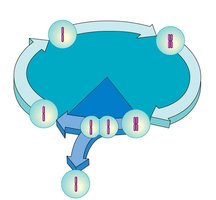
The cell cycle is the ordered sequence of events from a cell's formation to its own division. It consists of two main stages:
Interphase: 90% of the cell's lifetime, includes growth, normal functions, and DNA replication
Mitosis: Division of the nucleus and cytoplasm
Interphase: Breakdown
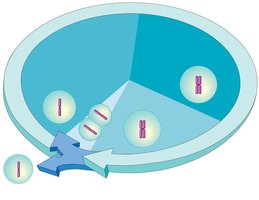
- G1 phase: Cell maintenance and growth; chromosomes are unreplicated - S phase: DNA synthesis; chromosomes replicate - G2 phase: Preparation for mitosis; chromosomes are replicated 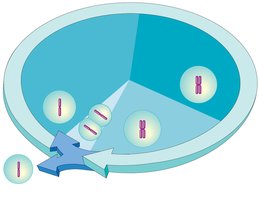
Mitosis: Phases and Mechanisms
Phases of Mitosis
Mitosis is divided into four main phases:
Prophase: Chromosomes condense, spindle fibers form, nuclear envelope disappears
Metaphase: Chromosomes align at the cell's equator, spindle fibers attach to kinetochores
Anaphase: Sister chromatids are separated and pulled to opposite poles
Telophase: Nuclear envelopes reform, chromosomes decondense, cytokinesis begins
Interphase (not part of mitosis)
- DNA is in loose chromatin form and not visible with light microscopy. - Centrosomes replicate and begin building microtubules. 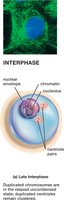
Prophase
- Chromosomes condense and become visible. - Spindle fibers assemble from centrosomes. - Nuclear envelope begins to disappear. 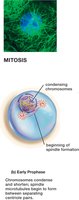
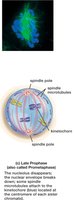
Metaphase
- Spindle fibers attach to kinetochores on centromeres. - Chromosomes align at the cell's equator. 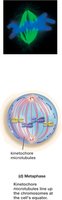
Anaphase
- Spindle fibers push against each other, breaking the centromere. - Sister chromatids are separated and move to opposite sides. 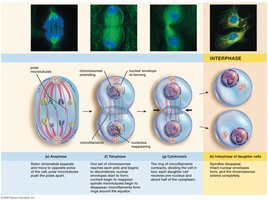
Telophase
- Nuclear envelopes reform around divided chromosomes. - Daughter cells begin to form. - In animal cells, a cleavage furrow forms; in plant cells, a cell plate forms. 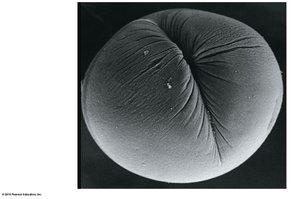
Cytokinesis
- Cytoplasm divides between daughter cells. - In plants, vesicles from the Golgi apparatus form the cell plate, which becomes the new cell wall.
Summary Table: Phases of Mitosis
Phase | Main Events |
|---|---|
Interphase | DNA replication, cell growth, centrosome duplication |
Prophase | Chromosome condensation, spindle formation, nuclear envelope breakdown |
Metaphase | Chromosomes align at equator, spindle fibers attach to kinetochores |
Anaphase | Sister chromatids separate and move to poles |
Telophase | Nuclear envelopes reform, chromosomes decondense, cytokinesis begins |
Result of Mitosis
The result of mitosis is two genetically identical daughter cells, each with a full diploid set of chromosomes. This process ensures the conservation of genetic information and supports growth, repair, and asexual reproduction in multicellular organisms. Key Formula: Chromosome Replication: Cell Cycle: Phases of Mitosis: Summary: Mitosis is a fundamental process for life, enabling organisms to grow, repair tissues, and reproduce asexually, while maintaining genetic stability across generations.
