 Indietro
Cellular Reproduction: Cells from Cells – Study Notes
Guida di studio - Note intelligenti
 Appunti personalizzati basati sui tuoi materiali, ampliati con definizioni chiave, esempi e contesto.
Cellular Reproduction: Cells from Cells
What Cell Reproduction Accomplishes
Cell reproduction is a fundamental process in biology, enabling organisms to grow, repair tissues, and reproduce. It involves the division of a parent cell into two genetically identical daughter cells, ensuring continuity of genetic information.
Production of New Cells: Cell division produces new cells for growth, maintenance, and repair.
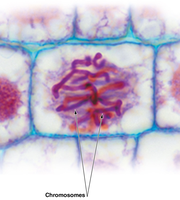
Chromosome Duplication: Before division, chromosomes (structures containing most of the cell’s DNA) are duplicated.
Roles of Cell Division: Replaces damaged or lost cells, permits growth, and allows for reproduction.
Asexual Reproduction: Single-celled organisms divide to produce genetically identical offspring (clones).
Sexual Reproduction: Requires fertilization and involves meiosis to produce gametes (egg and sperm).
Types of Cell Division: Mitosis for growth and maintenance; Meiosis for reproduction.
Eukaryotic Chromosomes
Chromosomes are the carriers of genetic information in eukaryotic cells. They are located in the nucleus and consist of DNA and proteins.
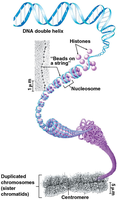
Chromatin: Chromosomes are made of chromatin, a complex of DNA and protein.
Histones: Proteins that help package DNA into nucleosomes.
Nucleosomes: DNA wound around histone molecules, forming the basic unit of chromatin structure.
Chromosome Number: Varies by species; humans have 46 chromosomes.
Duplicating Chromosomes
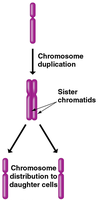
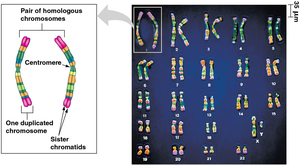
Before cell division, chromosomes are duplicated through DNA replication. Each chromosome then consists of two identical sister chromatids joined at the centromere.
Sister Chromatids: Identical copies of a chromosome joined together.
Centromere: The region where sister chromatids are attached.
Mitosis and Cytokinesis
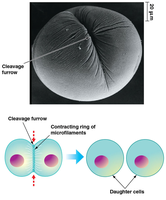
Mitosis is the process by which a cell divides its duplicated chromosomes into two identical sets. Cytokinesis is the division of the cytoplasm, resulting in two daughter cells.
Cleavage Furrow: In animal cells, cytokinesis begins with the formation of a cleavage furrow.
Plant Cell Cytokinesis: In plant cells, a cell plate forms to divide the cell.
Cancer: Disease of the Cell Cycle
Cancer arises when cells lose control over their division, leading to excessive growth and the formation of tumors.
Benign Tumors: Abnormal cells remain at the original site.
Malignant Tumors: Cells invade neighboring tissues and can spread (metastasis).
Cancer Treatments: Surgery, radiation therapy, chemotherapy, and immunotherapy.
Cancer Prevention: Lifestyle changes such as not smoking, exercising, and regular medical checkups.
Meiosis: Basis of Sexual Reproduction
Meiosis is a specialized type of cell division that produces haploid gametes, enabling sexual reproduction and genetic diversity.
Homologous Chromosomes: Chromosome pairs that carry genes for the same traits.
Sex Chromosomes: X and Y chromosomes determine sex in mammals.
Meiosis vs. Mitosis: Meiosis reduces chromosome number by half and introduces genetic variation through crossing over.

Genetic Variation in Meiosis
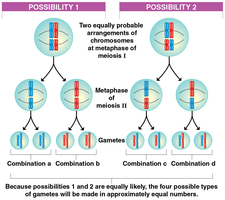
Meiosis produces genetic variation through independent assortment and crossing over, resulting in unique combinations of genes in offspring.
Independent Assortment: Chromosomes are randomly distributed to gametes.
Crossing Over: Exchange of genetic material between homologous chromosomes during prophase I.
Genetic Diversity: For humans, there are about 8 million possible chromosome combinations per gamete.
Chromosome Abnormalities: Down Syndrome
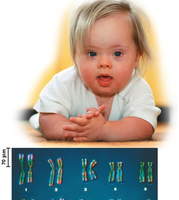
Chromosome number abnormalities can lead to genetic disorders. Down syndrome is caused by an extra chromosome 21 (trisomy 21).
Trisomy 21: Presence of three copies of chromosome 21.
Effects: Most common chromosome abnormality and serious birth defect in the U.S.
Evolutionary Advantages of Sexual Reproduction
Sexual reproduction increases genetic diversity, which can provide evolutionary advantages in changing environments.
Asexual Reproduction: Efficient in stable environments, produces clones.
Sexual Reproduction: Generates varied offspring, reduces harmful gene incidence.
Additional info: Sexual reproduction is favored in environments where adaptability is crucial, while asexual reproduction is advantageous in stable, unchanging conditions.
