 Indietro
Cellular Respiration and ATP: Harvesting Chemical Energy
Guida di studio - Note intelligenti
 Appunti personalizzati basati sui tuoi materiali, ampliati con definizioni chiave, esempi e contesto.
Cellular Respiration: Harvesting Chemical Energy
Overview of Cellular Respiration
Cellular respiration is the process by which cells extract energy from organic molecules, primarily glucose, to produce ATP, the universal energy currency. This process involves a series of enzyme-controlled reactions that occur in both the cytosol and mitochondria of eukaryotic cells.
Stages: Glycolysis, Pyruvate Oxidation, Krebs Cycle, Electron Transport Chain
Location: Glycolysis occurs in the cytosol; subsequent stages occur in the mitochondria.
Purpose: To convert chemical energy in glucose into ATP for cellular work.

ATP: Structure and Function
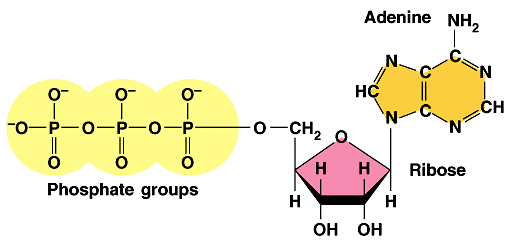
ATP (Adenosine Triphosphate) is a modified nucleotide composed of adenine, ribose, and three phosphate groups. It stores energy in its high-energy phosphate bonds, which can be released to fuel cellular processes.
Structure: Adenine (nitrogenous base), ribose (sugar), three phosphate groups
Energy Storage: Most energy is stored in the bond between the second and third phosphate group.
Instability: The negative charges on phosphate groups make ATP bonds unstable and easily broken, releasing energy.
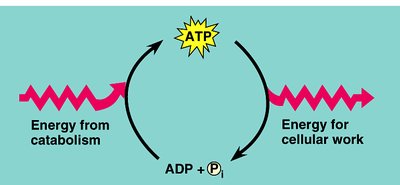
ATP Cycle: Formation and Utilization
ATP is continuously recycled in cells. Energy from catabolic reactions is used to reattach phosphate groups to ADP, forming ATP. ATP is then hydrolyzed to ADP and Pi, releasing energy for cellular work.
Formation: ADP + Pi → ATP (endergonic reaction)
Hydrolysis: ATP → ADP + Pi (exergonic reaction, releases energy)
Equation:
Energy Released:
Cellular Work Powered by ATP
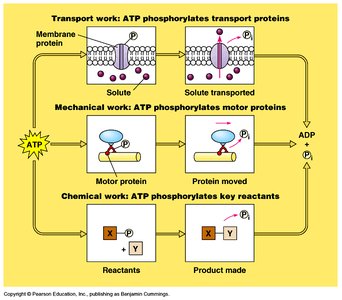
ATP powers three main types of cellular work: transport, mechanical, and chemical. It does so by transferring phosphate groups to target molecules, a process called phosphorylation.
Transport Work: ATP phosphorylates membrane proteins to move solutes across membranes.
Mechanical Work: ATP phosphorylates motor proteins, enabling movement (e.g., muscle contraction).
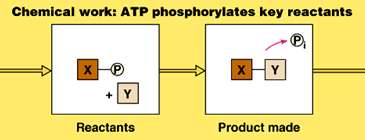
Chemical Work: ATP phosphorylates reactants, driving endergonic reactions (e.g., biosynthesis).
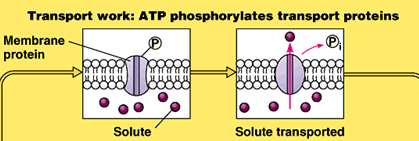
Transport Work Example
ATP phosphorylates transport proteins in the cell membrane, causing conformational changes that allow solute transport.
Mechanical Work Example
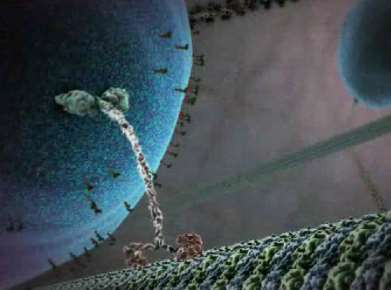
ATP is used by motor proteins to move cellular structures, such as during muscle contraction or vesicle transport.
Chemical Work Example
ATP phosphorylates reactants, making them more reactive and enabling the formation of new products.
ATP Synthase and Chemiosmosis
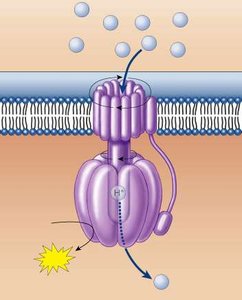
ATP synthase is an enzyme embedded in the inner mitochondrial membrane. It synthesizes ATP as protons (H+) flow down their concentration gradient, a process known as chemiosmosis.
Proton Gradient: Created by the electron transport chain pumping H+ into the intermembrane space.
ATP Synthase: Uses the energy from flowing H+ to bond Pi to ADP, forming ATP.
Equation:
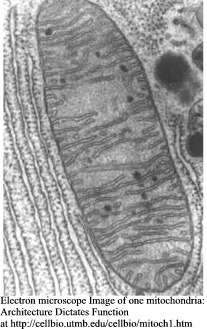
Mitochondria: Structure and Function
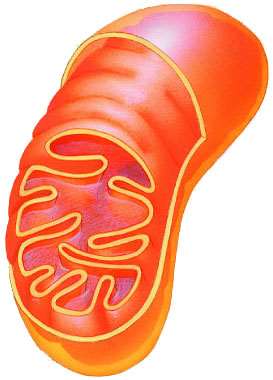
Mitochondria are double-membraned organelles responsible for aerobic respiration. Their highly folded inner membrane (cristae) increases surface area for enzymes involved in ATP production.
Outer Membrane: Smooth, encloses the organelle.
Inner Membrane: Highly folded (cristae), contains electron transport chain and ATP synthase.
Matrix: Fluid-filled space containing enzymes for the Krebs cycle.
Intermembrane Space: Site of proton accumulation during respiration.
Summary Table: ATP Functions
Type of Work | Mechanism | Example |
|---|---|---|
Transport | Phosphorylation of membrane proteins | Active transport of ions |
Mechanical | Phosphorylation of motor proteins | Muscle contraction |
Chemical | Phosphorylation of reactants | Biosynthesis of macromolecules |
Additional info:
ATP is not stored long-term due to its instability; cells store energy in carbohydrates and fats.
ATP is recycled rapidly; a working muscle cell can recycle over 10 million ATP molecules per second.
Feedback inhibition regulates cellular respiration, ensuring balance between energy supply and demand.
