 Indietro
Cellular Respiration and Energy Transformation in Biology
Guida di studio - Note intelligenti
 Appunti personalizzati basati sui tuoi materiali, ampliati con definizioni chiave, esempi e contesto.
Cellular Respiration Overview
Energy Acquisition in Living Organisms
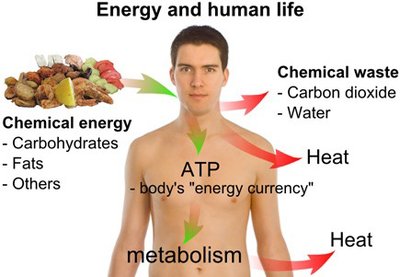
Living organisms obtain most of their energy from glucose, a simple sugar. The process of cellular respiration releases energy by breaking down glucose and other food molecules. Both autotrophs (organisms that produce their own food, such as plants) and heterotrophs (organisms that consume other organisms for food, such as animals) rely on cellular respiration to meet their energy needs. Cellular respiration can be aerobic (requiring oxygen) or anaerobic (not requiring oxygen).
Cellular Respiration vs. Photosynthesis
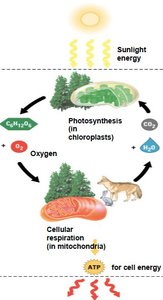
Cellular respiration is an exergonic process, meaning it releases energy. It occurs in multiple steps, allowing energy to be released slowly and efficiently. The energy released is used to produce ATP, the cell's energy currency. In contrast, photosynthesis is an endergonic process, absorbing energy from sunlight to convert energy-poor reactants (CO2 and H2O) into energy-rich products (glucose).
Cellular Respiration: Reactants and Products
Fuel Molecules and Overall Equation
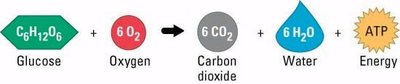
Carbohydrates, fats, and proteins can all serve as fuel for cellular respiration, but glucose is most commonly used. The overall equation for cellular respiration is:
Energy-Storing Molecules
ATP and Other Energy Carriers
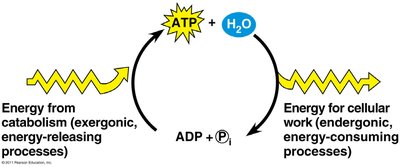
The main energy-storing molecules in cells are ATP (adenosine triphosphate), NADPH, NADH (from NAD+), FADH (from FAD+), and FADH2. ATP supplies most of the energy for cellular metabolism and releases energy when converted to ADP (adenosine diphosphate) via hydrolysis:

ATP: A Rechargeable Battery
ATP can be regenerated after being used, making it a "rechargeable battery" for the cell. The cycle of ATP hydrolysis and regeneration is essential for maintaining cellular energy balance.
Types of Cellular Work
Three Main Types of Cellular Work
Cells use ATP to perform three main types of work:
Chemical work: Driving endergonic reactions (e.g., synthesis of macromolecules)
Mechanical work: Moving cellular structures (e.g., muscle contraction, flagella movement)
Transport work: Pumping substances across membranes (e.g., active transport)
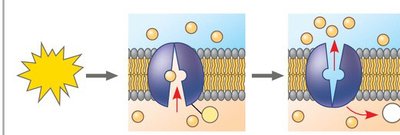
Energy Storage in Food Molecules
Electrons and Redox Reactions
Most of the energy in food molecules like glucose is stored in their electrons. During cellular respiration, electrons are transferred from glucose to oxygen through a series of oxidation-reduction (redox) reactions. These reactions release energy that is used to synthesize ATP.
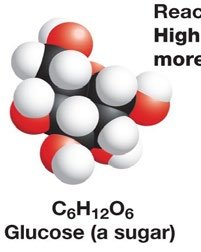
Oxidation and Reduction
Definitions and Coupling
Oxidation is the process of losing electrons (often a whole hydrogen atom), while reduction is the process of gaining electrons. These processes always occur together in redox reactions:
Oxidation: Lose Electrons = Oxidation (LEO)
Reduction: Gain Electrons = Reduction (GER)


Redox Reactions in Cellular Respiration
Redox reactions are always coupled: one molecule donates electrons (electron donor), and another accepts them (electron acceptor). In cellular respiration, glucose is oxidized (loses electrons), and oxygen is reduced (gains electrons).
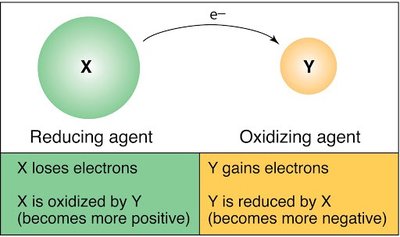
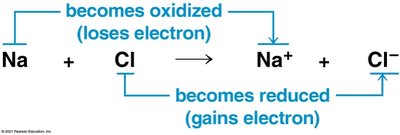
Electron Carriers and Energy Harvesting
NAD and FAD as Electron Carriers
NAD+ and FAD+ are electron carriers that can easily pick up and release electrons. When reduced, they form NADH and FADH2, which contain significant potential energy. These carriers are derived from B vitamins and play a crucial role in capturing energy from electrons "falling" from organic fuels to oxygen.
Summary Table: Cellular Respiration vs. Photosynthesis
Process | Reactants | Products | Energy Flow |
|---|---|---|---|
Cellular Respiration | Glucose, O2 | CO2, H2O, ATP | Energy released from glucose |
Photosynthesis | CO2, H2O, sunlight | Glucose, O2 | Energy absorbed from sunlight |
Key Vocabulary
Cellular Respiration
Photosynthesis
Oxidation
Reduction
Redox
Electron carriers
ATP = adenosine triphosphate
Anaerobic
Aerobic
Study Guide Questions
Name the various energy storing molecules in cells.
Write the overall equation for cellular respiration versus photosynthesis.
Contrast cellular respiration and photosynthesis. Which type of cells can perform each?
Why do we eat? Name 3 cellular uses for ATP.
Explain how redox reactions are involved in energy exchanges. Identify molecules that have been oxidized or reduced.
Explain how redox reactions drive cellular respiration.
Additional info: Expanded explanations and context were added to clarify the processes and vocabulary for exam preparation.
