 Indietro
Cellular Respiration and Energy Transformation in Living Systems
Guida di studio - Note intelligenti
 Appunti personalizzati basati sui tuoi materiali, ampliati con definizioni chiave, esempi e contesto.
Energy in Living Systems
Photosynthesis and Energy Transfer
Photosynthesis is the process by which plants convert light energy from the sun into chemical energy stored in glucose. This stored energy can be transferred to consumers when they eat plants. Cellular respiration is the process by which organisms release chemical energy from sugars and other carbon-based molecules to produce ATP, the main energy currency of cells, when oxygen is present.
Photosynthesis: Converts solar energy to chemical energy in glucose.
Cellular Respiration: Releases energy from glucose to produce ATP.
Energy Transfer: Energy not used by plants can be utilized by consumers.
Cellular Respiration
Overview and Equation
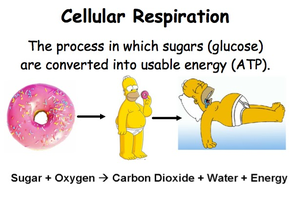
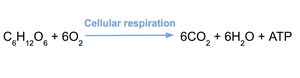
Cellular respiration is the process in which sugars (glucose) are converted into usable energy (ATP) in cells. It involves the breakdown of glucose in the presence of oxygen, resulting in the production of carbon dioxide, water, and energy.
Key Reactants: Glucose and Oxygen
Key Products: Carbon Dioxide, Water, and ATP
General Equation:
Exothermic Reaction in Cellular Respiration
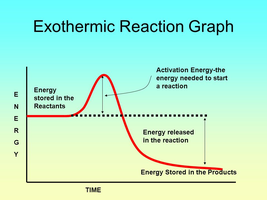
Cellular respiration is an exothermic reaction, meaning it releases energy. The process requires activation energy to start, but ultimately releases more energy than is stored in the reactants.
Activation Energy: Energy needed to initiate the reaction.
Energy Release: Energy is released as ATP and heat.
Comparison: Cellular Respiration vs. Photosynthesis
Key Differences and Similarities
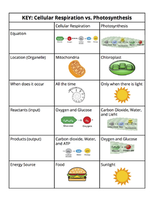
Cellular respiration and photosynthesis are complementary processes. While photosynthesis stores energy, cellular respiration releases it. Both processes involve the transformation of energy and the cycling of key molecules.
Aspect | Cellular Respiration | Photosynthesis |
|---|---|---|
Equation | Glucose + Oxygen → Carbon Dioxide + Water + ATP | Carbon Dioxide + Water + Sunlight → Oxygen + Glucose |
Location | Mitochondria | Chloroplast |
When Occurs | All the time | Only when there is light |
Reactants | Oxygen and Glucose | Carbon Dioxide, Water, and Sunlight |
Products | Carbon Dioxide, Water, and ATP | Oxygen and Glucose |
Energy Source | Food | Sunlight |
Stages of Cellular Respiration
Glycolysis, Krebs Cycle, and Electron Transport Chain
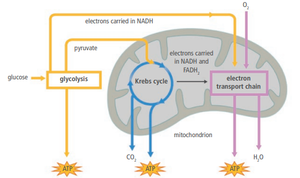
Cellular respiration occurs in three main stages: glycolysis, the Krebs cycle, and the electron transport chain. Each stage plays a critical role in the production of ATP.
Glycolysis: Breaks down glucose into pyruvate, producing ATP and NADH.
Krebs Cycle: Further breaks down pyruvate, releasing CO2, and producing NADH, FADH2, and ATP.
Electron Transport Chain: Uses electrons from NADH and FADH2 to produce a large amount of ATP and water.
Krebs Cycle (Citric Acid Cycle)
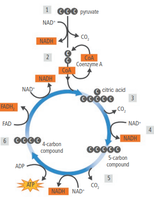
The Krebs cycle is a series of reactions that further breaks down pyruvate from glycolysis. It produces electron carriers (NADH and FADH2), ATP, and releases CO2 as a waste product.
Pyruvate is broken down into a 2-carbon molecule and CO2.
Coenzyme A is added, forming an intermediate molecule.
The 2-carbon molecule joins a 4-carbon molecule to form citric acid (6-carbon).
Citric acid is broken down, releasing NADH and CO2.
The 5-carbon molecule is broken down, forming NADH, ATP, and CO2.
The 4-carbon molecule is rearranged, producing NADH and FADH2.
Electron Transport Chain
The electron transport chain is the final stage of cellular respiration. It uses high-energy electrons from NADH and FADH2 to pump H+ ions across the mitochondrial membrane, creating a gradient. ATP synthase uses this gradient to produce ATP. Oxygen acts as the final electron acceptor, forming water.
Electron Transfer: Proteins transfer electrons from NADH and FADH2.
H+ Gradient: Energy is used to pump H+ ions, creating a gradient.
ATP Production: ATP synthase produces ATP as H+ ions flow back.
Water Formation: Oxygen combines with electrons and H+ to form water.
Fermentation and Anaerobic Respiration
Function and Importance
Fermentation allows cells to continue producing ATP when oxygen is not available. It does not produce ATP directly, but recycles NAD+ for glycolysis. Lactic acid is a common waste product of fermentation. Some organisms use anaerobic respiration and can survive in environments lacking oxygen.
Fermentation: Enables glycolysis to continue without oxygen.
Lactic Acid: Produced as a waste product in animal cells.
Anaerobic Respiration: Used by organisms in oxygen-poor environments.
Mitochondria
Role in Cellular Respiration
The mitochondrion is the organelle where most stages of cellular respiration occur, including the Krebs cycle and electron transport chain. It is often referred to as the "powerhouse" of the cell due to its role in energy production.
Location: Mitochondria in eukaryotic cells.
Function: Site of ATP production.
Summary Table: Cellular Respiration Stages
Stage | Main Events | Location | ATP Yield |
|---|---|---|---|
Glycolysis | Glucose → Pyruvate, NADH produced | Cytoplasm | 2 ATP |
Krebs Cycle | Pyruvate → CO2, NADH, FADH2, ATP produced | Mitochondrial matrix | 2 ATP |
Electron Transport Chain | Electrons → ATP, Water produced | Inner mitochondrial membrane | ~34 ATP |
Additional info: The total ATP yield from cellular respiration is typically about 36-38 ATP per glucose molecule, depending on cell type and conditions.
