 Indietro
Cellular Respiration and Fermentation: A Comprehensive Study Guide
Guida di studio - Note intelligenti
 Appunti personalizzati basati sui tuoi materiali, ampliati con definizioni chiave, esempi e contesto.
Cellular Respiration and Fermentation
Overview of Cellular Respiration
Cellular respiration is a fundamental metabolic process by which cells extract energy from organic molecules, primarily glucose, to produce ATP, the energy currency of the cell. This process occurs in the mitochondria of both plant and animal cells and involves a series of redox reactions. - Energy Flow: Energy flows in one direction, while chemicals are recycled. - ATP Production: ATP powers most cellular work. - Waste Products: Carbon dioxide, water, and heat are generated as waste. 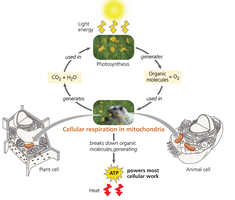
What is Respiration?
Respiration refers to the oxidation of glucose and other organic molecules to release energy. It is an exergonic process, meaning it releases energy, and involves multistep reactions catalyzed by enzymes. - Redox Reactions: Oxidation is loss of electrons; reduction is gain of electrons (OIL RIG). - Gas Exchange: Inhaling O2 and exhaling CO2 are part of the process. - ATP: Produced during cellular respiration.
Redox Reactions in Cellular Respiration
Redox reactions are central to cellular respiration, involving the transfer of electrons between molecules. - Oxidizing Agent: Electron acceptor, becomes reduced. - Reducing Agent: Electron donor, becomes oxidized. 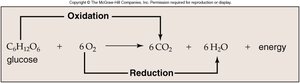
NAD and FAD: Electron Carriers
NAD (nicotinamide adenine dinucleotide) and FAD (flavin adenine dinucleotide) are coenzymes used by enzymes during the oxidation of glucose. - NAD+: Oxidized form, acts as an electron carrier. - NADH: Reduced form, carries electrons to the electron transport chain. - FAD: Sometimes used instead of NAD. 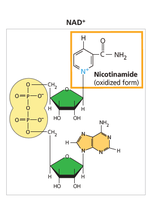
Stages of Cellular Respiration
Three Main Stages
Cellular respiration consists of three main stages: glycolysis, pyruvate oxidation and the citric acid cycle, and oxidative phosphorylation. 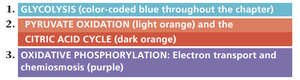
Glycolysis: Harvesting Energy from Glucose
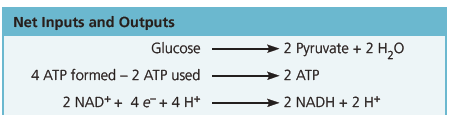
Glycolysis occurs in the cytosol and involves splitting glucose (a 6-carbon sugar) into two 3-carbon pyruvate molecules. - Inputs: Glucose, 2 ATP, 2 NAD+ - Outputs: 2 pyruvate, 4 ATP (net gain 2 ATP), 2 NADH - Location: Cytosol - Substrate-Level Phosphorylation: ATP is produced directly by transferring a phosphate group from a substrate to ADP. 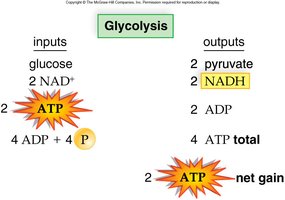
Substrate-Level vs. Oxidative Phosphorylation
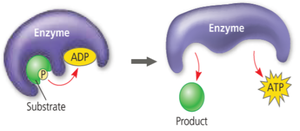
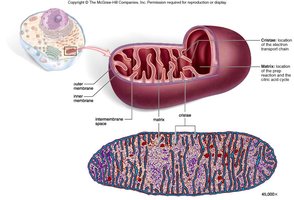
- Substrate-Level Phosphorylation: Enzyme transfers a phosphate group from a substrate to ADP, forming ATP. Occurs in glycolysis and the citric acid cycle. 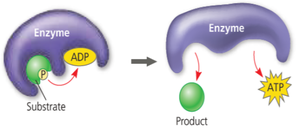 - Oxidative Phosphorylation: ATP is produced by the electron transport chain and chemiosmosis, powered by redox reactions. Occurs in the inner mitochondrial membrane (cristae).
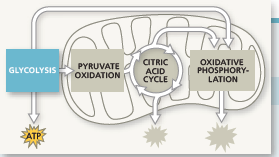
Aerobic Respiration: Pyruvate Oxidation and Citric Acid Cycle
Pyruvate Oxidation (Link Reaction)
Pyruvate is transported into the mitochondrial matrix and oxidized to acetyl CoA, producing CO2 and NADH. This reaction links glycolysis to the citric acid cycle. 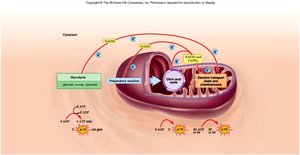

The Citric Acid Cycle (Krebs Cycle)
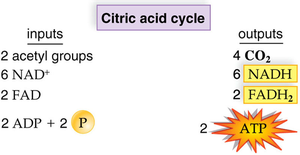
The citric acid cycle occurs in the mitochondrial matrix and completes the oxidation of glucose derivatives. It is a cyclic metabolic pathway that generates NADH, FADH2, ATP, and CO2. - Inputs: 2 acetyl groups, 6 NAD+, 2 FAD, 2 ADP + 2 P - Outputs: 4 CO2, 6 NADH, 2 FADH2, 2 ATP 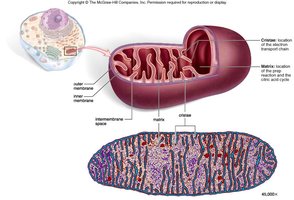
Oxidative Phosphorylation: Electron Transport Chain and Chemiosmosis
Electron Transport Chain (ETC)
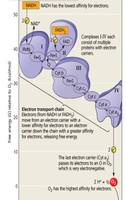
The ETC is a series of electron carrier proteins located in the inner mitochondrial membrane (cristae). Electrons from NADH and FADH2 are transferred through the chain, ultimately reducing oxygen to water. - Consumes Oxygen: O2 is the final electron acceptor. - Produces: ATP and H2O 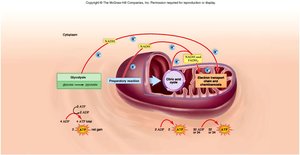
Chemiosmosis: Energy Coupling Mechanism
Chemiosmosis couples the ETC to ATP synthesis. As electrons pass down the ETC, protons (H+) are pumped into the intermembrane space, creating a proton gradient. Protons flow back through ATP synthase, driving ATP production. - ATP Synthase: Enzyme that synthesizes ATP as protons flow through it. - O2: Final electron acceptor. 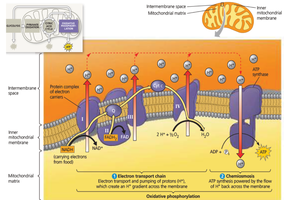
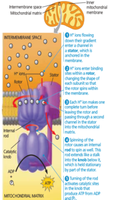
ATP Yield from Cellular Respiration
The total ATP yield from one glucose molecule is about 30 to 32 ATP, distributed as follows: - Glycolysis: 2 ATP - Krebs Cycle: 2 ATP - Oxidative Phosphorylation: 28 ATP 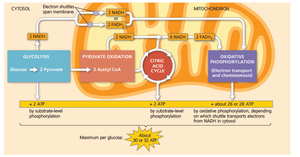
Anaerobic Respiration and Fermentation
Fermentation: ATP Production Without Oxygen
Fermentation enables cells to produce ATP without oxygen. Only glycolysis occurs, yielding a net gain of 2 ATP. Mitochondria, pyruvate oxidation, citric acid cycle, and ETC are not involved. 
Types of Fermentation
- Alcoholic Fermentation: Pyruvate is converted to ethanol and CO2, regenerating NAD+. Used by prokaryotes and yeast in brewing, baking, and winemaking. - Lactic Acid Fermentation: Pyruvate is converted to lactic acid, regenerating NAD+. Occurs in muscle cells, certain fungi, and bacteria (used in dairy industry for cheese and yogurt).
Pros and Cons of Fermentation
- Pros: Oxygen is not necessary. - Cons: Very low ATP production.
Metabolic Pathways and Regulation
Versatility of Catabolism
Glycolysis and the citric acid cycle connect to many other metabolic pathways, allowing the catabolism of carbohydrates, proteins, and fats.
Biosynthesis (Anabolism)
Cells can use intermediates from glycolysis and the citric acid cycle for biosynthesis of macromolecules.
Regulation of Cellular Respiration
Cellular respiration is controlled by negative feedback mechanisms, such as the regulation of phosphofructokinase, to prevent wasteful overproduction of ATP.
Summary Table: Stages of Cellular Respiration
Stage | Main Location | ATP Yield | Key Products |
|---|---|---|---|
Glycolysis | Cytosol | 2 ATP | 2 NADH, 2 Pyruvate |
Pyruvate Oxidation | Mitochondrial Matrix | 0 ATP | 2 NADH, 2 Acetyl CoA, 2 CO2 |
Citric Acid Cycle | Mitochondrial Matrix | 2 ATP | 6 NADH, 2 FADH2, 4 CO2 |
Oxidative Phosphorylation | Inner Mitochondrial Membrane | ~28 ATP | H2O |
Key Equations
Overall Cellular Respiration Equation: Glycolysis Net Reaction: Citric Acid Cycle Net Reaction: ATP Yield Summary: Fermentation (Alcoholic): Fermentation (Lactic Acid): Additional info: Some details, such as the regulation of phosphofructokinase and the versatility of metabolic pathways, were expanded for academic completeness.
