 Indietro
Cellular Respiration and Fermentation: A Comprehensive Study Guide
Guida di studio - Note intelligenti
 Appunti personalizzati basati sui tuoi materiali, ampliati con definizioni chiave, esempi e contesto.
Cellular Respiration and Fermentation
Catabolism and Anabolism: Coupling Reactions
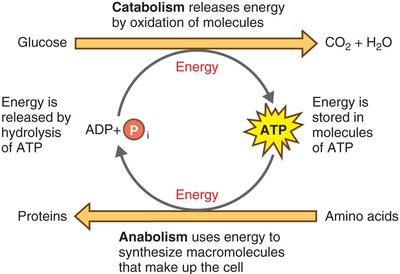
Cellular metabolism involves both catabolic and anabolic processes, which are tightly coupled to ensure efficient energy flow within the cell. Catabolic reactions break down molecules and release energy, while anabolic reactions use this energy to build macromolecules. ATP acts as the energy bridge between these processes.
Catabolism: Releases energy by oxidation of molecules (e.g., glucose to CO2 and H2O).
Anabolism: Uses energy to synthesize macromolecules (e.g., proteins from amino acids).
ATP: Stores energy in high-energy phosphate bonds; hydrolysis releases energy for cellular work.
ATP: Structure and Function
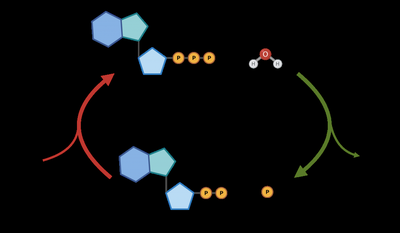
ATP (adenosine triphosphate) is the primary energy currency of the cell. It stores energy in its phosphate bonds, which can be released during hydrolysis to power endergonic reactions.
ATP: High-energy molecule; energy stored in phosphate bonds.
ADP: Lower-energy molecule; formed after ATP hydrolysis.
Cells regenerate ATP rapidly, consuming millions of molecules per second.
Coupling Endergonic Reactions with ATP Hydrolysis
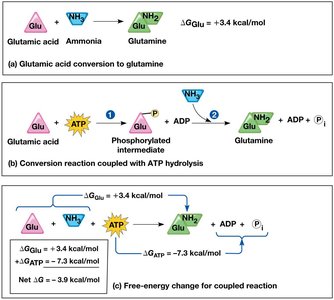
Endergonic reactions (requiring energy input) are made spontaneous by coupling them with ATP hydrolysis. The net free energy change must be negative for the coupled process to proceed.
Coupling: ATP hydrolysis provides energy to drive non-spontaneous reactions.
Example: Glutamic acid conversion to glutamine is coupled with ATP hydrolysis to make the reaction energetically favorable.
Regenerating ATP: Substrate-Level and Oxidative Phosphorylation
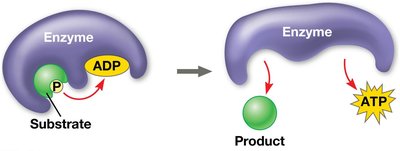
ATP is regenerated by two main methods: substrate-level phosphorylation and oxidative phosphorylation.
Substrate-level phosphorylation: Enzyme transfers a phosphate group from a substrate to ADP, forming ATP.
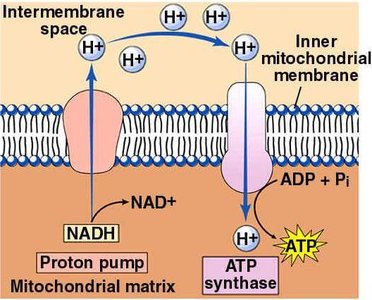
Oxidative phosphorylation: ATP is synthesized by ATP synthase using energy from electron transport and chemiosmosis.
Oxidation-Reduction (Redox) Reactions
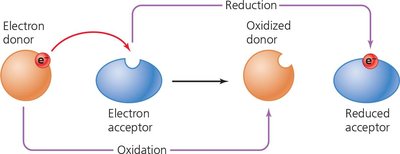
Redox reactions involve the transfer of electrons between molecules. Oxidation is the loss of electrons, while reduction is the gain of electrons. Electron carriers like NAD+ and FAD cycle between oxidized and reduced forms, shuttling electrons during cellular respiration.
Oxidation: Removal of electrons.
Reduction: Addition of electrons.
Electron carriers: NAD+ ⇌ NADH, FAD ⇌ FADH2, NADP+ ⇌ NADPH.
Electron Energy Levels in Molecules
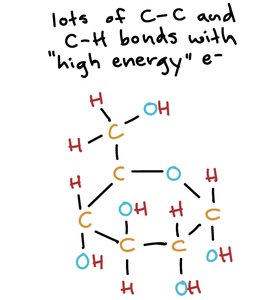
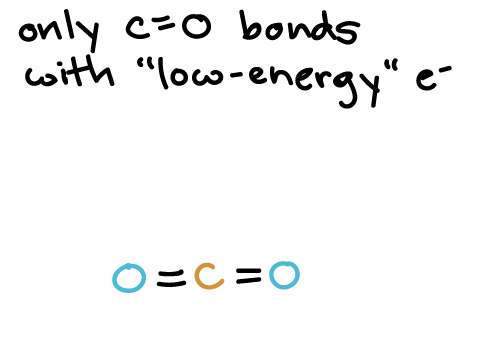
Organic molecules like glucose contain high-energy electrons, while inorganic molecules like CO2 and O2 have low-energy electrons. The transfer of electrons from high to low energy states releases energy for ATP production.
High-energy electrons: Found in C–C and C–H bonds (e.g., glucose).
Low-energy electrons: Found in C=O bonds (e.g., CO2).
Electron Transport Chains
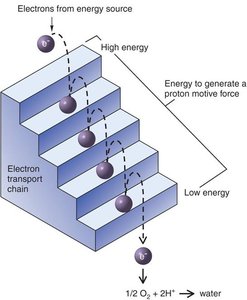
Electron transport chains transfer high-energy electrons to lower energy states, harnessing the released energy for ATP production. The final electron acceptor in aerobic respiration is oxygen.
Electron transport chain: Series of redox reactions; electrons lose energy stepwise.
Final electron acceptor: Oxygen in aerobic respiration.
Overview of Cellular Respiration
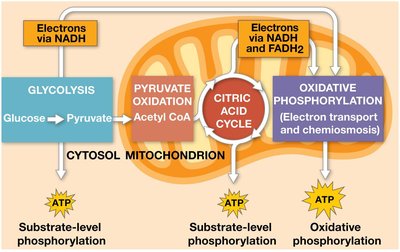
Cellular respiration is the process by which cells extract energy from glucose. It consists of four main stages: glycolysis, pyruvate oxidation, citric acid cycle, and oxidative phosphorylation.
Aerobic respiration equation:
Stages: Glycolysis, Pyruvate Oxidation, Citric Acid Cycle, Oxidative Phosphorylation.
Glycolysis
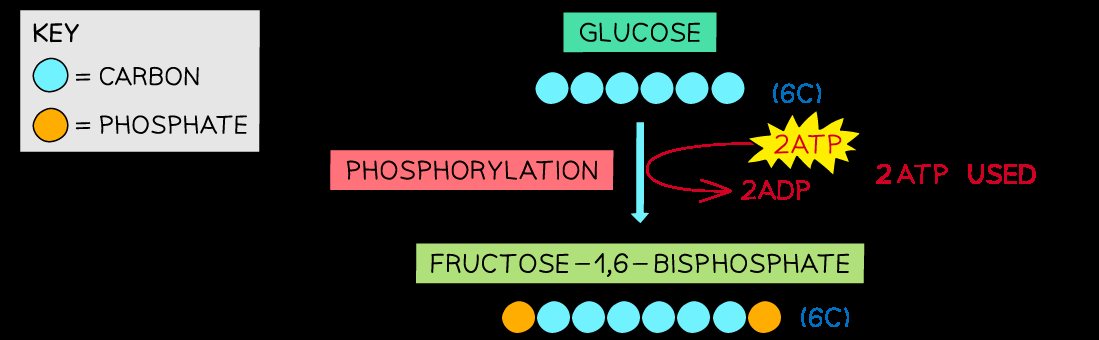
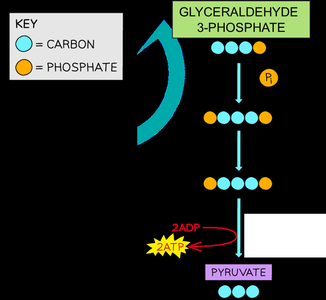
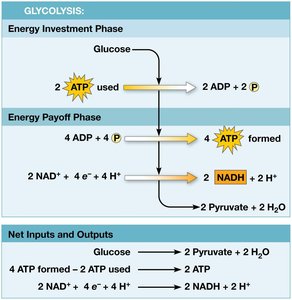
Glycolysis is the first stage of cellular respiration, occurring in the cytosol. It breaks down glucose into two pyruvate molecules through three stages: energy investment, cleavage, and energy payoff.
Energy Investment: 2 ATP used to phosphorylate glucose.
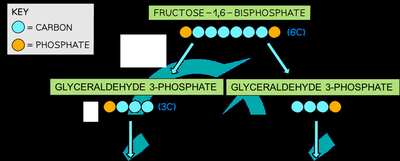
Cleavage: 6-carbon fructose-1,6-bisphosphate split into two 3-carbon G3P molecules.
Energy Payoff: Each G3P converted to pyruvate, producing 2 ATP and 1 NADH per G3P.
Net yield: 2 ATP, 2 NADH, 2 pyruvate per glucose.
Fate of Pyruvate
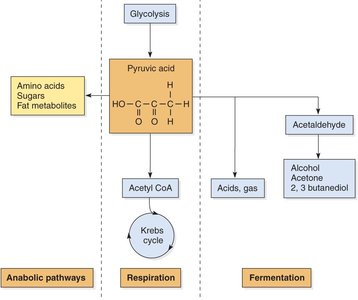
Pyruvate, the end product of glycolysis, is a key metabolite. It can enter the citric acid cycle, undergo fermentation, or participate in anabolic pathways depending on cellular conditions.
Citric Acid Cycle: Pyruvate is oxidized to acetyl-CoA.
Fermentation: Pyruvate is reduced to alcohol or acids.
Anabolic pathways: Pyruvate used for biosynthesis.
Mitochondria: Structure and Function
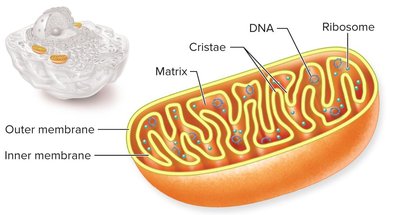
The mitochondrion is the site of pyruvate oxidation, citric acid cycle, and oxidative phosphorylation. It has a double membrane, with the matrix inside the inner membrane and cristae increasing surface area for reactions.
Outer membrane: Surrounds the organelle.
Inner membrane: Contains cristae and houses electron transport chain.
Matrix: Location of citric acid cycle and pyruvate oxidation.
Pyruvate Oxidation
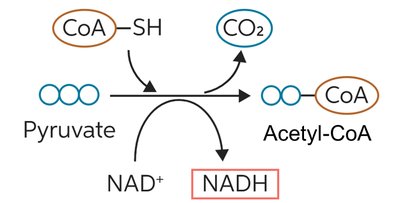
Pyruvate oxidation occurs in the mitochondrial matrix, converting pyruvate to acetyl-CoA, CO2, and NADH. This step links glycolysis to the citric acid cycle.
Reactants: Pyruvate, NAD+, CoA.
Products: Acetyl-CoA, CO2, NADH.
Citric Acid Cycle (Krebs Cycle)
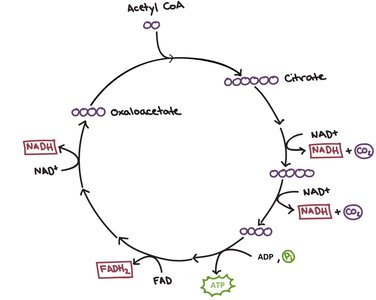
The citric acid cycle completes the oxidation of glucose derivatives, generating NADH, FADH2, ATP, and CO2. It occurs in the mitochondrial matrix and regenerates oxaloacetate for another cycle.
Acetyl-CoA: Combines with oxaloacetate to form citrate.
CO2: Released as waste.
NADH and FADH2: Electron carriers reduced.
ATP: Produced by substrate-level phosphorylation.
Oxidative Phosphorylation: Electron Transport Chain and Chemiosmosis
Oxidative phosphorylation occurs in the cristae and consists of the electron transport chain and chemiosmosis. NADH and FADH2 donate electrons, which move through the chain, releasing energy to pump protons and generate ATP via ATP synthase.
Electron transport chain: Stepwise transfer of electrons; oxygen is the final acceptor.
Proton pumps: Create a proton gradient (proton motive force).
ATP synthase: Uses proton flow to synthesize ATP.
ATP Yield from Cellular Respiration
ATP is generated by substrate-level phosphorylation (glycolysis and citric acid cycle) and oxidative phosphorylation (electron transport chain and chemiosmosis). The total yield from one glucose molecule is typically 32 ATP.
Substrate-level phosphorylation: 2 ATP from glycolysis, 2 ATP from citric acid cycle.
Oxidative phosphorylation: 28 ATP.
Total: 32 ATP per glucose.
Versatility of Catabolism
Cellular respiration can utilize carbohydrates, proteins, and fats. Glycolysis accepts various carbohydrates, proteins are deaminated, and fats are broken down into glycerol and fatty acids for entry into glycolysis and the citric acid cycle.
Anaerobic Respiration
Anaerobic respiration is similar to aerobic respiration but uses a different inorganic molecule as the final electron acceptor instead of oxygen. It is less efficient, yielding fewer ATP.
Fermentation
Fermentation occurs in the cytosol and does not use an electron transport chain. The final electron acceptor is an organic molecule, and the net ATP yield is only 2 per glucose. Fermentation is essential for organisms lacking respiration or when oxygen is unavailable.
Types of Fermentation
Fermentation regenerates NAD+ so glycolysis can continue. The end-products depend on the organism and pathway:
Alcohol fermentation: Pyruvate is converted to ethanol and CO2.
Acid fermentation: Pyruvate is converted to various acids (e.g., lactic acid).
Summary Table: Pathways and ATP Yield
Pathway | Final Electron Acceptor | ATP Yield |
|---|---|---|
Aerobic Respiration | Oxygen | 32 ATP |
Anaerobic Respiration | Inorganic molecule (not O2) | 2–32 ATP |
Fermentation | Organic molecule | 2 ATP |
Key Equations
Aerobic Respiration:
Substrate-level phosphorylation:
Redox reactions:
Additional info: The notes cover all major aspects of cellular respiration and fermentation, including the role of ATP, electron carriers, and the metabolic pathways involved. The images included directly reinforce the explanations and are essential for visualizing complex biochemical processes.
