 Indietro
Cellular Respiration and Fermentation: Chapter 7 Study Notes
Guida di studio - Note intelligenti
 Appunti personalizzati basati sui tuoi materiali, ampliati con definizioni chiave, esempi e contesto.
Cellular Respiration and Fermentation
Overview of Cellular Energy Transformation
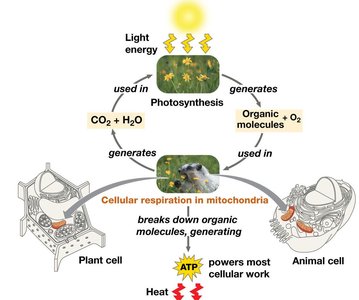
Cellular respiration is the process by which cells extract energy from organic molecules, primarily glucose, to generate ATP, the main energy currency of the cell. This process occurs in both plant and animal cells and involves a series of metabolic pathways that transform chemical energy into usable cellular energy, with some energy lost as heat.
ATP powers most cellular work, including movement, synthesis, and transport.
Energy flows into ecosystems as light and exits as heat, while essential chemical elements are recycled.
Photosynthesis and cellular respiration are interconnected: photosynthesis generates organic molecules and O2, which are used in cellular respiration to produce ATP, CO2, and H2O.
Cellular respiration occurs in mitochondria.
Fermentation is an alternative pathway that allows ATP production without oxygen.
Catabolic Pathways and ATP Production
Catabolic pathways break down organic molecules to release energy. Cellular respiration includes both aerobic (with O2) and anaerobic (without O2) processes, but typically refers to aerobic respiration.
Fermentation: Partial breakdown of organic molecules without O2.
Aerobic respiration: Complete breakdown of organic molecules using O2, most efficient for ATP production.
Anaerobic respiration: Uses electron acceptors other than O2.
Glucose is commonly used to trace cellular respiration:

Redox Reactions: Oxidation and Reduction
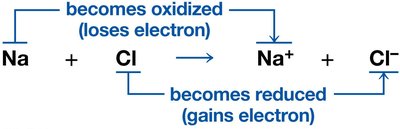
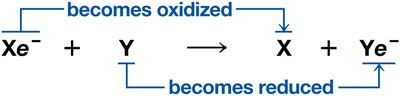
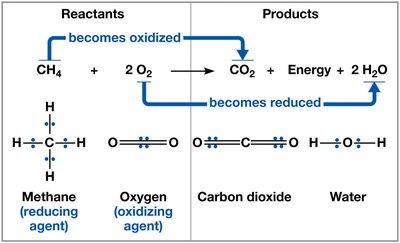
Cellular respiration relies on redox reactions, which involve the transfer of electrons between molecules. These reactions release energy that is harnessed to synthesize ATP.
Oxidation: Loss of electrons from a substance.
Reduction: Gain of electrons by a substance.
Oxidation and reduction always occur together; the electron donor is the reducing agent, and the electron acceptor is the oxidizing agent.
Redox reactions can involve changes in electron sharing in covalent bonds, not just complete electron transfer.
Stepwise Energy Harvest via NAD+ and the Electron Transport Chain
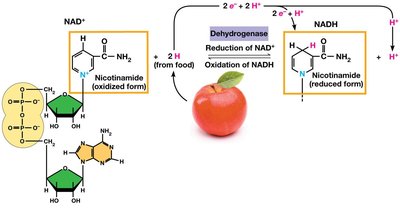
Cellular respiration breaks down glucose in a series of steps, transferring electrons to NAD+, a coenzyme that acts as an electron shuttle. NADH, the reduced form, stores energy used to synthesize ATP.
Enzymes called dehydrogenases facilitate electron transfer to NAD+.
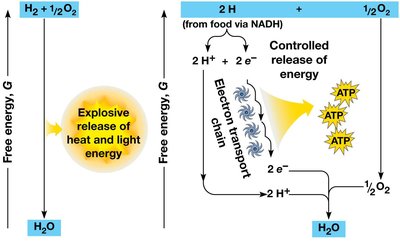
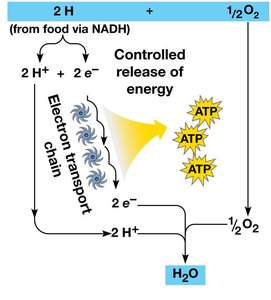
NADH passes electrons to the electron transport chain, where they are transferred to increasingly electronegative carriers, ultimately to O2.
This stepwise transfer releases energy in manageable amounts for ATP synthesis.

The Stages of Cellular Respiration
Three Main Stages
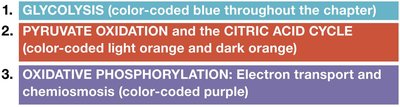
Energy extraction from glucose occurs in three stages:
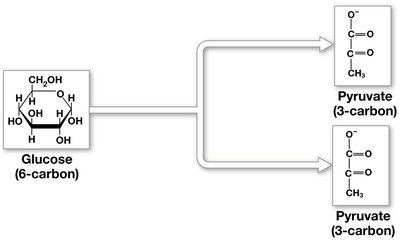
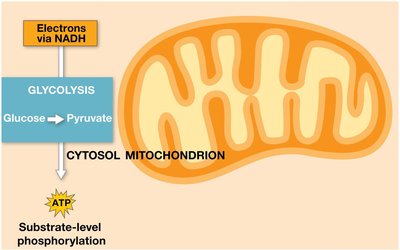
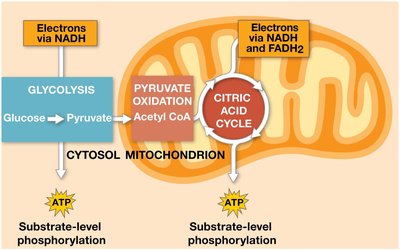
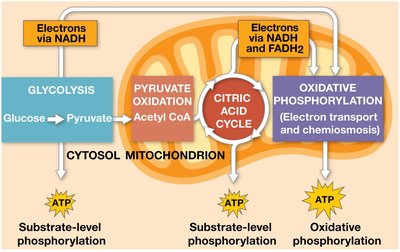
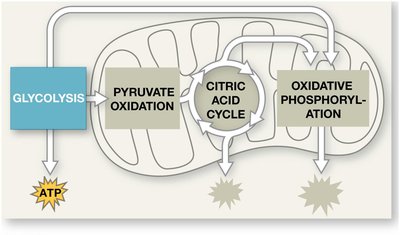
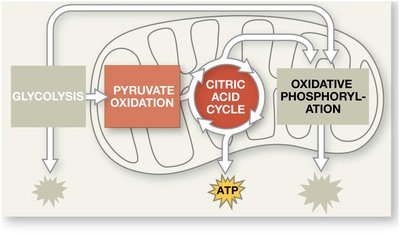
Glycolysis: Breaks down glucose into two pyruvate molecules in the cytosol.
Pyruvate Oxidation and Citric Acid Cycle: Completes glucose breakdown in the mitochondrial matrix (eukaryotes).
Oxidative Phosphorylation: Electron transport and chemiosmosis produce most ATP.
Substrate-Level Phosphorylation
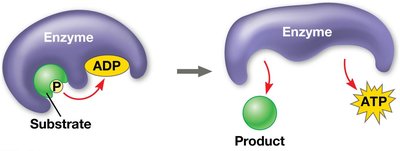
Some ATP is produced by substrate-level phosphorylation, where an enzyme transfers a phosphate group directly from a substrate to ADP.
ATP Yield
For each glucose molecule, cellular respiration can produce up to 32 ATP molecules, which are more practical for cellular work than glucose.
Glycolysis: Harvesting Chemical Energy
Phases of Glycolysis
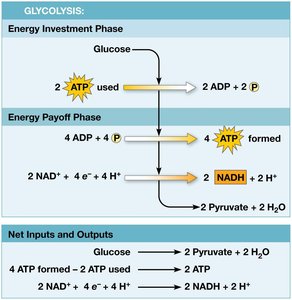
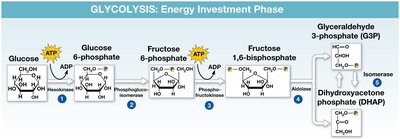
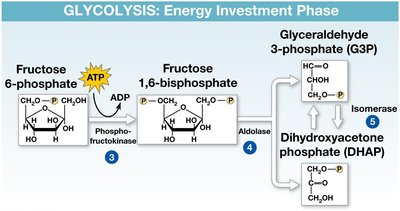
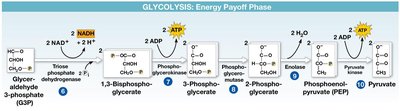
Glycolysis is the process of splitting glucose into two pyruvate molecules, occurring in two phases:
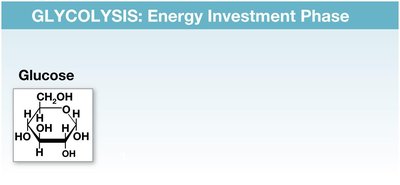
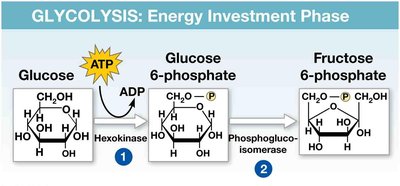
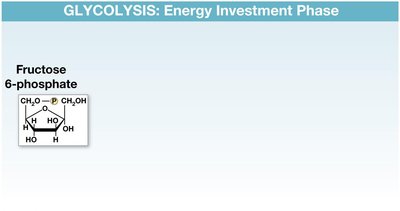
Energy Investment Phase: 2 ATP are used to phosphorylate glucose.
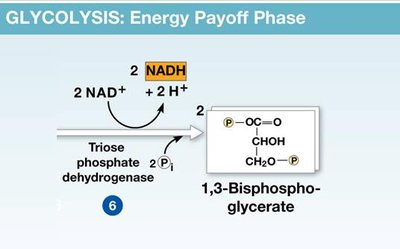
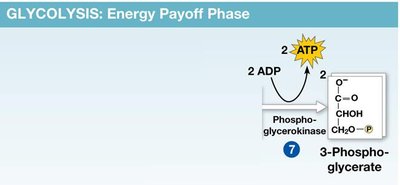
Energy Payoff Phase: 4 ATP and 2 NADH are produced, along with 2 pyruvate and 2 H2O.
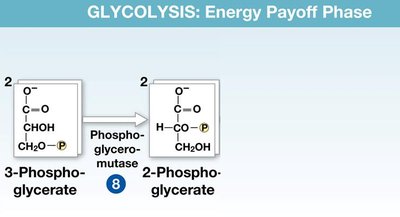
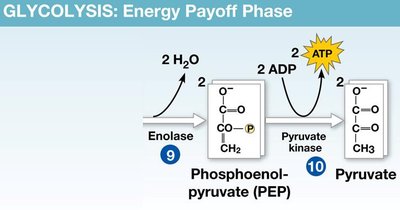
Net Products of Glycolysis
2 ATP (net gain)
2 NADH + 2 H+
2 Pyruvate + 2 H2O
Pyruvate Oxidation and the Citric Acid Cycle
Pyruvate Oxidation
If oxygen is present, pyruvate is oxidized to acetyl CoA, which enters the citric acid cycle. This process releases CO2 and produces NADH.
The Citric Acid Cycle (Krebs Cycle)
The citric acid cycle completes the breakdown of glucose, generating ATP, NADH, FADH2, and CO2. Each turn of the cycle processes one pyruvate, and the cycle turns twice per glucose molecule.
Per glucose: 2 ATP, 6 NADH, 2 FADH2, 4 CO2
NADH and FADH2 carry high-energy electrons to the electron transport chain.
Oxidative Phosphorylation: Electron Transport and Chemiosmosis
Electron Transport Chain
The electron transport chain is located in the inner mitochondrial membrane. It consists of multiprotein complexes that transfer electrons from NADH and FADH2 to O2, releasing energy in small steps.
O2 is the final electron acceptor, forming H2O.
No ATP is produced directly by the chain; energy is harnessed for chemiosmosis.
Chemiosmosis and ATP Synthase
Energy released by electron transfer is used to pump H+ ions across the membrane, creating a gradient. ATP synthase uses this gradient to drive ATP production.
The H+ gradient is called the proton-motive force.
Most ATP from cellular respiration is produced by oxidative phosphorylation.
Fermentation and Anaerobic Respiration
Fermentation
Fermentation allows cells to produce ATP without oxygen by regenerating NAD+ for glycolysis. Two common types are alcohol fermentation and lactic acid fermentation.
Alcohol fermentation: Pyruvate is converted to ethanol, releasing CO2.
Lactic acid fermentation: Pyruvate is converted directly to lactate.
Anaerobic Respiration
Anaerobic respiration uses an electron transport chain with a final electron acceptor other than O2 (e.g., sulfate).
Comparison Table: Fermentation vs. Anaerobic vs. Aerobic Respiration
Process | Final Electron Acceptor | ATP Yield (per glucose) |
|---|---|---|
Fermentation | Organic molecule (e.g., pyruvate) | 2 |
Anaerobic Respiration | Inorganic molecule (e.g., sulfate) | Variable, less than aerobic |
Aerobic Respiration | O2 | ~32 |
Metabolic Pathways and Catabolic Versatility
Connections to Other Pathways
Glycolysis and the citric acid cycle are central to both catabolic and anabolic pathways. Catabolic pathways funnel electrons from various organic molecules into cellular respiration.
Carbohydrates, proteins, and fats can all be used as fuel.
Proteins must be deaminated before entering glycolysis or the citric acid cycle.
Fats are broken down to glycerol and fatty acids; fatty acids undergo beta oxidation to yield acetyl CoA.
An oxidized gram of fat produces more than twice as much ATP as a gram of carbohydrate.
Biosynthesis (Anabolic Pathways)
Cells use intermediates from glycolysis and the citric acid cycle to synthesize necessary molecules, such as amino acids and nucleotides.
Evolutionary Significance of Glycolysis
Glycolysis is the most common metabolic pathway and likely evolved early in the history of life, before the presence of mitochondria and atmospheric oxygen.
----------------------------------------
