 Indietro
Cellular Respiration and Fermentation: Chapter 9 Study Guide
Guida di studio - Note intelligenti
 Appunti personalizzati basati sui tuoi materiali, ampliati con definizioni chiave, esempi e contesto.
Cellular Respiration and Fermentation
Overview of Cellular Energy Transformation
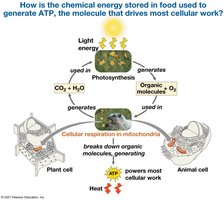
Cellular respiration is a fundamental process by which cells extract energy from organic molecules, primarily glucose, to generate ATP, the universal energy currency. This process occurs in both plant and animal cells and is essential for driving most cellular work.
ATP (Adenosine Triphosphate): The primary molecule used by cells to perform work.
Energy Flow: Energy enters ecosystems as light (via photosynthesis) and exits as heat.
Photosynthesis: Converts light energy, CO2, and H2O into organic molecules and O2.
Cellular Respiration: Breaks down organic molecules in mitochondria, generating ATP and releasing heat.

Catabolic Pathways and ATP Production
Catabolic pathways release stored energy by breaking down complex molecules. Cellular respiration includes both aerobic (with oxygen) and anaerobic (without oxygen) processes.
Fermentation: Partial degradation of sugars without oxygen.
Aerobic Respiration: Consumes organic molecules and oxygen, yielding ATP.
Anaerobic Respiration: Uses compounds other than oxygen as final electron acceptors.
Redox Reactions: Oxidation and Reduction
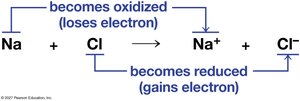
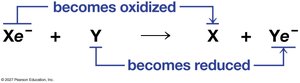
Redox reactions are central to cellular respiration, involving the transfer of electrons between molecules. These reactions release energy stored in organic molecules, which is used to synthesize ATP.
Oxidation: Loss of electrons from a substance.
Reduction: Gain of electrons by a substance.
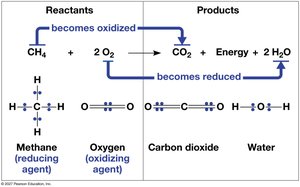
Reducing Agent: Electron donor.
Oxidizing Agent: Electron acceptor.
Oxidation of Organic Fuel Molecules During Cellular Respiration
Cellular respiration is a redox process where glucose is oxidized and oxygen is reduced. Organic molecules rich in hydrogen are excellent sources of high-energy electrons.
Glucose Oxidation: Transfers electrons from a higher energy state to a lower energy state with oxygen atoms, releasing energy for ATP synthesis.

Stepwise Energy Harvest via NAD+ and the Electron Transport Chain
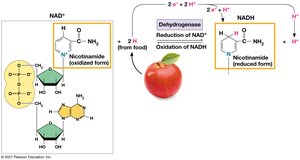
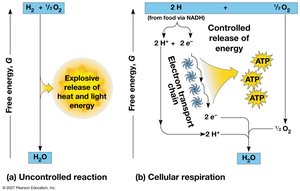
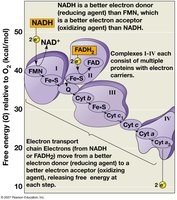
Energy from glucose is harvested in a series of steps, with electrons transferred to electron carriers such as NAD+. NADH stores energy and transfers electrons to the electron transport chain, which releases energy in manageable steps.
NAD+ (Nicotinamide Adenine Dinucleotide): A coenzyme functioning as an electron carrier.
Dehydrogenases: Enzymes that remove hydrogen atoms from substrates.
Electron Transport Chain: Series of molecules in the mitochondrial inner membrane that transfer electrons and release energy.

The Stages of Cellular Respiration: A Preview
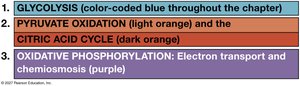
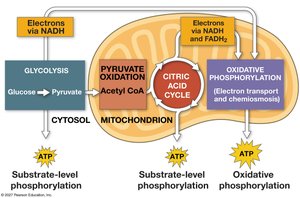
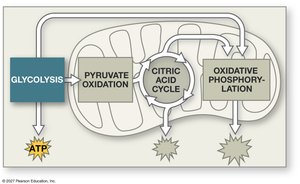
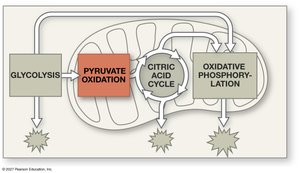
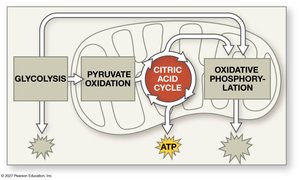
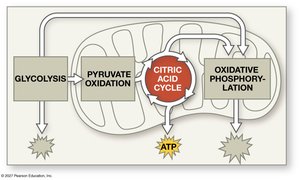
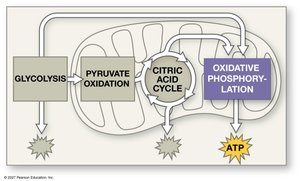
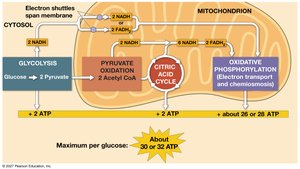
Cellular respiration consists of three main stages: glycolysis, pyruvate oxidation and the citric acid cycle, and oxidative phosphorylation. Each stage contributes to the breakdown of glucose and the production of ATP.
Glycolysis: Occurs in the cytoplasm; breaks down glucose into two pyruvate molecules.
Pyruvate Oxidation and Citric Acid Cycle: Completes glucose breakdown in mitochondria.
Oxidative Phosphorylation: Electron transport chain and chemiosmosis synthesize most ATP.
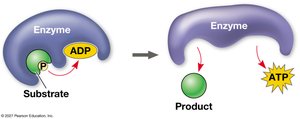
Substrate-Level Phosphorylation: Enzyme transfers phosphate group directly to ADP.
Glycolysis: Harvesting Chemical Energy
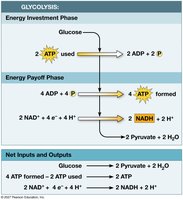
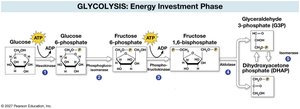
Glycolysis is the first stage of cellular respiration, occurring in the cytoplasm. It consists of two phases: energy investment and energy payoff.
Energy Investment Phase: 2 ATP are used to split glucose.
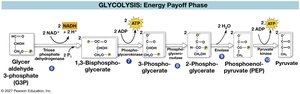
Energy Payoff Phase: 4 ATP are synthesized, NAD+ is reduced to NADH, and pyruvate is formed.
Net Yield: 2 ATP and 2 NADH per glucose.
Oxidation of Pyruvate to Acetyl CoA
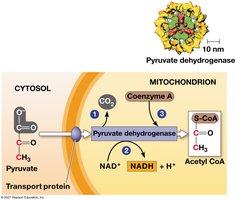
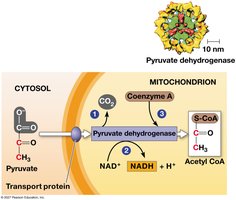
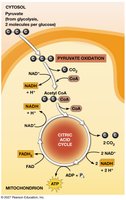
Before entering the citric acid cycle, pyruvate is converted to acetyl CoA. This conversion involves three reactions catalyzed by pyruvate dehydrogenase.
Decarboxylation: Releases CO2.
Reduction: NAD+ is reduced to NADH.
Formation of Acetyl CoA: Two-carbon fragment combines with coenzyme A.
The Citric Acid Cycle (Krebs Cycle)
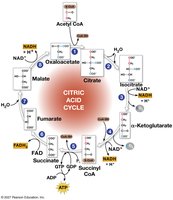
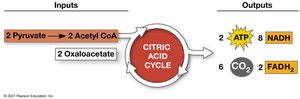
The citric acid cycle completes the oxidation of organic molecules, generating ATP, NADH, and FADH2 per turn. It runs twice per glucose molecule.
Eight Steps: Each catalyzed by a specific enzyme.
First Step: Acetyl group joins oxaloacetate to form citrate.
Cycle: Citrate is decomposed back to oxaloacetate.
Electron Carriers: NADH and FADH2 carry electrons to the electron transport chain.
Oxidative Phosphorylation and Chemiosmosis
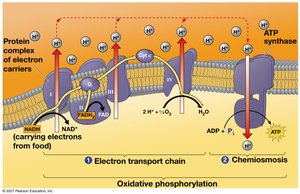
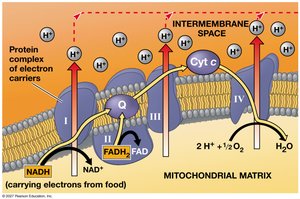
Oxidative phosphorylation is the process by which most ATP is generated, powered by redox reactions. It involves the electron transport chain and chemiosmosis.
Electron Transport Chain: Embedded in the inner mitochondrial membrane; electrons are passed through carrier molecules.
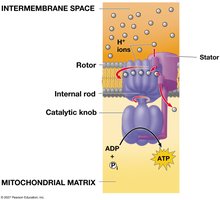
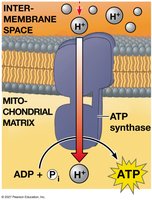
Chemiosmosis: Energy released pumps protons (H+) across the membrane, creating a gradient used by ATP synthase to generate ATP.
Proton-Motive Force: The gradient's capacity to do work.
ATP Yield from Cellular Respiration
Cellular respiration transfers about 34% of the energy in glucose to ATP, producing up to 32 ATP molecules per glucose. The rest is lost as heat.
Fermentation and Anaerobic Respiration
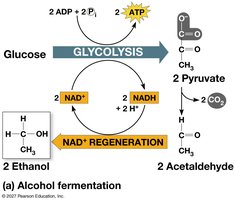
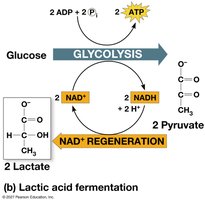
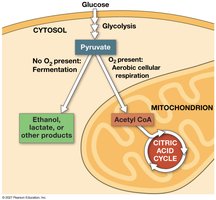
Cells can produce ATP without oxygen through fermentation or anaerobic respiration. Fermentation extends glycolysis and regenerates NAD+ by transferring electrons to pyruvate or its derivatives.
Alcohol Fermentation: Pyruvate is converted to ethanol, releasing CO2.
Lactic Acid Fermentation: Pyruvate is reduced to lactate without releasing CO2.
Comparing Fermentation, Anaerobic, and Aerobic Respiration
All three processes use glycolysis to oxidize glucose, but differ in their mechanisms for oxidizing NADH and the amount of ATP produced.
Fermentation: Produces 2 ATP per glucose.
Aerobic Respiration: Produces up to 32 ATP per glucose.
Obligate Anaerobes: Cannot survive in the presence of oxygen.
Facultative Anaerobes: Can use either fermentation or cellular respiration.
Metabolic Pathways and Regulation
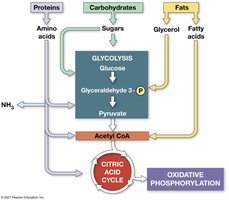
Glycolysis and the citric acid cycle connect to many other metabolic pathways, allowing cells to use carbohydrates, fats, and proteins as fuel. Catabolic pathways funnel electrons from various molecules into cellular respiration.
Deamination: Removal of amino groups from proteins.
Beta Oxidation: Breakdown of fatty acids to acetyl CoA.
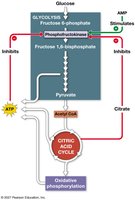
Feedback Inhibition: Regulates cellular respiration based on ATP concentration.
Summary Tables
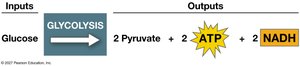
Glycolysis: Inputs and Outputs
Input | Output |
|---|---|
Glucose | 2 Pyruvate, 2 ATP, 2 NADH |
Citric Acid Cycle: Inputs and Outputs
Input | Output |
|---|---|
2 Pyruvate (as Acetyl CoA), 2 Oxaloacetate | 2 ATP, 8 NADH, 6 CO2, 2 FADH2 |
Electron Transport Chain: Inputs and Outputs
Input | Output |
|---|---|
NADH, FADH2, O2 | ATP, H2O |
ATP Synthase: Function
Process | Result |
|---|---|
ADP + Pi + H+ gradient | ATP |
Key Equations
Cellular Respiration Overall Equation:
ATP Formation:
Additional info:
Cellular respiration is tightly regulated to ensure efficient energy production and prevent waste.
Glycolysis is considered an ancient metabolic pathway, present in all domains of life.
