 Indietro
Cellular Respiration and Fermentation: Energy Harvest in Cells
Guida di studio - Note intelligenti
 Appunti personalizzati basati sui tuoi materiali, ampliati con definizioni chiave, esempi e contesto.
Cellular Respiration and Fermentation
Overview of Cellular Respiration
Cellular respiration is a fundamental metabolic process by which cells extract energy from organic molecules, primarily glucose, to produce ATP, the main energy currency of the cell. This process involves a series of redox reactions and can occur with or without oxygen.
Cellular Respiration: The process by which cells break down glucose and other organic fuels to generate ATP.
Fermentation: An anaerobic process that partially degrades sugars to produce ATP without the use of oxygen.
ATP (Adenosine Triphosphate): The molecule that stores and transfers energy within cells.
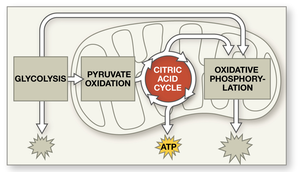
Key Stages: Glycolysis, Pyruvate Oxidation, Citric Acid Cycle, and Oxidative Phosphorylation.
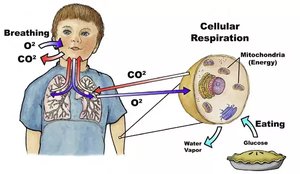
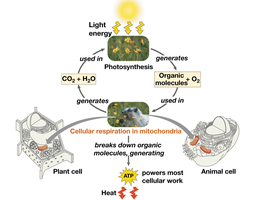
Energy Flow and Chemical Recycling in Ecosystems
Energy enters ecosystems as sunlight, is captured by photosynthesis, and is then used by cellular respiration to generate ATP. The chemical elements involved are recycled, while energy flows through the system and is eventually lost as heat.
Photosynthesis: Converts light energy, CO2, and H2O into organic molecules and O2.
Cellular Respiration: Breaks down organic molecules, using O2 and releasing CO2 and H2O.
ATP: Powers most cellular work in both plant and animal cells.
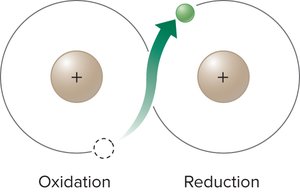
Redox Reactions in Cellular Respiration
Oxidation and Reduction
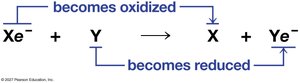
Redox reactions are central to energy transfer in cells. Oxidation is the loss of electrons, while reduction is the gain of electrons. These reactions allow the transfer of energy from food molecules to electron carriers and ultimately to ATP.
Oxidation: Loss of electrons from a molecule.
Reduction: Gain of electrons by a molecule.
Redox Reaction: A chemical reaction involving the transfer of electrons between two species.
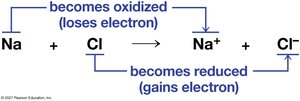
Examples of Redox Reactions
Redox reactions can be illustrated by the transfer of electrons in reactions such as the formation of NaCl from sodium and chlorine, or in more general terms with other elements.
Example:
Sodium is oxidized (loses an electron), chlorine is reduced (gains an electron).
Stages of Cellular Respiration
Overview of the Stages
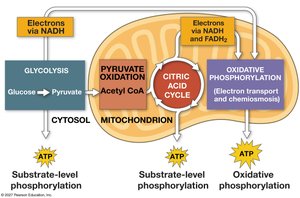
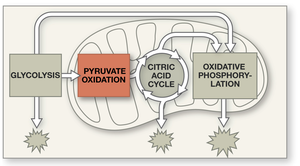
Cellular respiration consists of three main stages: glycolysis, the citric acid cycle, and oxidative phosphorylation. Each stage occurs in a specific region of the cell and contributes to the overall production of ATP.
Glycolysis: Occurs in the cytosol; breaks down glucose into two molecules of pyruvate.
Pyruvate Oxidation and Citric Acid Cycle: Occur in the mitochondria; complete the breakdown of glucose and generate electron carriers.
Oxidative Phosphorylation: Occurs in the mitochondrial inner membrane; uses the electron transport chain and chemiosmosis to produce most ATP.
Substrate-Level vs. Oxidative Phosphorylation
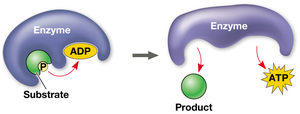
ATP can be generated by two mechanisms: substrate-level phosphorylation and oxidative phosphorylation.
Substrate-Level Phosphorylation: Direct transfer of a phosphate group to ADP from a substrate.
Oxidative Phosphorylation: ATP synthesis powered by redox reactions in the electron transport chain.
Glycolysis
Phases and Net Yield
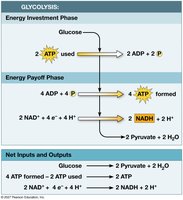
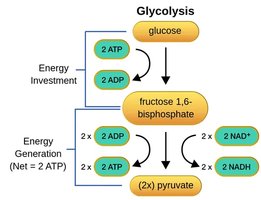
Glycolysis is the first step in cellular respiration, occurring in the cytoplasm. It consists of two phases: the energy investment phase and the energy payoff phase. The net result is the conversion of one glucose molecule into two pyruvate molecules, with a net gain of 2 ATP and 2 NADH.
Energy Investment Phase: 2 ATP are used to phosphorylate glucose and its intermediates.
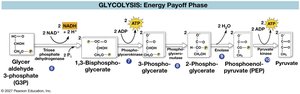
Energy Payoff Phase: 4 ATP and 2 NADH are produced, resulting in a net gain of 2 ATP.
Location: Cytoplasm of the cell.
Detailed Steps of Glycolysis
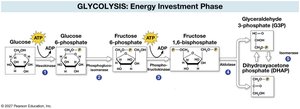
The process of glycolysis involves a series of enzyme-catalyzed reactions that convert glucose to pyruvate. The pathway can be divided into the energy investment and energy payoff phases, each with specific intermediates and enzymes.
Key Intermediates: Glucose-6-phosphate, Fructose-1,6-bisphosphate, Glyceraldehyde-3-phosphate, Phosphoenolpyruvate.
Key Enzymes: Hexokinase, Phosphofructokinase, Pyruvate kinase.
Pyruvate Oxidation and the Citric Acid Cycle
Pyruvate Oxidation
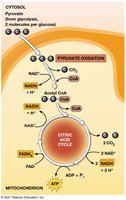
After glycolysis, pyruvate is transported into the mitochondrion, where it is converted to acetyl CoA. This step links glycolysis to the citric acid cycle and produces NADH and CO2.
Location: Mitochondrial matrix (eukaryotes).
Products: Acetyl CoA, NADH, CO2.
Enzyme: Pyruvate dehydrogenase complex.
The Citric Acid Cycle (Krebs Cycle)
The citric acid cycle completes the oxidation of glucose by breaking down acetyl CoA into CO2 and transferring electrons to NAD+ and FAD, forming NADH and FADH2. Each turn of the cycle generates 1 ATP, 3 NADH, and 1 FADH2 per acetyl CoA.
Location: Mitochondrial matrix.
Key Steps: Acetyl CoA combines with oxaloacetate to form citrate; citrate is progressively oxidized, regenerating oxaloacetate.
Products (per glucose): 2 ATP, 6 NADH, 2 FADH2, 4 CO2.
Summary Table: ATP Yield from Cellular Respiration
Stage | ATP Produced (per glucose) | NADH Produced | FADH2 Produced |
|---|---|---|---|
Glycolysis | 2 | 2 | 0 |
Pyruvate Oxidation | 0 | 2 | 0 |
Citric Acid Cycle | 2 | 6 | 2 |
Oxidative Phosphorylation | ~28 | - | - |
Total | ~32 | - | - |
Additional info: The exact ATP yield can vary depending on the cell type and conditions.
