Indietro
Cellular Respiration and Fermentation: Energy Harvesting in Cells
Guida di studio - Note intelligenti
 Appunti personalizzati basati sui tuoi materiali, ampliati con definizioni chiave, esempi e contesto.
Cellular Respiration and Fermentation
Introduction to Cellular Respiration
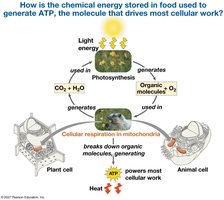
Cellular respiration is the process by which cells extract energy from organic molecules, primarily glucose, to produce ATP, the main energy currency of the cell. This process occurs in both plant and animal cells and involves a series of metabolic pathways that break down complex molecules, releasing energy that is captured in ATP.
ATP (adenosine triphosphate) is the molecule that powers most cellular work.
Energy enters ecosystems as light and exits as heat, while chemical elements are recycled.
Photosynthesis stores energy in organic molecules; cellular respiration releases that energy for cellular use.

Catabolic Pathways and ATP Production
Overview of Catabolic Pathways
Catabolic pathways break down complex molecules into simpler ones, releasing stored energy. This energy is used to synthesize ATP. Cellular respiration includes both aerobic (with oxygen) and anaerobic (without oxygen) processes.
Fermentation: Partial degradation of sugars without oxygen.
Aerobic respiration: Consumes organic molecules and oxygen, yielding ATP.
Anaerobic respiration: Uses electron acceptors other than oxygen.
Glucose is the primary molecule traced in cellular respiration, but fats and proteins can also be used.
Redox Reactions: Oxidation and Reduction
Principles of Redox Reactions
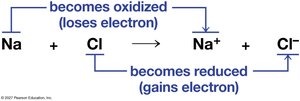
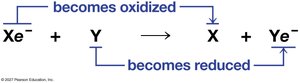
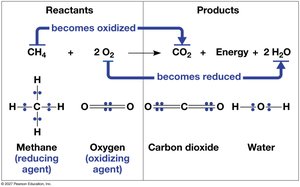
Redox (oxidation-reduction) reactions involve the transfer of electrons between molecules, releasing energy stored in organic molecules. This energy is harnessed to synthesize ATP.
Oxidation: Loss of electrons from a substance.
Reduction: Gain of electrons by a substance (reduces positive charge).
Oxidation and reduction always occur together; the electron donor is the reducing agent, and the electron acceptor is the oxidizing agent.
Redox in Cellular Respiration
During cellular respiration, glucose is oxidized and oxygen is reduced. Organic molecules rich in hydrogen are excellent sources of high-energy electrons. The transfer of electrons to oxygen releases energy used to make ATP.

Electron Carriers and the Electron Transport Chain
NAD+ and NADH
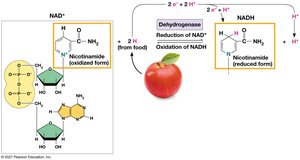
Nicotinamide adenine dinucleotide (NAD+) is a coenzyme that acts as an electron carrier. Enzymes called dehydrogenases remove hydrogen atoms from substrates, transferring electrons and protons to NAD+, forming NADH.
NADH stores energy that is later used to synthesize ATP.

Electron Transport Chain (ETC)
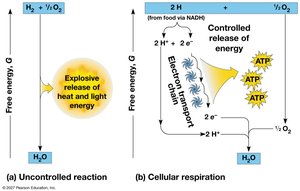
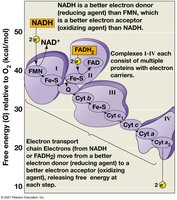
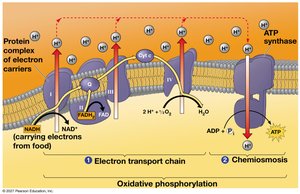
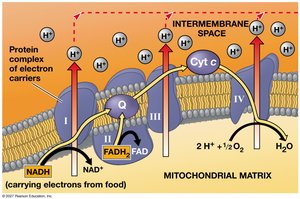
The ETC is a series of molecules embedded in the inner mitochondrial membrane (or plasma membrane in prokaryotes). NADH passes electrons to the ETC, where they are transferred through a series of redox reactions, releasing energy in small steps. Oxygen is the final electron acceptor, forming water.

Stages of Cellular Respiration
Overview of the Three Stages
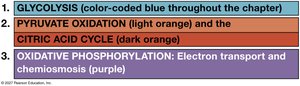
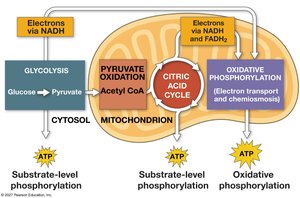
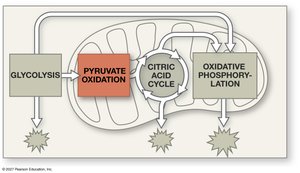
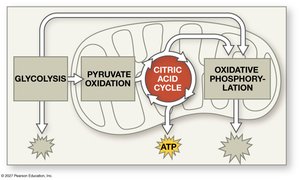
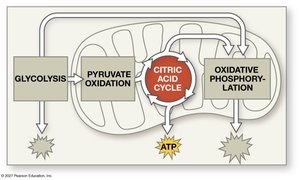
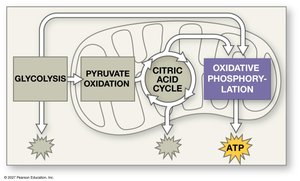
Cellular respiration consists of three main stages: glycolysis, pyruvate oxidation and the citric acid cycle, and oxidative phosphorylation.
Glycolysis: Breaks down glucose into two pyruvate molecules (cytoplasm).
Pyruvate Oxidation and Citric Acid Cycle: Completes glucose breakdown (mitochondria).
Oxidative Phosphorylation: Electron transport and chemiosmosis produce most ATP.
Substrate-Level and Oxidative Phosphorylation
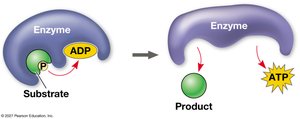
ATP is produced by two mechanisms:
Substrate-level phosphorylation: Enzyme transfers a phosphate group directly to ADP from a substrate.
Oxidative phosphorylation: ATP is synthesized using energy from the electron transport chain and chemiosmosis.
Glycolysis
Pathway and Products
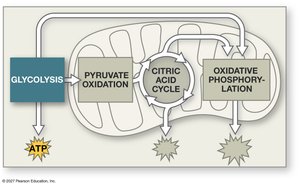
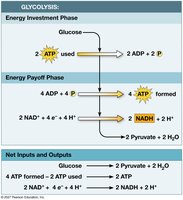
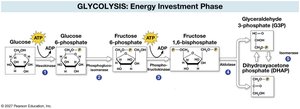
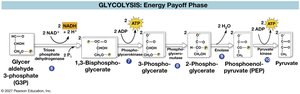
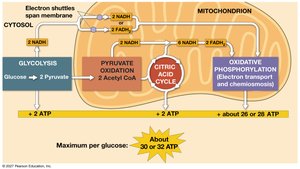
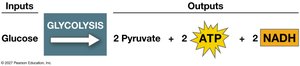
Glycolysis occurs in the cytoplasm and consists of two phases: energy investment and energy payoff. It splits glucose into two three-carbon pyruvate molecules, producing a net gain of 2 ATP and 2 NADH per glucose.
Does not require oxygen and occurs in all living cells.
All carbon from glucose is retained in pyruvate.
Pyruvate Oxidation and the Citric Acid Cycle
Pyruvate Oxidation
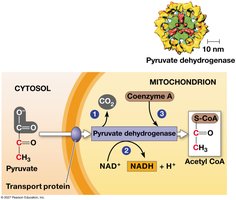
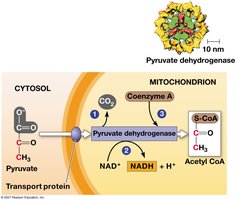
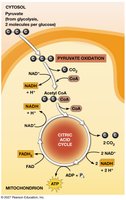
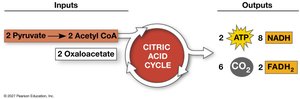
Pyruvate is transported into the mitochondrion and converted to acetyl coenzyme A (acetyl CoA) by the pyruvate dehydrogenase complex. This step produces NADH and releases CO2.
The Citric Acid Cycle (Krebs Cycle)
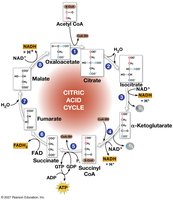
The citric acid cycle completes the breakdown of glucose by oxidizing acetyl CoA to CO2. Each turn of the cycle generates 1 ATP, 3 NADH, and 1 FADH2 per acetyl CoA. Since two acetyl CoA are produced per glucose, the cycle runs twice per glucose molecule.
Electrons from NADH and FADH2 are carried to the electron transport chain.
Oxidative Phosphorylation and Chemiosmosis
Electron Transport Chain
The electron transport chain (ETC) is located in the inner mitochondrial membrane. Electrons from NADH and FADH2 are transferred through protein complexes, ultimately reducing oxygen to water. The energy released is used to pump protons (H+) across the membrane, creating a proton gradient.
Chemiosmosis and ATP Synthase
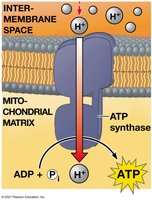
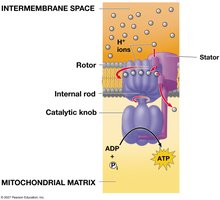
Protons flow back into the mitochondrial matrix through ATP synthase, a protein complex that synthesizes ATP from ADP and inorganic phosphate. This process is called chemiosmosis and is driven by the proton-motive force generated by the ETC.
ATP Yield from Cellular Respiration
ATP Accounting
Cellular respiration can produce up to 32 ATP molecules per glucose, though the exact number varies. Most ATP is generated by oxidative phosphorylation, with smaller amounts from substrate-level phosphorylation in glycolysis and the citric acid cycle.
Fermentation and Anaerobic Respiration
Fermentation Pathways
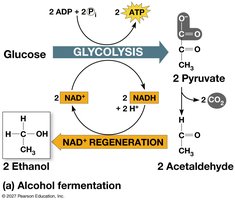
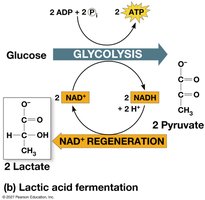
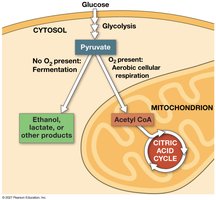
When oxygen is not available, cells can produce ATP by fermentation. Fermentation regenerates NAD+ by transferring electrons to pyruvate or its derivatives. Two common types are alcohol fermentation and lactic acid fermentation.
Alcohol fermentation: Pyruvate is converted to ethanol, releasing CO2.
Lactic acid fermentation: Pyruvate is reduced to lactate without releasing CO2.
Comparison of Fermentation, Anaerobic, and Aerobic Respiration
Process | Final Electron Acceptor | ATP Yield (per glucose) |
|---|---|---|
Fermentation | Organic molecule (e.g., pyruvate) | 2 |
Anaerobic Respiration | Inorganic molecule (not O2) | Varies (less than aerobic) |
Aerobic Respiration | Oxygen (O2) | ~32 |
Connections to Other Metabolic Pathways
Catabolic Versatility
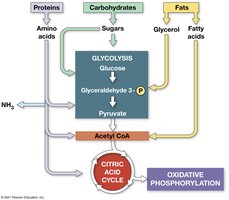
Glycolysis and the citric acid cycle are central hubs for catabolism and anabolism. Carbohydrates, fats, and proteins can all enter these pathways at various points, allowing cells to extract energy from diverse sources.
Regulation of Cellular Respiration
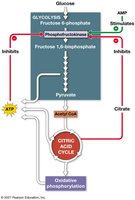
Cellular respiration is tightly regulated by feedback mechanisms. High ATP levels inhibit key enzymes, slowing respiration, while low ATP levels stimulate it. This ensures efficient energy use and prevents wasteful overproduction of ATP.
Summary Tables
Summary of Glycolysis
Summary of Citric Acid Cycle
Summary of Electron Transport Chain
Summary of ATP Synthase