 Indietro
Cellular Respiration and Fermentation: Energy Harvesting in Cells
Guida di studio - Note intelligenti
 Appunti personalizzati basati sui tuoi materiali, ampliati con definizioni chiave, esempi e contesto.
Cellular Respiration: Overview
Introduction to Cellular Respiration
Cellular respiration is a fundamental metabolic process by which plant and animal cells break down organic molecules to release energy. This energy is stored in the form of ATP, which powers most cellular work. The process occurs primarily in the mitochondria and involves a series of catabolic pathways.
Catabolic Pathways: Release stored energy by breaking down complex molecules.
ATP: The main energy currency of the cell, generated from the chemical energy in food.
Heat: Some energy is lost as heat during cellular respiration.
Key Question: How is the chemical energy stored in food used to generate ATP?
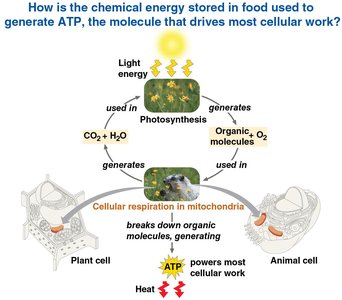
Catabolic Pathways and ATP Production
Types of Respiration
Cells utilize different pathways to harvest energy from organic molecules:
Fermentation: Partial degradation of sugars without oxygen.
Aerobic Respiration: Consumes organic molecules and oxygen, yielding ATP.
Anaerobic Respiration: Similar to aerobic, but uses compounds other than oxygen as final electron acceptors.
The overall equation for aerobic respiration is:
Redox Reactions: Oxidation and Reduction
Principles of Redox Reactions
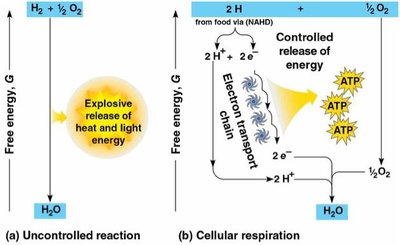
Cellular respiration relies on redox reactions, which involve the transfer of electrons between molecules. These reactions release energy that is used to synthesize ATP.
Oxidation: Loss of electrons from a substance.
Reduction: Gain of electrons by a substance.
Reducing Agent: Electron donor.
Oxidizing Agent: Electron acceptor.
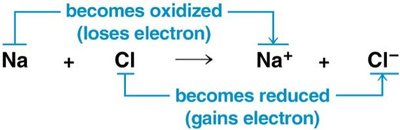
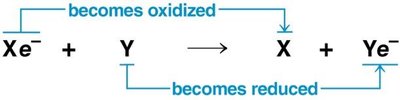
In cellular respiration, electrons are transferred from organic fuel molecules to oxygen, moving from a higher energy state to a lower energy state.
Electron Carriers and the Electron Transport Chain
NAD+ and NADH
Nicotinamide adenine dinucleotide (NAD+) is a coenzyme that functions as an electron carrier. It is reduced to NADH, which stores energy used to synthesize ATP.
NAD+: Oxidizing agent, accepts electrons.
NADH: Reduced form, carries electrons to the electron transport chain.
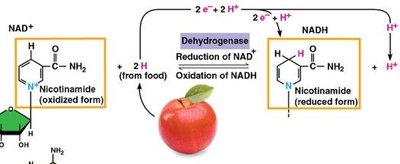
Electron Transport Chain (ETC)
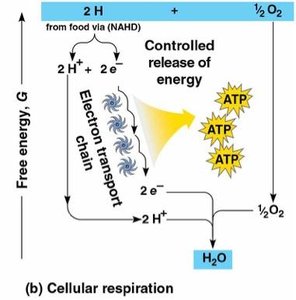
The ETC breaks the fall of electrons to oxygen into several energy-releasing steps, allowing controlled release of energy for ATP synthesis.
Final Electron Acceptor: Oxygen (O2).
Energy Yield: Used to regenerate ATP.
Stages of Cellular Respiration
Three Main Stages
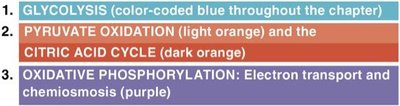
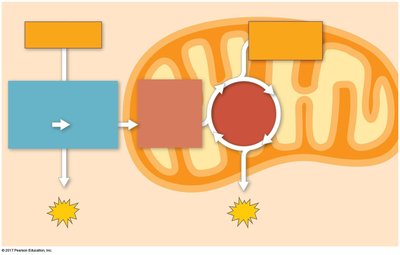
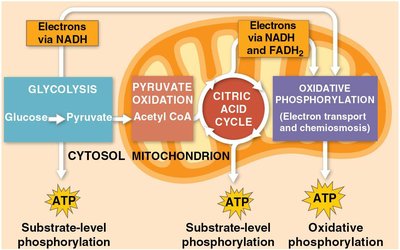
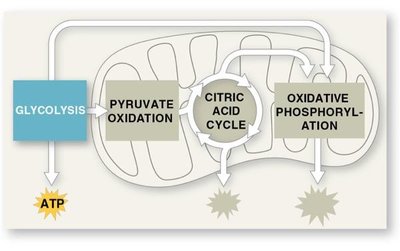
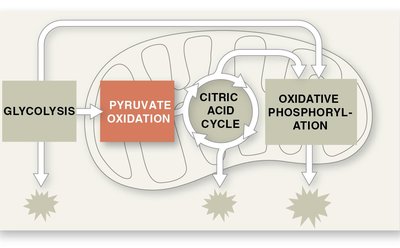
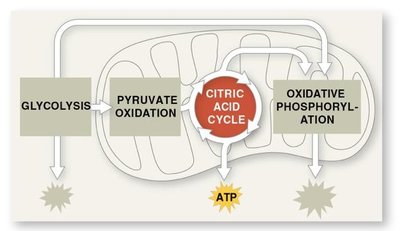
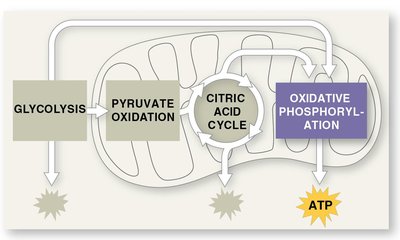
Cellular respiration consists of three interconnected stages:
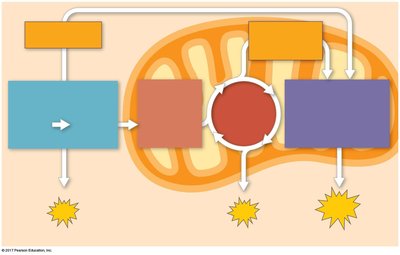
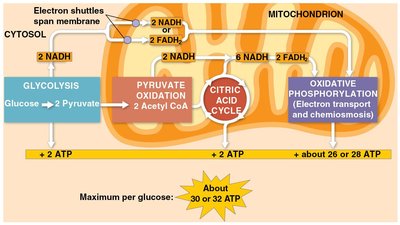
Glycolysis: Breaks down glucose into two molecules of pyruvate (cytosol).
Pyruvate Oxidation and Citric Acid Cycle: Completes breakdown of glucose to CO2 (mitochondrion).
Oxidative Phosphorylation: Electron transport and chemiosmosis facilitate synthesis of most ATP (mitochondrion).
Glycolysis
Process and Net Reaction
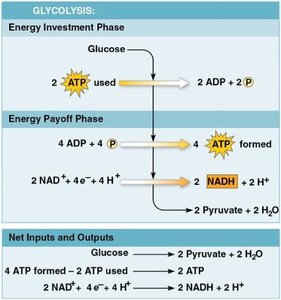
Glycolysis occurs in the cytoplasm and does not require oxygen. It consists of two phases: energy investment and energy payoff.
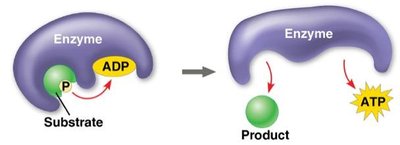
Energy Investment Phase: 2 ATP are used to phosphorylate glucose.
Energy Payoff Phase: 4 ATP and 2 NADH are produced, along with 2 pyruvate and 2 H2O.
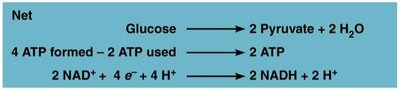
Net Reaction:
ATP Yield:
NADH Yield:
Pyruvate Oxidation and Citric Acid Cycle
Pyruvate Oxidation
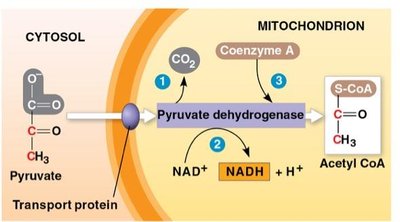
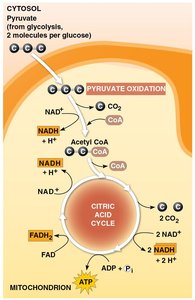
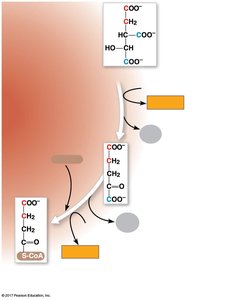
After glycolysis, pyruvate is transported into the mitochondrion and converted to acetyl CoA. This process links glycolysis to the citric acid cycle.
Steps:
Oxidation of pyruvate’s carboxyl group (releases CO2).
Reduction of NAD+ to NADH.
Combination of the remaining two-carbon fragment with coenzyme A to form acetyl CoA.
Citric Acid Cycle (Krebs Cycle)
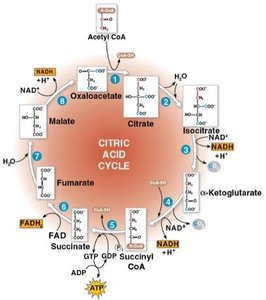
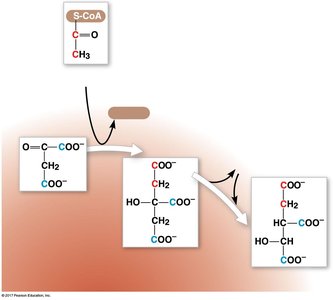
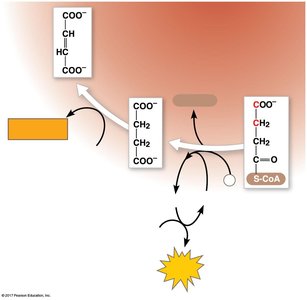
The citric acid cycle completes the oxidation of organic molecules, generating ATP, NADH, and FADH2 per turn. It consists of eight steps, each catalyzed by a specific enzyme.
Inputs: Acetyl CoA, NAD+, FAD, ADP + Pi
Outputs: CO2, NADH, FADH2, ATP
Cycle: Citrate is formed and then decomposed back to oxaloacetate.
Oxidative Phosphorylation
Electron Transport Chain and Chemiosmosis
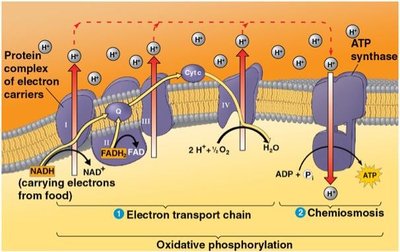
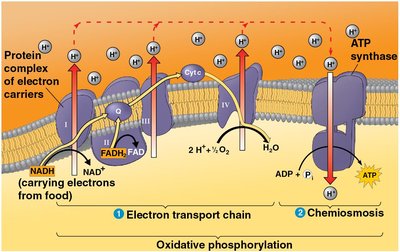
Oxidative phosphorylation is the process that generates most ATP during cellular respiration. It involves the electron transport chain and chemiosmosis.
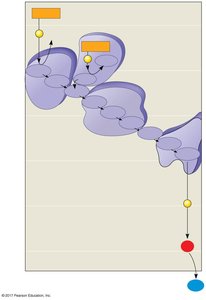
Electron Transport Chain: Series of protein complexes embedded in the inner mitochondrial membrane.
Electron Carriers: NADH and FADH2 donate electrons to the chain.
Proton Gradient: Energy released pumps H+ into the intermembrane space, creating a proton-motive force.
ATP Synthase: H+ flows back into the matrix through ATP synthase, driving ATP production.
Fermentation and Anaerobic Respiration
ATP Production Without Oxygen
Cells can produce ATP without oxygen through fermentation or anaerobic respiration.
Anaerobic Respiration: Uses an electron transport chain with a final electron acceptor other than oxygen.
Fermentation: Extension of glycolysis; NADH is oxidized by transferring electrons to pyruvate or its derivatives.
Regulation of Cellular Respiration
Feedback Mechanisms
Cellular respiration is regulated by feedback inhibition, which prevents wasteful production of ATP.
ATP Concentration: If ATP drops, respiration speeds up; if ATP is abundant, respiration slows down.
Metabolic Pathways: Catabolic pathways funnel electrons from many kinds of organic molecules into cellular respiration.
Summary Table: Stages of Cellular Respiration
Stage | Main Location | Key Inputs | Key Outputs | ATP Yield |
|---|---|---|---|---|
Glycolysis | Cytosol | Glucose, 2 ATP, 2 NAD+ | 2 Pyruvate, 2 NADH, 2 ATP | 2 ATP (net) |
Pyruvate Oxidation | Mitochondrion | 2 Pyruvate, 2 NAD+, CoA | 2 Acetyl CoA, 2 NADH, 2 CO2 | 0 ATP |
Citric Acid Cycle | Mitochondrion | 2 Acetyl CoA, 6 NAD+, 2 FAD, 2 ADP + Pi | 6 NADH, 2 FADH2, 2 ATP, 4 CO2 | 2 ATP |
Oxidative Phosphorylation | Mitochondrion | NADH, FADH2, O2 | ATP, H2O | ~26-28 ATP |
Total ATP per glucose: About 30-32 ATP
Example: During exercise, muscle cells may switch to fermentation when oxygen is limited, producing lactic acid and ATP.
Additional info: The notes above expand on brief points with academic context, definitions, and examples to ensure completeness and clarity for exam preparation.
