 Indietro
Cellular Respiration and Fermentation: Energy Harvesting in Cells
Guida di studio - Note intelligenti
 Appunti personalizzati basati sui tuoi materiali, ampliati con definizioni chiave, esempi e contesto.
Cellular Respiration and Fermentation
Introduction to Cellular Respiration
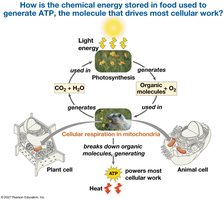
Cellular respiration is the process by which cells extract energy from organic molecules, primarily glucose, to produce ATP, the main energy currency of the cell. This process occurs in both plant and animal cells and involves a series of metabolic pathways that break down glucose and other fuels.
ATP (Adenosine Triphosphate): The molecule that stores and transfers energy for most cellular work.
Energy Flow: Energy enters ecosystems as light, is stored in organic molecules by photosynthesis, and is released by cellular respiration.
Heat: Some energy is always lost as heat during these transformations.

Catabolic Pathways and ATP Production
Overview of Catabolic Pathways
Catabolic pathways break down complex molecules into simpler ones, releasing stored energy. This energy is used to synthesize ATP. The main catabolic pathway is cellular respiration, which includes aerobic and anaerobic processes.
Fermentation: Partial degradation of sugars without oxygen.
Aerobic Respiration: Consumes organic molecules and oxygen, yielding ATP.
Anaerobic Respiration: Uses electron acceptors other than oxygen.
Redox Reactions: Oxidation and Reduction
The Principle of Redox
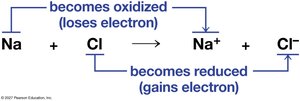
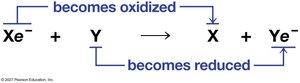
Redox (oxidation-reduction) reactions involve the transfer of electrons between molecules. These reactions are central to energy extraction in cellular respiration.
Oxidation: Loss of electrons from a substance.
Reduction: Gain of electrons by a substance (reduces positive charge).
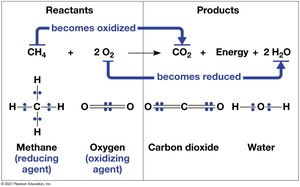
Reducing Agent: Electron donor.
Oxidizing Agent: Electron acceptor.
Redox in Cellular Respiration
During cellular respiration, glucose is oxidized and oxygen is reduced. This releases energy that is used to synthesize ATP.

Electron Carriers and the Electron Transport Chain
NAD+ and NADH
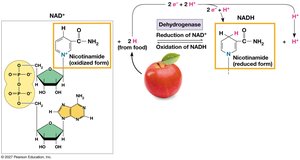
Nicotinamide adenine dinucleotide (NAD+) is a coenzyme that acts as an electron carrier. It cycles between oxidized (NAD+) and reduced (NADH) states, shuttling electrons to the electron transport chain.
Dehydrogenases: Enzymes that remove hydrogen atoms from substrates and transfer them to NAD+.

Electron Transport Chain (ETC)
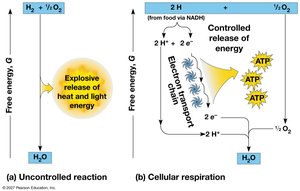
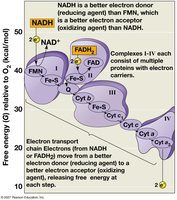
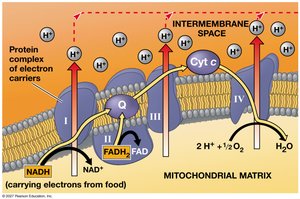
The ETC is a series of protein complexes in the inner mitochondrial membrane that transfer electrons from NADH and FADH2 to oxygen, releasing energy in small steps to produce ATP.

Stages of Cellular Respiration
Overview of the Three Stages
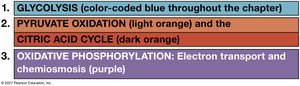
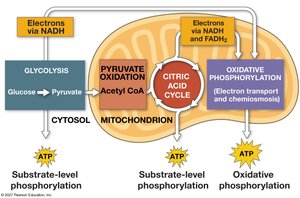
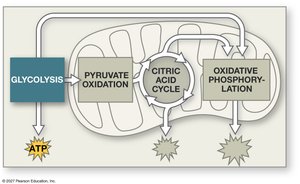
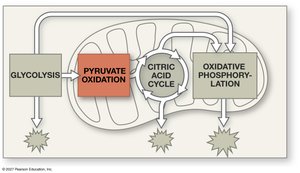
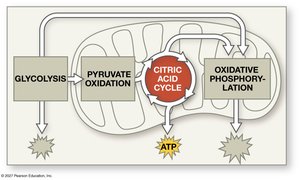
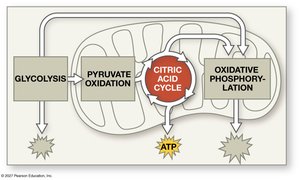
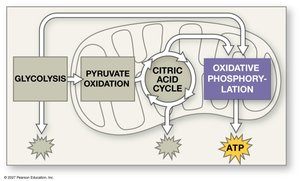
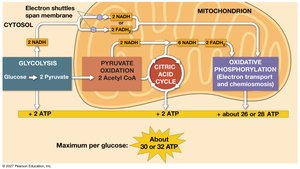
Cellular respiration consists of three main stages: glycolysis, pyruvate oxidation and the citric acid cycle, and oxidative phosphorylation.
Glycolysis: Occurs in the cytosol; breaks down glucose into two pyruvate molecules.
Pyruvate Oxidation and Citric Acid Cycle: Completes the breakdown of glucose in the mitochondrial matrix.
Oxidative Phosphorylation: Electron transport and chemiosmosis produce most of the ATP.
Substrate-Level and Oxidative Phosphorylation
ATP is produced by two mechanisms:
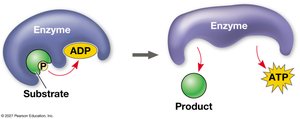
Substrate-Level Phosphorylation: Direct transfer of a phosphate group to ADP by an enzyme.
Oxidative Phosphorylation: ATP synthesis powered by the electron transport chain and chemiosmosis.
Glycolysis
Pathway and Phases
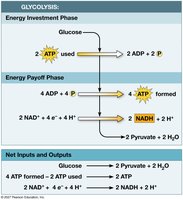
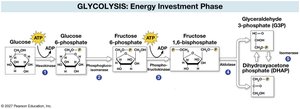
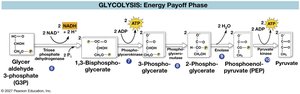
Glycolysis is the first step in cellular respiration, occurring in the cytoplasm. It consists of two phases: the energy investment phase and the energy payoff phase.
Energy Investment Phase: 2 ATP are used to split glucose into two three-carbon sugars.
Energy Payoff Phase: 4 ATP and 2 NADH are produced, and glucose is converted to 2 pyruvate.
Net Yield: 2 ATP and 2 NADH per glucose.
Pyruvate Oxidation and the Citric Acid Cycle
Pyruvate Oxidation
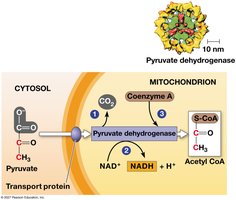
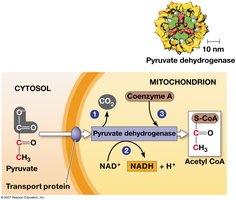
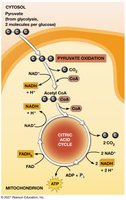
Pyruvate produced by glycolysis is transported into the mitochondrion and converted to acetyl CoA by the pyruvate dehydrogenase complex. This step produces NADH and releases CO2.
The Citric Acid Cycle (Krebs Cycle)
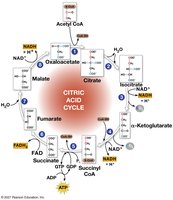
The citric acid cycle completes the breakdown of glucose by oxidizing acetyl CoA to CO2. Each turn of the cycle generates 1 ATP, 3 NADH, and 1 FADH2 (per acetyl CoA).
Eight Steps: Each catalyzed by a specific enzyme.
Electron Carriers: NADH and FADH2 carry electrons to the ETC.
Oxidative Phosphorylation and Chemiosmosis
Electron Transport Chain
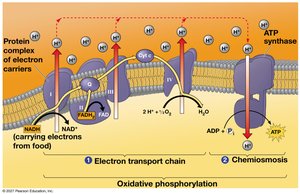
The ETC is located in the inner mitochondrial membrane. Electrons from NADH and FADH2 are transferred through a series of protein complexes, ultimately reducing oxygen to water. The energy released is used to pump protons (H+) across the membrane, creating a proton gradient.
Chemiosmosis and ATP Synthase
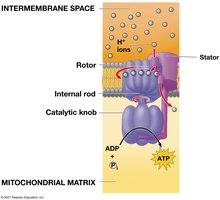
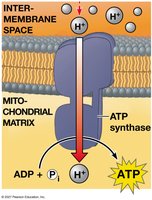
Protons flow back into the mitochondrial matrix through ATP synthase, driving the phosphorylation of ADP to ATP. This process is called chemiosmosis.
ATP Yield from Cellular Respiration
ATP Accounting
Cellular respiration can produce up to 32 ATP molecules per glucose, though the exact number varies due to several factors, such as the shuttle systems and the use of the proton-motive force for other work.
Fermentation and Anaerobic Respiration
Fermentation Pathways
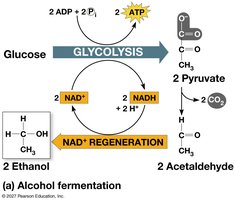
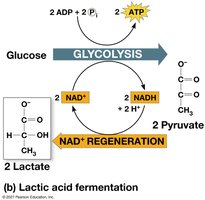
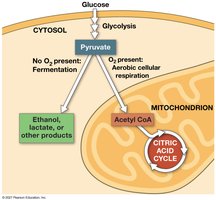
When oxygen is not available, cells can produce ATP by fermentation. Two common types are alcohol fermentation and lactic acid fermentation.
Alcohol Fermentation: Pyruvate is converted to ethanol, releasing CO2.
Lactic Acid Fermentation: Pyruvate is reduced to lactate without releasing CO2.
Comparison of Fermentation, Anaerobic, and Aerobic Respiration
All three processes use glycolysis but differ in their final electron acceptors and ATP yield. Fermentation yields 2 ATP per glucose, while aerobic respiration yields up to 32 ATP.
Connections to Other Metabolic Pathways
Catabolic Versatility
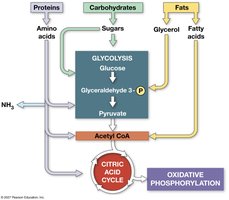
Glycolysis and the citric acid cycle are central hubs that connect to the metabolism of carbohydrates, fats, and proteins. These pathways allow cells to extract energy from a variety of food sources.
Regulation of Cellular Respiration
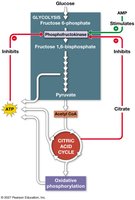
Cellular respiration is tightly regulated by feedback mechanisms. High ATP levels inhibit key enzymes, while low ATP levels stimulate them, ensuring efficient energy production.
Summary Tables
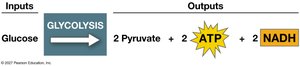
Summary of Glycolysis
Inputs | Outputs |
|---|---|
Glucose | 2 Pyruvate, 2 ATP, 2 NADH |
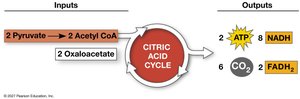
Summary of Citric Acid Cycle
Inputs | Outputs |
|---|---|
2 Acetyl CoA, 2 Oxaloacetate | 2 ATP, 8 NADH, 2 FADH2, 6 CO2 |
Summary of Electron Transport Chain
Inputs | Outputs |
|---|---|
NADH, FADH2, O2 | ATP, H2O |
Summary of ATP Synthase
Inputs | Outputs |
|---|---|
ADP, Pi, H+ gradient | ATP |
Additional info: These notes provide a comprehensive overview of cellular respiration and fermentation, including the biochemical pathways, regulation, and integration with other metabolic processes. The included images and tables reinforce key concepts and steps in the pathways.
