 Indietro
Cellular Respiration and Fermentation: Energy Harvesting in Cells
Guida di studio - Note intelligenti
 Appunti personalizzati basati sui tuoi materiali, ampliati con definizioni chiave, esempi e contesto.
Cellular Respiration and Fermentation
Overview of Cellular Respiration
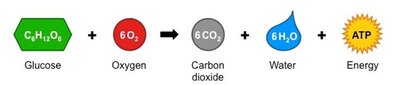
Cellular respiration is the process by which cells convert energy stored in food molecules into ATP, the main energy currency of the cell. This process is essential for all living organisms and involves a series of metabolic pathways that extract energy from carbohydrates, fats, and proteins.
Aerobic cellular respiration requires oxygen and produces carbon dioxide and water as waste products.
ATP is generated through both substrate-level phosphorylation and oxidative phosphorylation.
Organic molecules, especially those with many C–H bonds, are excellent fuels due to their high-energy electrons.
Main Stages of Cellular Respiration
Cellular respiration occurs in three main stages, each with distinct locations and functions:
Glycolysis: Occurs in the cytosol; breaks glucose into two pyruvate molecules.
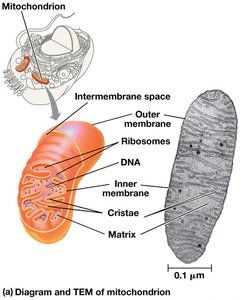
Pyruvate Oxidation and Citric Acid Cycle: Occurs in the mitochondrial matrix (eukaryotes); completes the breakdown of pyruvate and generates electron carriers.
Oxidative Phosphorylation: Occurs in the inner mitochondrial membrane; uses electrons from NADH and FADH2 to produce most of the ATP via the electron transport chain and chemiosmosis.
Redox Reactions and Electron Carriers
Redox Reactions in Respiration
Energy transfer in cellular respiration is accomplished through redox (reduction-oxidation) reactions:
Oxidation: Loss of electrons from a molecule.
Reduction: Gain of electrons by a molecule.
Electron carriers such as NAD+ and FAD shuttle electrons safely between metabolic pathways.
Cells harvest energy in small, controlled steps to maximize ATP production and minimize energy loss as heat.
Glycolysis
Steps and Phases of Glycolysis
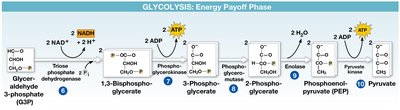
Glycolysis is the first stage of cellular respiration and occurs in the cytosol of all cells. It splits one glucose molecule (6C) into two pyruvate molecules (3C each) through a series of enzyme-catalyzed reactions.
Energy Investment Phase: 2 ATP are used to phosphorylate glucose, priming it for breakdown.
Energy Payoff Phase: 4 ATP and 2 NADH are produced, along with 2 pyruvate and 2 H2O.
Net yield per glucose: 2 ATP, 2 NADH, 2 pyruvate, and 2 H2O.
Pyruvate Oxidation
Conversion to Acetyl CoA
After glycolysis, pyruvate is transported into the mitochondrial matrix (in eukaryotes) where it is converted into acetyl CoA. This step links glycolysis to the citric acid cycle.
Each pyruvate (3C) loses one carbon as CO2 and is oxidized, producing one NADH.
The remaining 2C fragment attaches to coenzyme A, forming acetyl CoA.
Per glucose: 2 NADH and 2 CO2 are produced from pyruvate oxidation.
Citric Acid Cycle (Krebs Cycle)
Cycle Steps and Products
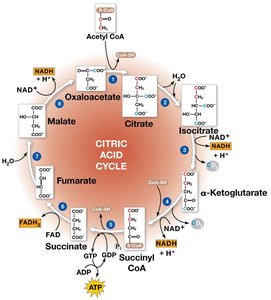
The citric acid cycle completes the breakdown of acetyl CoA, releasing stored energy through the reduction of electron carriers and the production of ATP.
Acetyl CoA (2C) combines with oxaloacetate (4C) to form citrate (6C).
Citrate is oxidized through a series of steps, regenerating oxaloacetate.
Each turn of the cycle (per acetyl CoA) produces: 3 NADH, 1 FADH2, 1 ATP (or GTP), and 2 CO2.
Since each glucose yields 2 acetyl CoA, the cycle runs twice per glucose.
Oxidative Phosphorylation
Electron Transport Chain and Chemiosmosis
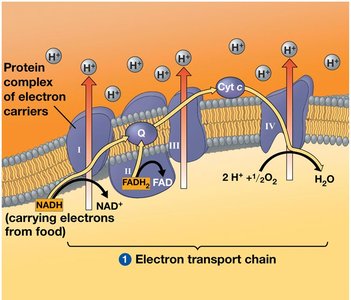
Oxidative phosphorylation is the final stage of cellular respiration, where most ATP is produced. It involves the electron transport chain (ETC) and chemiosmosis.
The ETC is a series of protein complexes embedded in the inner mitochondrial membrane (eukaryotes).
Electrons from NADH and FADH2 are passed through the ETC, releasing energy used to pump H+ ions across the membrane.
This creates a proton gradient (proton-motive force) that drives ATP synthesis via ATP synthase.
Oxygen is the final electron acceptor, forming water.
ATP Yield and Anaerobic Pathways
ATP Yield from Glucose
Complete oxidation of one glucose molecule typically yields about 30–32 ATP in eukaryotic cells.
Some energy from the proton-motive force is used for other cellular processes, so the exact yield can vary.
ATP Production without Oxygen
In the absence of oxygen, cells can produce ATP through anaerobic respiration (using a different final electron acceptor) or fermentation (no ETC, only substrate-level phosphorylation).
Fermentation
Types and Mechanisms
Fermentation allows cells to regenerate NAD+ from NADH, enabling glycolysis to continue producing ATP in the absence of oxygen.
Alcohol fermentation: Pyruvate is converted to ethanol, releasing CO2 and regenerating NAD+.
Lactic acid fermentation: Pyruvate is reduced directly to lactate, regenerating NAD+ without releasing CO2.
Comparison of Fermentation, Anaerobic, and Aerobic Respiration
Feature | Fermentation | Anaerobic Respiration | Aerobic Respiration |
|---|---|---|---|
Electron Transport Chain | No | Yes | Yes |
Final Electron Acceptor | Organic molecule | Non-oxygen acceptor | Oxygen |
ATP Production | Substrate-level phosphorylation | Mostly oxidative phosphorylation | Mostly oxidative phosphorylation |
Relative ATP Yield | Lowest | Variable | Usually highest |
Example: Yeast cells use alcohol fermentation in brewing and baking, while muscle cells use lactic acid fermentation during intense exercise when oxygen is scarce.
Additional info: The efficiency of ATP production is much higher in aerobic respiration compared to fermentation, which is why most eukaryotic cells rely on oxygen when it is available.
