 Indietro
Cellular Respiration and Fermentation: Energy Harvesting in Cells
Guida di studio - Note intelligenti
 Appunti personalizzati basati sui tuoi materiali, ampliati con definizioni chiave, esempi e contesto.
Cellular Respiration and Fermentation
Overview of Cellular Respiration
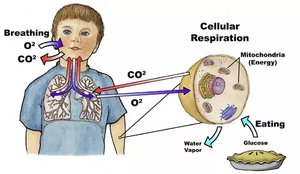
Cellular respiration is a series of metabolic processes by which cells extract energy from organic molecules, primarily glucose, to produce ATP, the main energy currency of the cell. This process involves the oxidation of glucose and the reduction of oxygen, resulting in the release of carbon dioxide and water as byproducts.
Cellular respiration occurs in both plant and animal cells, primarily within the mitochondria.
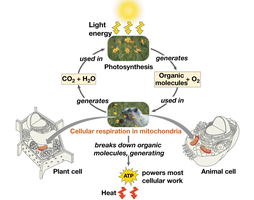
It transforms the chemical energy stored in food into ATP, which powers most cellular work.
Some energy is lost as heat during the process.
Energy Flow and Chemical Recycling
Energy enters ecosystems as light and exits as heat. The chemical elements essential to life are recycled through processes such as photosynthesis and cellular respiration.
Photosynthesis uses light energy to convert CO2 and H2O into organic molecules and O2.
Cellular respiration breaks down organic molecules, using O2 and releasing CO2 and H2O, generating ATP and heat.
Redox Reactions in Cellular Respiration
Oxidation and Reduction
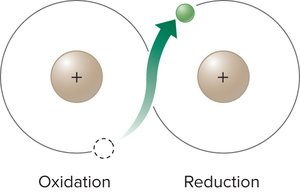
Redox reactions (oxidation-reduction reactions) are central to energy transfer in cellular respiration. Oxidation is the loss of electrons, while reduction is the gain of electrons.
Oxidation: Loss of electrons from a molecule, atom, or ion.
Reduction: Gain of electrons by a molecule, atom, or ion.
These reactions often involve the transfer of hydrogen atoms (proton + electron).
Examples of Redox Reactions
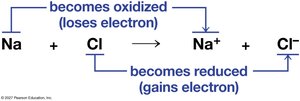
Redox reactions can be illustrated with simple chemical equations, such as the reaction between sodium and chlorine to form sodium chloride.
Na is oxidized (loses an electron), Cl is reduced (gains an electron).
Reactants | Products |
|---|---|
Na + Cl | Na+ + Cl- |
Stages of Cellular Respiration
Overview of the Three Main Stages
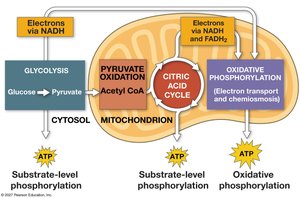
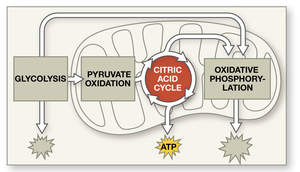
Cellular respiration consists of three main stages: glycolysis, pyruvate oxidation and the citric acid cycle, and oxidative phosphorylation. Each stage occurs in a specific region of the cell and contributes to the overall production of ATP.
Glycolysis: Occurs in the cytosol; breaks down glucose into two molecules of pyruvate.
Pyruvate Oxidation and Citric Acid Cycle: Occur in the mitochondrial matrix; complete the breakdown of glucose to CO2.
Oxidative Phosphorylation: Occurs in the inner mitochondrial membrane; uses the electron transport chain and chemiosmosis to produce most of the cell’s ATP.
ATP Production Mechanisms
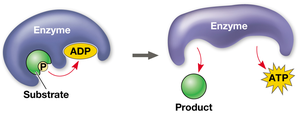
ATP is produced by two main mechanisms during cellular respiration:
Substrate-level phosphorylation: Direct transfer of a phosphate group to ADP from a substrate molecule by an enzyme.
Oxidative phosphorylation: ATP synthesis powered by the redox reactions of the electron transport chain, coupled to chemiosmosis.
Glycolysis
Pathway and Energy Yield
Glycolysis is the first stage of cellular respiration and occurs in the cytoplasm. It consists of two phases: the energy investment phase and the energy payoff phase.
In the energy investment phase, 2 ATP are used to split glucose into two three-carbon sugars.
In the energy payoff phase, 4 ATP are produced (net gain of 2 ATP), and 2 NAD+ are reduced to 2 NADH.
The end products are 2 pyruvate, 2 ATP (net), and 2 NADH per glucose molecule.
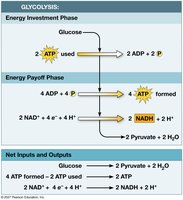
Phase | ATP Used | ATP Produced | NADH Produced | End Products |
|---|---|---|---|---|
Investment | 2 | 0 | 0 | 2 G3P |
Payoff | 0 | 4 | 2 | 2 Pyruvate, 2 H2O |
Net | 2 | 2 | 2 | 2 Pyruvate, 2 NADH |
Pyruvate Oxidation and the Citric Acid Cycle
Linking Glycolysis to the Citric Acid Cycle
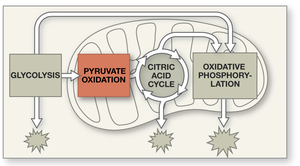
After glycolysis, pyruvate is transported into the mitochondrion and converted to acetyl CoA by the enzyme pyruvate dehydrogenase. This step produces NADH and releases CO2.
Pyruvate oxidation links glycolysis to the citric acid cycle.
Products: 1 NADH, 1 CO2, and 1 acetyl CoA per pyruvate.
The Citric Acid Cycle (Krebs Cycle)
The citric acid cycle completes the breakdown of glucose by oxidizing acetyl CoA to CO2. Each turn of the cycle generates 1 ATP, 3 NADH, and 1 FADH2 per acetyl CoA.
The cycle runs twice per glucose molecule (since each glucose yields 2 pyruvate).
NADH and FADH2 produced carry electrons to the electron transport chain.
Oxidative Phosphorylation and Chemiosmosis
Electron Transport Chain and ATP Synthesis
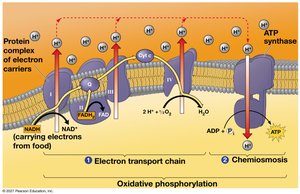
Oxidative phosphorylation involves the electron transport chain (ETC) and chemiosmosis. Electrons from NADH and FADH2 are transferred through protein complexes in the inner mitochondrial membrane, releasing energy used to pump protons and create a proton gradient.
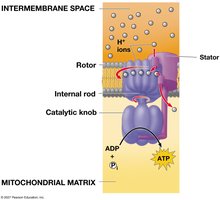
The proton gradient drives protons back through ATP synthase, which synthesizes ATP from ADP and inorganic phosphate.
This process is called chemiosmosis.
Fermentation and Anaerobic Respiration
ATP Production Without Oxygen
When oxygen is not available, cells can produce ATP through fermentation or anaerobic respiration. Fermentation allows glycolysis to continue by regenerating NAD+ from NADH.
Alcohol fermentation: Pyruvate is converted to ethanol, releasing CO2.
Lactic acid fermentation: Pyruvate is reduced to lactate without releasing CO2.
Fermentation yields only 2 ATP per glucose, compared to up to 32 ATP in aerobic respiration.
Regulation and Versatility of Catabolism
Metabolic Pathways and Feedback Control
Cellular respiration is regulated by feedback mechanisms, primarily through the enzyme phosphofructokinase in glycolysis. Catabolic pathways can also process other macromolecules, such as fats and proteins, feeding their breakdown products into glycolysis or the citric acid cycle.
High ATP levels inhibit phosphofructokinase, slowing glycolysis.
Other molecules (e.g., citrate, AMP) also regulate the pathway.
Summary Table: Comparison of Aerobic Respiration, Anaerobic Respiration, and Fermentation
Process | Final Electron Acceptor | ATP Yield (per glucose) | Location |
|---|---|---|---|
Aerobic Respiration | O2 | ~32 | Cytosol & Mitochondria |
Anaerobic Respiration | Other than O2 (e.g., SO42-) | Varies, less than aerobic | Cytosol & Plasma Membrane (prokaryotes) |
Fermentation | Organic molecule (e.g., pyruvate) | 2 | Cytosol |
