 Indietro
Cellular Respiration and Fermentation: Energy Production in Cells
Guida di studio - Note intelligenti
 Appunti personalizzati basati sui tuoi materiali, ampliati con definizioni chiave, esempi e contesto.
Cellular Respiration and Fermentation
Overview of Cellular Respiration
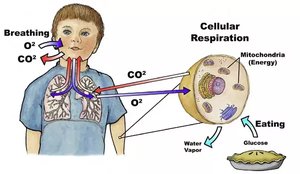
Cellular respiration is a fundamental process by which cells extract energy from organic molecules, primarily glucose, to produce ATP, the energy currency of the cell. This process involves a series of redox reactions and occurs in distinct stages within the cell.
Cellular respiration is a series of metabolic reactions that break down glucose and other organic fuels to generate ATP.
It involves oxidation (loss of electrons) and reduction (gain of electrons).
Dehydrogenation refers to the removal of hydrogen atoms (electrons and protons), while decarboxylation is the removal of carbon atoms, releasing CO2.
Cells require energy to function, and the breakdown of glucose is essential for ATP production.
Energy Flow and Chemical Recycling
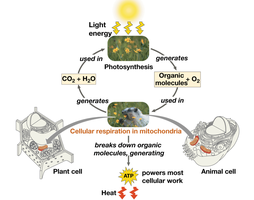
Energy enters ecosystems as light and exits as heat. The chemical elements essential to life are recycled, with photosynthesis and cellular respiration forming a cycle between plants and animals.
Photosynthesis uses light energy to convert CO2 and H2O into organic molecules and O2.
Cellular respiration breaks down organic molecules in mitochondria, generating ATP and releasing CO2 and H2O.
ATP powers most cellular work, and some energy is lost as heat.
Redox Reactions in Cellular Respiration
Oxidation and Reduction
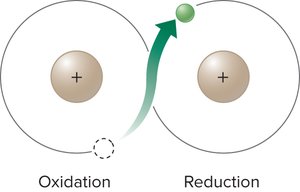
Redox reactions are central to cellular respiration, involving the transfer of electrons between molecules. These reactions release energy stored in organic molecules, which is used to synthesize ATP.
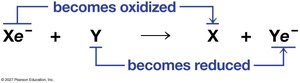
Oxidation: Loss of electrons from a substance.
Reduction: Gain of electrons by a substance (reduces positive charge).
Redox reactions transfer energy by moving electrons from high-energy molecules to lower-energy molecules.
Examples of Redox Reactions
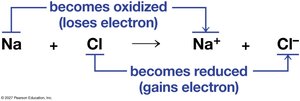
Redox reactions can be illustrated by the transfer of electrons between sodium and chlorine, forming NaCl, or between other generic atoms.
In the reaction: , sodium is oxidized and chlorine is reduced.
In the reaction: , Xe is oxidized and Y is reduced.
Electron Carriers and the Electron Transport Chain
NAD+ and NADH
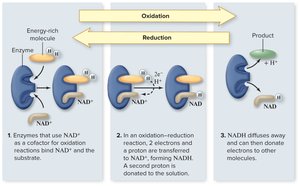
Nicotinamide adenine dinucleotide (NAD+) is a coenzyme that functions as an electron carrier in cellular respiration. It accepts electrons during redox reactions, becoming NADH, which stores energy for ATP synthesis.
Enzymes called dehydrogenases remove hydrogen atoms from substrates and transfer them to NAD+.
NADH can then donate electrons to other molecules, including the electron transport chain.
Electron Transport Chain
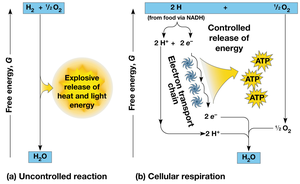
The electron transport chain is a series of molecules embedded in the inner mitochondrial membrane. It facilitates the transfer of electrons from NADH and FADH2 to oxygen, releasing energy in small, manageable steps.
Electrons are passed through carrier molecules, including cytochromes.
Energy released is used to pump protons across the membrane, creating a proton gradient.
This gradient powers ATP synthesis via chemiosmosis.
Stages of Cellular Respiration
Three Main Stages
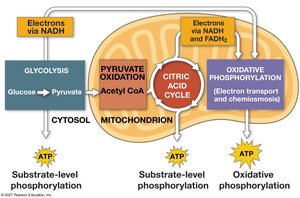
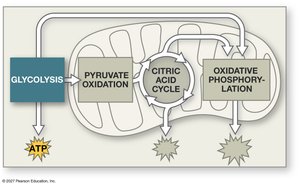
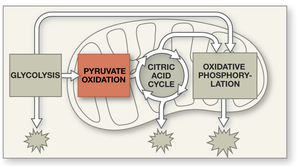
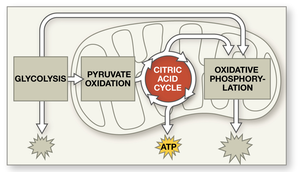
Cellular respiration occurs in three main stages: glycolysis, the citric acid cycle, and oxidative phosphorylation. Each stage takes place in specific regions of the cell and contributes to ATP production.
Glycolysis: Occurs in the cytosol; breaks down glucose into pyruvate.
Pyruvate Oxidation and Citric Acid Cycle: Occur in the mitochondria; complete the breakdown of glucose.
Oxidative Phosphorylation: Electron transport chain and chemiosmosis; produces most ATP.
Substrate-Level vs. Oxidative Phosphorylation
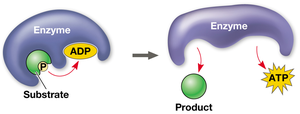
ATP can be produced by two mechanisms: substrate-level phosphorylation and oxidative phosphorylation.
Substrate-level phosphorylation: Enzyme transfers a phosphate group directly from a substrate to ADP.
Oxidative phosphorylation: ATP is synthesized using energy from the electron transport chain and chemiosmosis.
Glycolysis: Harvesting Energy from Glucose
Phases of Glycolysis
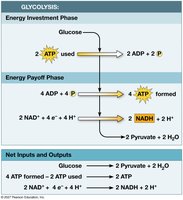
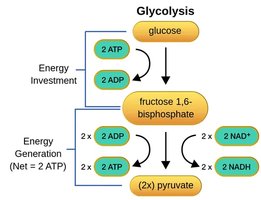
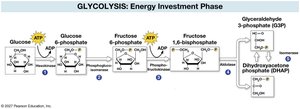
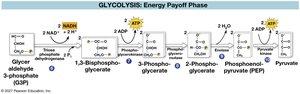
Glycolysis is the first stage of cellular respiration, occurring in the cytoplasm. It consists of two phases: energy investment and energy payoff.
Energy investment phase: 2 ATP are used to split glucose into two three-carbon molecules.
Energy payoff phase: 4 ATP are produced, 2 NAD+ are reduced to NADH, and 2 pyruvate are formed.
Net gain: 2 ATP per glucose molecule.
Steps of Glycolysis
Glycolysis involves a series of enzyme-catalyzed reactions that convert glucose to pyruvate.
Preparatory steps require ATP.
Substrate-level phosphorylation and reduction of NAD+ occur during the energy payoff phase.
Pyruvate Oxidation and the Citric Acid Cycle
Oxidation of Pyruvate
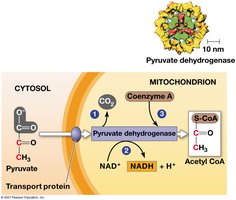
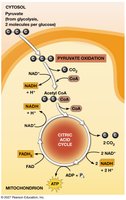
After glycolysis, pyruvate is transported into the mitochondria and converted to acetyl CoA. This process links glycolysis to the citric acid cycle.
Pyruvate dehydrogenase catalyzes the conversion, releasing CO2, reducing NAD+ to NADH, and forming acetyl CoA.
The Citric Acid Cycle (Krebs Cycle)
The citric acid cycle completes the oxidation of organic molecules, generating ATP, NADH, and FADH2 per turn. It is called a cycle because the starting molecule, oxaloacetate, is regenerated.
Each turn produces 1 ATP, 3 NADH, 1 FADH2, and 2 CO2.
The cycle runs twice per glucose molecule.
Summary Table: Stages of Cellular Respiration
Stage | Location | Main Products | ATP Production |
|---|---|---|---|
Glycolysis | Cytosol | 2 Pyruvate, 2 NADH | 2 ATP (substrate-level) |
Pyruvate Oxidation | Mitochondria | 2 Acetyl CoA, 2 NADH, 2 CO2 | 0 ATP |
Citric Acid Cycle | Mitochondria | 6 NADH, 2 FADH2, 4 CO2 | 2 ATP (substrate-level) |
Oxidative Phosphorylation | Mitochondria | H2O | ~28 ATP |
Additional info: The table summarizes the main stages, locations, products, and ATP yield of cellular respiration for one glucose molecule.
