 Indietro
Cellular Respiration and Fermentation: Energy Production in Cells
Guida di studio - Note intelligenti
 Appunti personalizzati basati sui tuoi materiali, ampliati con definizioni chiave, esempi e contesto.
Cellular Respiration and Fermentation
Overview of Cellular Respiration
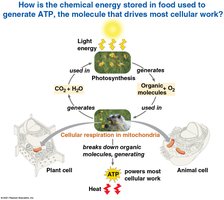
Cellular respiration is a fundamental metabolic pathway that enables cells to extract energy from organic molecules, primarily glucose, to produce ATP, the main energy currency of the cell. This process occurs in both plant and animal cells and involves a series of redox reactions, ultimately transferring electrons to oxygen.
Aerobic respiration: Consumes organic molecules and oxygen, yielding ATP.
Fermentation: Partial degradation of sugars without oxygen.
ATP: Adenosine triphosphate, powers most cellular work.
Exergonic reactions: Release energy during the breakdown of organic molecules.
Redox reactions: Involve the transfer of electrons between molecules.
Redox Reactions: Oxidation and Reduction
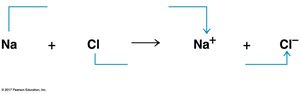
Redox reactions are central to cellular respiration. In these reactions, one substance loses electrons (oxidation) and another gains electrons (reduction). The transfer of electrons releases energy that is harnessed to produce ATP.
Oxidation: Loss of electrons; increases positive charge.
Reduction: Gain of electrons; decreases positive charge.
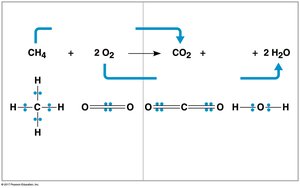
Some redox reactions involve changes in electron sharing within covalent bonds.
Oxidation of Organic Fuel Molecules
Organic molecules rich in hydrogen are excellent sources of high-energy electrons. During cellular respiration, these electrons are transferred to oxygen, releasing energy.
Glucose is a primary fuel for cellular respiration.
Oxidation of glucose releases energy, water, and carbon dioxide.

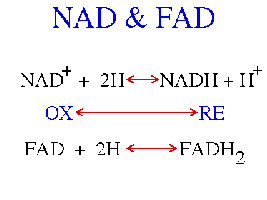
Electron Carriers: NAD+ and FAD
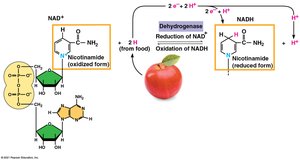
Electron carriers such as NAD+ and FAD play a crucial role in cellular respiration by shuttling electrons between metabolic pathways and the electron transport chain.
NAD+: Accepts electrons and becomes NADH.
FAD: Accepts electrons and becomes FADH2.
These carriers are reduced during glycolysis and the citric acid cycle, then oxidized in the electron transport chain.
Stages of Cellular Respiration
Major Pathways
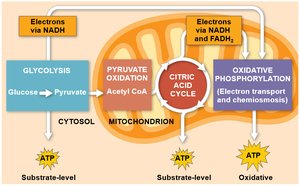
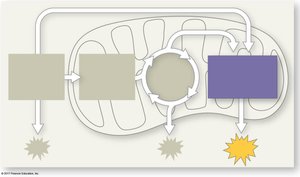
Cellular respiration consists of three main stages: glycolysis, the citric acid cycle, and oxidative phosphorylation. Each stage occurs in specific cellular locations and contributes to ATP production.
Glycolysis: Occurs in the cytoplasm; breaks down glucose into pyruvate.
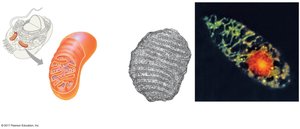
Pyruvate oxidation and citric acid cycle: Occur in the mitochondrial matrix; further oxidize pyruvate.
Oxidative phosphorylation: Occurs in the mitochondrial inner membrane; includes electron transport and chemiosmosis.
Glycolysis
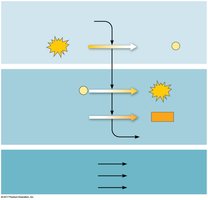
Glycolysis is the first step in cellular respiration, breaking down glucose into two molecules of pyruvate. It occurs in the cytoplasm and consists of two phases: energy investment and energy payoff.
Energy investment phase: 2 ATP are used.
Energy payoff phase: 4 ATP are produced, 2 NADH are generated.
Net yield: 2 ATP, 2 NADH, 2 pyruvate per glucose.
Glycolysis can occur with or without oxygen.
Pyruvate Oxidation and Citric Acid Cycle
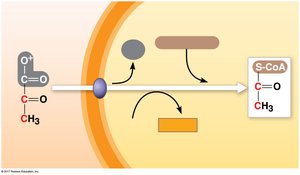
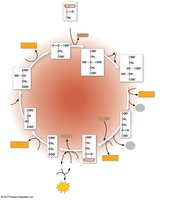
After glycolysis, pyruvate is transported into the mitochondrion and oxidized to acetyl CoA, which enters the citric acid cycle. The citric acid cycle completes the breakdown of pyruvate, generating ATP, NADH, and FADH2.
Location: Mitochondrial matrix.
Citric acid cycle (Krebs cycle): Produces 1 ATP, 3 NADH, and 1 FADH2 per turn.
Releases CO2 as a waste product.
ATP Production: Substrate-Level and Oxidative Phosphorylation
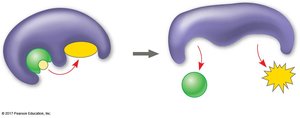
ATP is produced by two mechanisms: substrate-level phosphorylation and oxidative phosphorylation. Substrate-level phosphorylation occurs directly in glycolysis and the citric acid cycle, while oxidative phosphorylation is driven by the electron transport chain.
Substrate-level phosphorylation: Direct transfer of phosphate to ADP.
Oxidative phosphorylation: Accounts for ~90% of ATP production; powered by redox reactions.
Oxidative Phosphorylation and Chemiosmosis
Electron Transport Chain
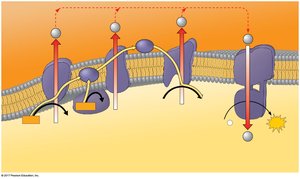
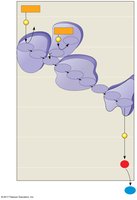
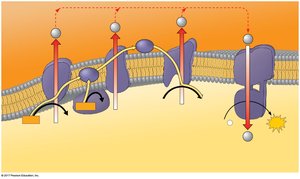
The electron transport chain (ETC) is located in the inner mitochondrial membrane. Electrons from NADH and FADH2 are transferred through protein complexes, ultimately reducing oxygen to water. The ETC creates a proton (H+) gradient across the membrane.
Electrons are passed through complexes I-IV.
Oxygen is the final electron acceptor.
No ATP is produced directly by the ETC; instead, it establishes a proton gradient.
Chemiosmosis: ATP Synthesis
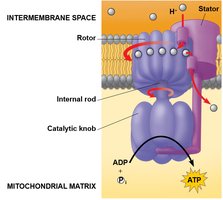
Chemiosmosis is the process by which the energy stored in the proton gradient is used to drive ATP synthesis. Protons flow back into the mitochondrial matrix through ATP synthase, generating ATP.
H+ gradient is established by ETC.
ATP synthase uses the energy of proton flow to convert ADP and inorganic phosphate (Pi) into ATP.
ATP Yield and Energy Accounting
Cellular respiration transfers about 34% of the energy in glucose to ATP, producing approximately 32 ATP molecules per glucose. The remainder is lost as heat.
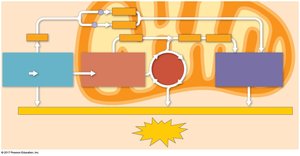
Energy flow: glucose → NADH/FADH2 → ETC → proton-motive force → ATP.
NADH yields ~2.5 ATP; FADH2 yields ~1.5 ATP.
Fermentation and Anaerobic Respiration
Fermentation Pathways
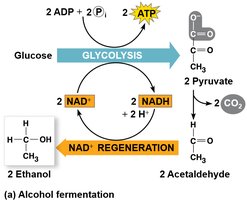
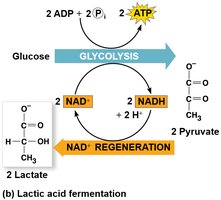
Fermentation allows cells to produce ATP without oxygen by regenerating NAD+ for glycolysis. Two common types are alcohol fermentation and lactic acid fermentation.
Alcohol fermentation: Produces ethanol and CO2.
Lactic acid fermentation: Produces lactate.
Both pathways yield 2 ATP per glucose.
Comparison of Fermentation, Anaerobic, and Aerobic Respiration
Fermentation and anaerobic respiration differ from aerobic respiration in their mechanisms for oxidizing NADH and their ATP yields.
Fermentation: Organic molecule is final electron acceptor; 2 ATP per glucose.
Anaerobic respiration: Uses electron transport chain with a different final electron acceptor.
Aerobic respiration: Oxygen is final electron acceptor; 32 ATP per glucose.
Connections to Other Metabolic Pathways
Integration of Metabolism
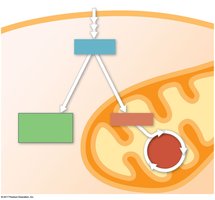
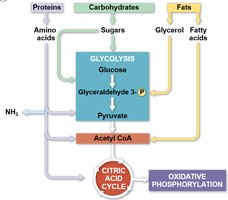
Glycolysis and the citric acid cycle are central hubs that connect to other metabolic pathways, including the breakdown and synthesis of carbohydrates, fats, and proteins.
Catabolic pathways feed into glycolysis and the citric acid cycle.
Anabolic pathways use intermediates from these cycles for biosynthesis.
Regulation of Cellular Respiration
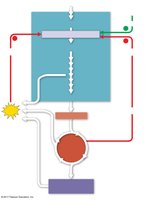
Cellular respiration is tightly regulated by feedback mechanisms. Key enzymes such as phosphofructokinase are inhibited or stimulated by various metabolites, ensuring efficient energy production.
ATP and citrate inhibit phosphofructokinase.
AMP stimulates phosphofructokinase.
Feedback regulation maintains cellular energy balance.
Process | Final Electron Acceptor | ATP Yield (per glucose) |
|---|---|---|
Aerobic Respiration | O2 | ~32 |
Anaerobic Respiration | Other (e.g., sulfate) | Variable, less than aerobic |
Fermentation | Organic molecule (e.g., pyruvate) | 2 |
Additional info: The notes above expand on the original slides by providing definitions, context, and examples for each process, as well as a summary table comparing ATP yields and electron acceptors in different metabolic pathways.
