 Indietro
Cellular Respiration and Fermentation: Energy Transformation in Cells
Guida di studio - Note intelligenti
 Appunti personalizzati basati sui tuoi materiali, ampliati con definizioni chiave, esempi e contesto.
Cellular Respiration and Fermentation
Introduction to Energy Transformation in Cells
Cells require energy to perform essential functions, which they obtain by breaking down organic molecules. Two primary processes—cellular respiration and fermentation—enable cells to extract energy from glucose and convert it into ATP (adenosine triphosphate), the cell’s main energy currency. Photosynthesis captures solar energy and stores it in glucose, while cellular respiration and fermentation release this energy for cellular work.
Photosynthesis: Converts solar energy into chemical energy stored in glucose.
Cellular Respiration: Aerobic process (requires O2) that releases energy from glucose to produce ATP.
Fermentation: Anaerobic process (does not require O2) that also releases energy from glucose, but less efficiently.
ATP: The molecule that stores and supplies energy for many cellular processes.
Oxidation-Reduction (Redox) Reactions in Cellular Respiration
Both cellular respiration and fermentation involve oxidation-reduction (redox) reactions, which are chemical reactions involving the transfer of electrons between molecules.
Oxidation: Loss of electrons from a molecule.
Reduction: Gain of electrons by a molecule.
During cellular respiration, glucose is oxidized (loses electrons), and NAD+ is reduced to NADH (gains electrons).
NADH then transfers electrons to the electron transport chain, releasing energy used to synthesize ATP.
Key Equation for Cellular Respiration:
Stages of Cellular Respiration
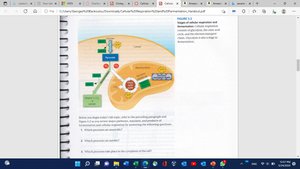
Cellular respiration is a multi-step process that occurs in both the cytoplasm and mitochondria of eukaryotic cells. It consists of three main stages:
Glycolysis: Occurs in the cytoplasm; breaks down glucose into two molecules of pyruvate, producing a small amount of ATP and NADH.
Citric Acid Cycle (Krebs Cycle): Occurs in the mitochondrial matrix; completes the breakdown of glucose, generating more NADH and FADH2.
Electron Transport Chain (ETC): Located in the inner mitochondrial membrane; uses electrons from NADH and FADH2 to produce a large amount of ATP.
Overall, cellular respiration can yield up to 32 ATP molecules per glucose molecule.
Fermentation
Fermentation is an anaerobic process that allows cells to generate ATP when oxygen is scarce. It involves glycolysis followed by a pathway that regenerates NAD+ from NADH, enabling glycolysis to continue.
Alcoholic Fermentation: Occurs in yeast and some plants; converts pyruvate into ethanol and carbon dioxide.
Lactic Acid Fermentation: Occurs in animals, certain fungi, and some bacteria; converts pyruvate into lactate.
Fermentation produces only 2 ATP molecules per glucose, much less than cellular respiration.
Key Equation for Alcoholic Fermentation:
Key Equation for Lactic Acid Fermentation:
Comparison of Cellular Respiration and Fermentation
Feature | Cellular Respiration | Fermentation |
|---|---|---|
Oxygen Requirement | Requires O2 (aerobic) | Does not require O2 (anaerobic) |
ATP Yield (per glucose) | ~32 ATP | 2 ATP |
End Products | CO2, H2O | Ethanol + CO2 (alcoholic), Lactate (lactic acid) |
Location | Cytoplasm & Mitochondria | Cytoplasm |
Alcoholic Fermentation: Substrates, Products, and Measurement
Alcoholic fermentation is a process used by yeast and some plants to generate ATP in the absence of oxygen. The substrate is glucose, and the products are ethanol, carbon dioxide, and ATP.
Substrate: Glucose (C6H12O6)
Products: Ethanol (C2H5OH), Carbon dioxide (CO2), ATP
Measurement: The rate of alcoholic fermentation can be measured by the amount of CO2 produced or the decrease in glucose concentration.
Factors Affecting Enzymatic Activity in Fermentation and Respiration
Several environmental factors can influence the rate of fermentation and cellular respiration by affecting enzyme activity:
Temperature: Enzyme activity generally increases with temperature up to an optimum point, then decreases due to denaturation.
pH: Each enzyme has an optimal pH; deviations can reduce activity.
Substrate Concentration: Higher substrate levels can increase the rate until enzymes are saturated.
Presence of Inhibitors or Activators: Chemicals can decrease or increase enzyme activity.
Scientific Inquiry: Designing Experiments
To investigate factors influencing fermentation or cellular respiration, students should:
Formulate a testable hypothesis and prediction.
Design and conduct experiments (e.g., varying temperature or substrate concentration).
Analyze and interpret results, presenting findings clearly.
Microscopic Observation of Yeast Cells
Yeast cells are commonly used to study alcoholic fermentation. Under the microscope, yeast appears as small, round or oval cells, often seen budding during reproduction.
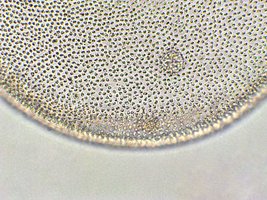
Additional info: Yeast is a model organism for studying fermentation due to its ability to efficiently convert glucose to ethanol and CO2 in anaerobic conditions.
