 Indietro
Cellular Respiration and Fermentation: Mechanisms and Regulation
Guida di studio - Note intelligenti
 Appunti personalizzati basati sui tuoi materiali, ampliati con definizioni chiave, esempi e contesto.
Cellular Respiration & Fermentation
Overview of Cellular Respiration
Cellular respiration is a fundamental metabolic pathway that allows cells to extract energy from organic molecules, primarily glucose, through a series of redox reactions. The process consists of several stages: glycolysis, pyruvate oxidation, the citric acid cycle, and oxidative phosphorylation. - Cellular respiration occurs in both prokaryotic and eukaryotic cells, with the final stages taking place in the mitochondria of eukaryotes. - Fermentation is an alternative pathway that enables ATP production in the absence of oxygen.
Redox Reactions in Cellular Respiration
Redox reactions (oxidation-reduction) are central to cellular respiration, involving the transfer of electrons between molecules. - Oxidation: Loss of electrons from a molecule. - Reduction: Gain of electrons by a molecule. - The electron donor is the reducing agent, and the electron acceptor is the oxidizing agent. 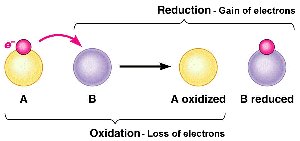
Example:
In cellular respiration, glucose is oxidized and oxygen is reduced. 
Stages of Cellular Respiration
Glycolysis
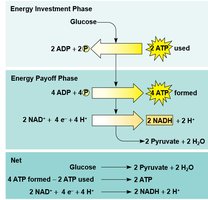
Glycolysis is the first stage, occurring in the cytosol, where glucose is split into two molecules of pyruvate. - Energy investment phase: 2 ATP are used to phosphorylate glucose. - Energy payoff phase: 4 ATP and 2 NADH are produced. - Net yield: 2 ATP, 2 NADH, and 2 pyruvate per glucose. 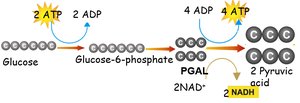
Pyruvate Oxidation
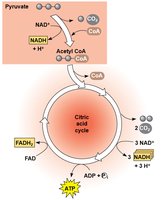
In the presence of oxygen, pyruvate is transported into the mitochondrion and converted to acetyl-CoA, producing NADH and CO2. - This step links glycolysis to the citric acid cycle. 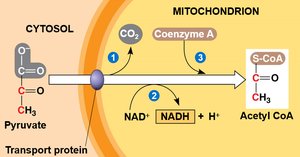
The Citric Acid Cycle (Krebs Cycle)
Acetyl-CoA enters the citric acid cycle, where it is fully oxidized to CO2. - Each turn generates 3 NADH, 1 FADH2, and 1 ATP (or GTP). - For each glucose, two turns occur (one per pyruvate). 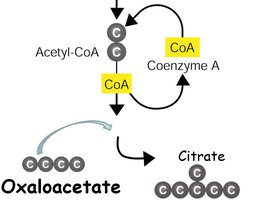
Oxidative Phosphorylation: Electron Transport Chain and Chemiosmosis
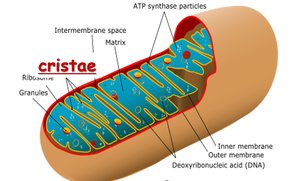
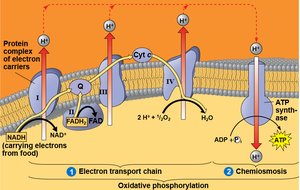
The electron transport chain (ETC) is located in the inner mitochondrial membrane. - NADH and FADH2 donate electrons to the ETC, which are passed through protein complexes. - The energy released pumps H+ ions into the intermembrane space, creating a proton gradient. - ATP synthase uses this gradient to synthesize ATP (chemiosmosis). 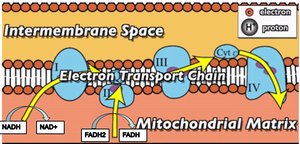
ATP Yield and Efficiency
- Complete oxidation of one glucose molecule yields about 32 ATP. - Only about 34% of the energy in glucose is transferred to ATP; the rest is lost as heat.
Fermentation and Anaerobic Respiration
Fermentation
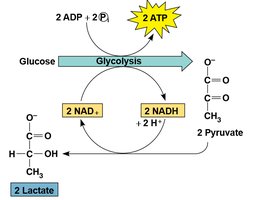
Fermentation allows cells to produce ATP without oxygen, using substrate-level phosphorylation. - Alcohol fermentation: Pyruvate is converted to ethanol and CO2. 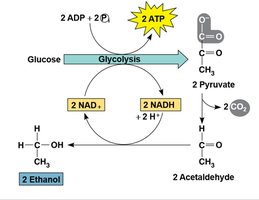 - Lactic acid fermentation: Pyruvate is reduced to lactate.
Anaerobic Respiration
Anaerobic respiration uses an electron transport chain with a final electron acceptor other than O2 (e.g., sulfate).
Regulation of Cellular Respiration
Cellular respiration is regulated by feedback mechanisms, primarily through enzyme activity. - If ATP levels drop, respiration speeds up; if ATP is abundant, respiration slows down. - Phosphofructokinase is a key regulatory enzyme in glycolysis. 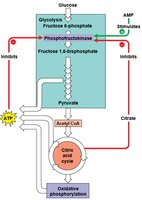
Metabolic Intersections and Evolutionary Significance
Glycolysis and the citric acid cycle are central hubs for catabolic and anabolic pathways. - All living organisms utilize glycolysis, indicating its ancient evolutionary origin. 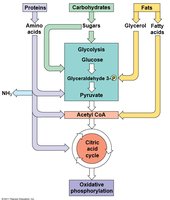
Practice Questions and Data Interpretation
Experimental Data: Pyruvate Dehydrogenase Activity
- The dependent variable is the accumulation of acetyl-CoA. - Higher affinity for pyruvate results in greater acetyl-CoA production. 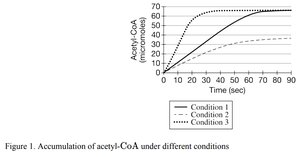
Electron Transport Chain and Chemiosmosis
- NADH and FADH2 contribute electrons to the ETC, but NADH yields more ATP because it donates electrons earlier in the chain. 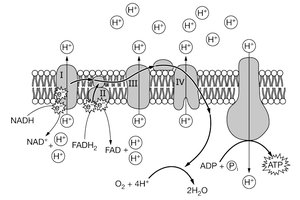
Brown Fat and Heat Production
- Uncoupling proteins in brown fat allow H+ to leak, reducing ATP production and generating heat. 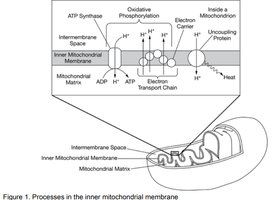
Summary Table: Comparison of Pathways
Pathway | Final Electron Acceptor | ATP Yield (per glucose) |
|---|---|---|
Aerobic Respiration | O2 | ~32 |
Anaerobic Respiration | Other (e.g., sulfate) | Variable, less than aerobic |
Fermentation | Organic molecule (e.g., pyruvate) | 2 |
Key Terms
- Glycolysis: The breakdown of glucose to pyruvate. - Citric Acid Cycle: Completes the oxidation of organic molecules. - Oxidative Phosphorylation: ATP synthesis via ETC and chemiosmosis. - Fermentation: ATP production without oxygen. - Redox Reaction: Electron transfer between molecules. Additional info: The notes expand on the original content by providing definitions, equations, and context for each stage of cellular respiration and fermentation, as well as regulatory mechanisms and evolutionary significance.
