 Indietro
Cellular Respiration and Fermentation: Mechanisms of ATP Production
Guida di studio - Note intelligenti
 Appunti personalizzati basati sui tuoi materiali, ampliati con definizioni chiave, esempi e contesto.
Cellular Respiration and Fermentation
Introduction to Cellular Respiration
Cellular respiration is a fundamental metabolic process by which cells harvest energy from high-energy molecules, such as glucose, to produce ATP. This process is essential for life, providing the energy required for cellular activities.
ATP (Adenosine Triphosphate): The molecular unit of currency for energy in cells.
Energy Source: Glucose and oxygen are required for cellular respiration; the process releases carbon dioxide and water.
Exergonic Reaction: The breakdown of glucose releases energy, which is stored in ATP.
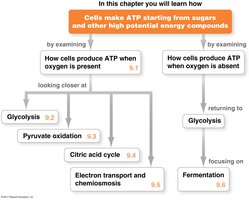
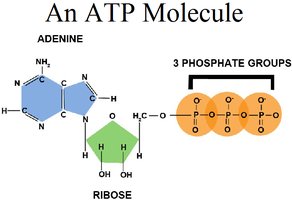
Overview of Cellular Respiration
Cellular respiration consists of a series of metabolic pathways that convert glucose into ATP. The process involves the oxidation of glucose and the reduction of oxygen, resulting in the release of energy.
General Equation:
Redox Reactions: Electron transfers occur with the rearrangement of hydrogen atoms.
ATP Yield: Each glucose molecule can produce up to 32 ATP molecules.
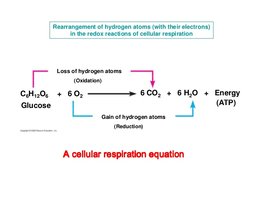
Major Steps of Cellular Respiration
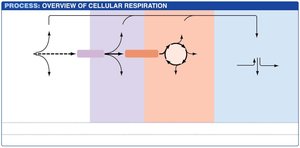
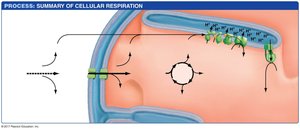
Cellular respiration is divided into four main stages, each occurring in specific cellular locations and involving distinct substrates and products.
Glycolysis: Occurs in the cytosol; breaks glucose into two pyruvate molecules.
Pyruvate Processing: Pyruvate is oxidized to form acetyl CoA in the mitochondrial matrix.
Citric Acid Cycle: Acetyl CoA is oxidized to CO2, generating NADH and FADH2.
Electron Transport Chain and Oxidative Phosphorylation: Electrons move through a transport chain, creating a proton gradient used to synthesize ATP.
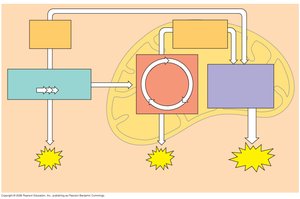
Metabolic Pathways and Regulation
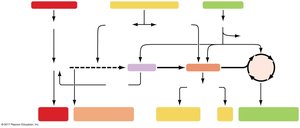
Cellular respiration is central to metabolism, integrating catabolic and anabolic pathways.
Catabolic Pathways: Breakdown of molecules to harvest energy.
Anabolic Pathways: Synthesis of larger molecules using ATP.
Regulation: Feedback inhibition controls key enzymes, such as phosphofructokinase in glycolysis.
Step 1: Glycolysis
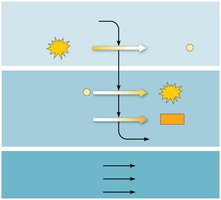
Glycolysis is a sequence of 10 reactions that occur in the cytosol, converting glucose into pyruvate.
Energy Investment Phase: 2 ATP are used to "prime the pump."
Energy Payoff Phase: NADH and ATP are produced by substrate-level phosphorylation.
Net Yield: 2 NADH, 2 ATP, and 2 pyruvate per glucose.
Regulation of Glycolysis
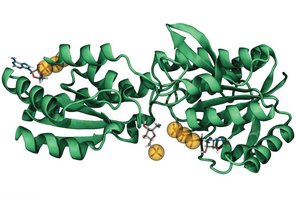
Glycolysis is regulated by feedback inhibition, primarily through the enzyme phosphofructokinase.
ATP Binding: High ATP levels inhibit phosphofructokinase by binding to a regulatory site.
Enzyme Activity: When ATP binds to the active site, the enzyme catalyzes glycolysis; binding to the regulatory site slows the reaction.
Step 2: Pyruvate Processing
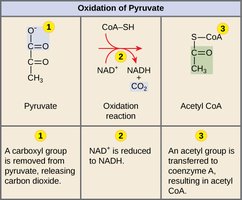
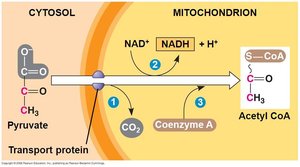
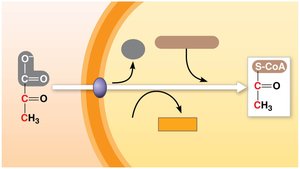
Pyruvate produced in glycolysis is transported into the mitochondria and converted to acetyl CoA.
Location: Mitochondrial matrix in eukaryotes; cytosol in prokaryotes.
Enzyme Complex: Pyruvate dehydrogenase catalyzes the reaction.
Products: One carbon is released as CO2, NADH is produced, and the remaining two-carbon unit forms acetyl CoA.
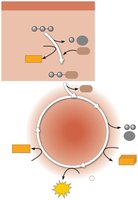
Step 3: Citric Acid Cycle
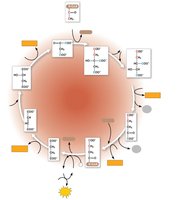
The citric acid cycle completes the breakdown of glucose, generating electron carriers and ATP.
Cycle Runs Twice: For each glucose molecule, the cycle turns twice.
Products: 6 CO2, 4 ATP, 10 NADH, and 2 FADH2 per glucose.
Regulation: Feedback inhibition at multiple points; high ATP or NADH slows the cycle.
Step 4: Electron Transport Chain and Oxidative Phosphorylation
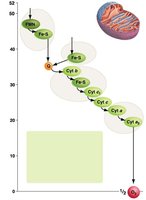
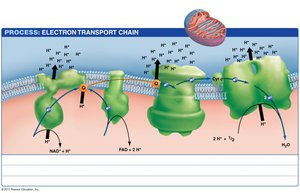
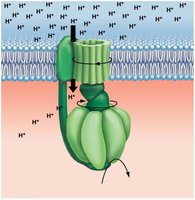
The electron transport chain (ETC) and chemiosmosis are responsible for the majority of ATP production.
Location: Inner mitochondrial membrane.
ETC: Electrons are passed through protein complexes, releasing energy to pump protons and create a gradient.
Chemiosmosis: Protons flow through ATP synthase, driving ATP production.
Final Electron Acceptor: Oxygen in aerobic respiration; other molecules in anaerobic respiration.
ATP Yield and Efficiency
Oxidative Phosphorylation: Most ATP is produced by this process.
Maximum Yield: Up to 29 ATP per glucose molecule.
Aerobic Respiration: Most efficient due to oxygen's high electronegativity.
Anaerobic Respiration and Fermentation
When oxygen is unavailable, cells use alternative pathways to regenerate NAD+ and produce ATP.
Anaerobic Respiration: Uses other electron acceptors; less efficient than aerobic respiration.
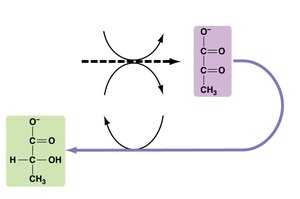
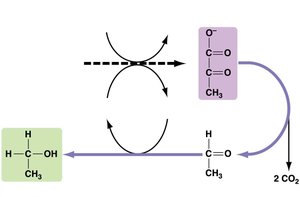
Fermentation: Regenerates NAD+ by transferring electrons to pyruvate; allows glycolysis to continue.
Efficiency: Fermentation produces only 2 ATP per glucose.
Facultative Anaerobes: Organisms that can switch between fermentation and aerobic respiration.
Comparison of Cellular Respiration and Fermentation
Process | Final Electron Acceptor | ATP Yield (per glucose) | Location |
|---|---|---|---|
Aerobic Respiration | Oxygen | ~29 | Mitochondria |
Anaerobic Respiration | Other molecules (e.g., nitrate) | Variable, less than aerobic | Cytosol/Plasma membrane |
Fermentation | Pyruvate or derivatives | 2 | Cytosol |
Key Terms and Concepts
ATP: Adenosine triphosphate, primary energy carrier.
Glycolysis: First step in glucose metabolism.
Pyruvate: End product of glycolysis.
Acetyl CoA: Entry molecule for the citric acid cycle.
NADH/FADH2: Electron carriers.
Electron Transport Chain: Series of protein complexes for electron transfer.
Chemiosmosis: ATP synthesis driven by proton gradient.
Fermentation: Anaerobic pathway for ATP production.
Additional info: The notes expand on the original content by providing definitions, context, and comparisons to ensure completeness and academic quality. The included images are directly relevant to the explanations and reinforce key concepts in cellular respiration and fermentation.
