 Indietro
Cellular Respiration and Fermentation: Mechanisms of ATP Production
Guida di studio - Note intelligenti
 Appunti personalizzati basati sui tuoi materiali, ampliati con definizioni chiave, esempi e contesto.
Cellular Respiration
Overview of Cellular Respiration
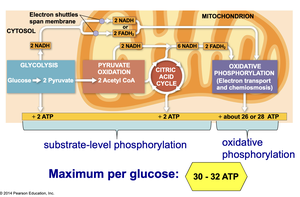
Cellular respiration is a fundamental metabolic process by which cells extract energy from glucose to produce ATP, the cell's energy currency. It consists of four main stages: glycolysis, pyruvate oxidation, the citric acid cycle, and oxidative phosphorylation.
Glycolysis: Occurs in the cytosol; glucose is split into two pyruvate molecules.
Pyruvate Oxidation: Pyruvate is converted to acetyl CoA in the mitochondrion.
Citric Acid Cycle: Acetyl CoA enters the cycle, generating NADH and FADH2.
Oxidative Phosphorylation: Electron transport and chemiosmosis produce most ATP.
ATP is generated by substrate-level phosphorylation in glycolysis and the citric acid cycle, and by oxidative phosphorylation in the final stage. 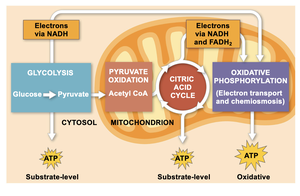
Energy Transfer: Electron Movement
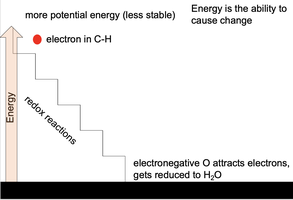
During cellular respiration, "high energy" electrons are transferred from C-H bonds in glucose to oxygen, releasing energy through a series of redox reactions.
Redox Reactions: Electrons move from less stable, high-energy states to more stable, low-energy states.
Oxygen: Highly electronegative, attracts electrons and is reduced to water.
Electron Transport Chain (ETC)
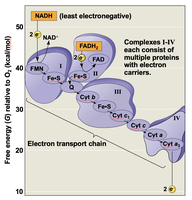
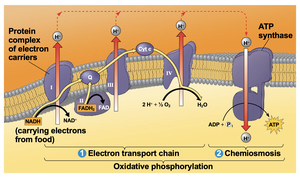
The ETC is a series of protein complexes embedded in the inner mitochondrial membrane. Electrons from NADH and FADH2 are passed through these complexes, releasing energy used to pump protons (H+) across the membrane.
Complexes I-IV: Each consists of multiple proteins and electron carriers.
Free Energy: Decreases as electrons move through the chain.
Oxygen as the Final Electron Acceptor
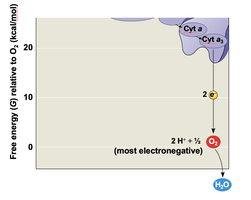
Oxygen serves as the terminal electron acceptor in the ETC, combining with electrons and protons to form water. This step is essential for the completion of aerobic respiration.
Reduction of Oxygen:
Importance: Without oxygen, the ETC cannot function, halting ATP production by oxidative phosphorylation.
Chemiosmosis: The Energy-Coupling Mechanism
Chemiosmosis is the process by which energy stored in a proton gradient across the mitochondrial membrane is used to drive ATP synthesis.
Proton Gradient: Protons are pumped into the intermembrane space, creating a proton-motive force.
ATP Synthase: Protons flow back into the matrix through ATP synthase, powering ATP production.
Chemiosmotic Theory
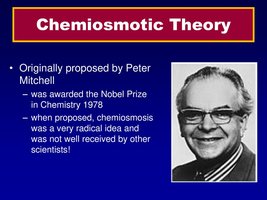
The chemiosmotic theory, proposed by Peter Mitchell, explains how the proton gradient generated by the ETC is used to synthesize ATP.
Historical Significance: Revolutionized understanding of bioenergetics; Mitchell received the Nobel Prize in Chemistry in 1978.
ATP Synthase Structure and Function
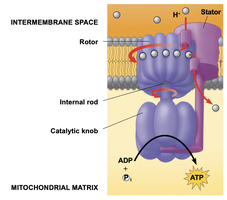
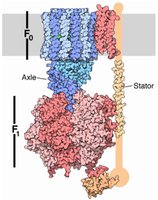
ATP synthase is a complex molecular machine with two main components: F0 (motor powered by protons) and F1 (ATP generator).
Mechanism: Protons flow through F0, causing rotation and conformational changes in F1 that catalyze ATP formation.
Location: Embedded in the inner mitochondrial membrane.
Oxidative Phosphorylation: ATP Yield
Oxidative phosphorylation is the stage where most ATP is produced during cellular respiration.
ATP Yield: Maximum per glucose is 30–32 ATP molecules.
Substrate-Level vs. Oxidative Phosphorylation: Substrate-level occurs in glycolysis and citric acid cycle; oxidative occurs in ETC and chemiosmosis.
Fermentation and Anaerobic Respiration
Fermentation: ATP Production Without Oxygen
Fermentation and anaerobic respiration allow cells to produce ATP in the absence of oxygen.
Anaerobic Respiration: Uses a final electron acceptor other than oxygen (e.g., sulfate).
Fermentation: Relies solely on substrate-level phosphorylation during glycolysis.
Types of Fermentation
Fermentation consists of glycolysis plus reactions that regenerate NAD+, allowing glycolysis to continue. The two most important types are lactic acid fermentation and alcohol fermentation.
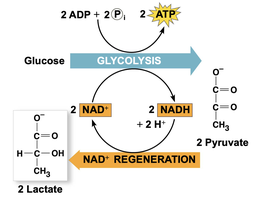
Lactic Acid Fermentation: Pyruvate is reduced to lactate, regenerating NAD+.
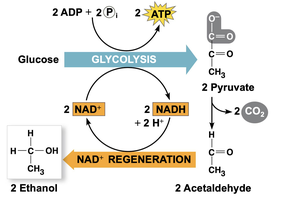
Alcohol Fermentation: Pyruvate is converted to ethanol and CO2, regenerating NAD+.
Lactic Acid Fermentation
Lactic acid fermentation occurs in some bacteria and animal cells (e.g., muscle cells).
Process: Glucose is converted to pyruvate via glycolysis; pyruvate is reduced to lactate.
ATP Yield: 2 ATP per glucose.
Regeneration of NAD+: Essential for continued glycolysis.
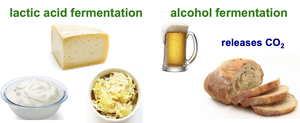
Examples: Yogurt, cheese, sauerkraut.
Alcohol Fermentation
Alcohol fermentation is carried out by yeast and some bacteria.
Process: Glucose is converted to pyruvate via glycolysis; pyruvate is decarboxylated to acetaldehyde, then reduced to ethanol.
ATP Yield: 2 ATP per glucose.
CO2 Release: Characteristic of alcohol fermentation.
Examples: Beer, bread.
Applications of Fermentation
Fermentation is essential in food production, such as yogurt, cheese, sauerkraut (lactic acid fermentation), and beer, bread (alcohol fermentation).
Chocolate Production: Fresh cocoa beans undergo complex fermentation, including alcohol fermentation and ethanol oxidation to acetic acid, followed by roasting to develop chocolate flavor.
Additional info: Fermentation is also important in biotechnology and industrial microbiology for producing biofuels and pharmaceuticals.
