 Indietro
Cellular Respiration and Fermentation: Metabolic Pathways in Biology
Guida di studio - Note intelligenti
 Appunti personalizzati basati sui tuoi materiali, ampliati con definizioni chiave, esempi e contesto.
Cellular Respiration and Fermentation
Overview of Metabolism
Metabolism encompasses all chemical reactions within a cell, including catabolic pathways that break down molecules to release energy. Cellular respiration is a central metabolic process, converting organic molecules into ATP, the cell's energy currency.
Catabolic Pathways:
Aerobic respiration: Complete breakdown of organic molecules using O2.
Anaerobic respiration: Partial breakdown without O2.
ATP: Powers most cellular work.
Photosynthesis and Respiration: Photosynthesis in chloroplasts produces organic molecules and O2, which are used in cellular respiration in mitochondria.
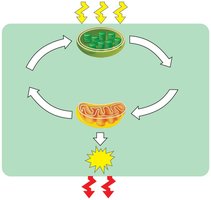
Cellular Respiration: The Overall Reaction
Cellular respiration is an exergonic process, releasing energy by breaking down glucose. The overall chemical equation is:
Glucose + Oxygen → Carbon Dioxide + Water + Energy
The process involves the transfer of high-energy electrons through redox reactions.

Redox Reactions in Cellular Respiration
Redox (oxidation-reduction) reactions are fundamental to cellular respiration. Electrons are transferred from organic molecules to electron carriers, facilitating energy extraction.
Oxidation: Loss of electrons.
Reduction: Gain of electrons.
Electron Carriers: NAD+ and FAD act as oxidizing agents, becoming NADH and FADH2 when reduced.
Stages of Cellular Respiration
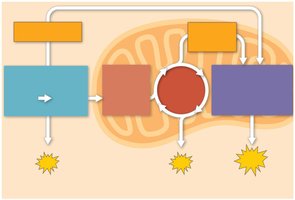
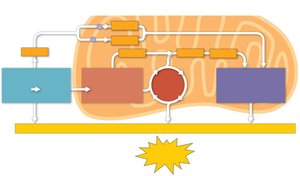
Cellular respiration consists of four main stages, each contributing to the breakdown of glucose and the production of ATP.
Glycolysis: Splits glucose into two pyruvate molecules in the cytoplasm.
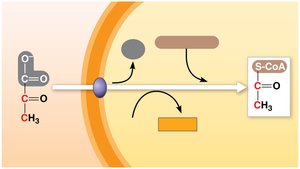
Pyruvate Oxidation: Converts pyruvate to Acetyl CoA in the mitochondrion.
Citric Acid Cycle (Krebs Cycle): Completes the breakdown of Acetyl CoA to CO2.
Oxidative Phosphorylation: Includes the electron transport chain and chemiosmosis, producing most ATP.
Glycolysis
Glycolysis is the first stage of cellular respiration, occurring in the cytoplasm and functioning with or without O2. It consists of two phases:
Energy Investment Phase: 2 ATP are used to phosphorylate glucose.
Energy Payoff Phase: 4 ATP are produced (net gain of 2 ATP), and NAD+ is reduced to NADH.
End Products: 2 pyruvate, 2 ATP (net), 2 NADH.
Pyruvate Oxidation
Pyruvate produced in glycolysis is transported into the mitochondrion and converted to Acetyl CoA, releasing CO2 and generating NADH.
Location: Mitochondrial matrix.
Products: Acetyl CoA, NADH, CO2.
Citric Acid Cycle (Krebs Cycle)
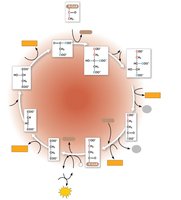
The citric acid cycle completes the breakdown of Acetyl CoA, generating ATP, NADH, and FADH2 per cycle turn.
Per Turn: 1 ATP, 3 NADH, 1 FADH2, 2 CO2.
Location: Mitochondrial matrix.
Oxidative Phosphorylation and Electron Transport Chain
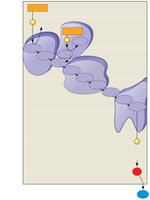
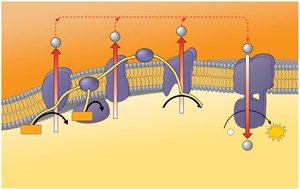
Oxidative phosphorylation occurs in the inner mitochondrial membrane, where NADH and FADH2 donate electrons to the electron transport chain. The chain consists of multiprotein complexes that transfer electrons, ultimately reducing O2 to H2O.
Electron Transport Chain: Electrons move through complexes, releasing energy.
Chemiosmosis: Energy is used to pump H+ across the membrane, driving ATP synthesis via ATP synthase.
ATP Yield from Cellular Respiration
Cellular respiration harnesses about 35% of the energy in glucose, yielding approximately 32 ATP per glucose molecule.
Glycolysis: 2 ATP
Citric Acid Cycle: 2 ATP
Oxidative Phosphorylation: ~28 ATP
Total: ~32 ATP
Fermentation: ATP Production Without Oxygen
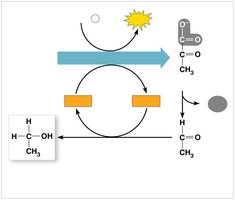
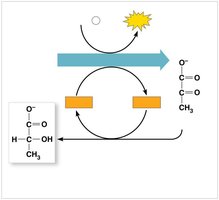
When O2 is unavailable, cells rely on fermentation to produce ATP. Glycolysis continues, but pyruvate is converted to other products to regenerate NAD+.
Alcohol Fermentation: Pyruvate is converted to ethanol and CO2.
Lactic Acid Fermentation: Pyruvate is converted to lactate.
Metabolic Pathways for Other Molecules
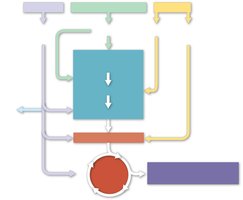
Proteins, fats, and carbohydrates can all enter cellular respiration at various points, being converted to intermediates that feed into glycolysis or the citric acid cycle.
Proteins: Broken down to amino acids, which are deaminated and enter as pyruvate or Acetyl CoA.
Fats: Glycerol enters glycolysis; fatty acids enter as Acetyl CoA.
Carbohydrates: Enter as glucose or other sugars.
Regulation of Cellular Respiration
Cellular respiration is tightly regulated by feedback mechanisms. When ATP levels are low, respiration speeds up; when ATP is abundant, it slows down. Enzyme activity in catabolic pathways is the main control point.
Negative Feedback: High ATP inhibits key enzymes.
Positive Feedback: Low ATP stimulates pathway activity.
----------------------------------------
