 Indietro
Cellular Respiration and Fermentation: Pathways for Energy Harvest
Guida di studio - Note intelligenti
 Appunti personalizzati basati sui tuoi materiali, ampliati con definizioni chiave, esempi e contesto.
Cellular Respiration and Fermentation
Introduction to Cellular Respiration
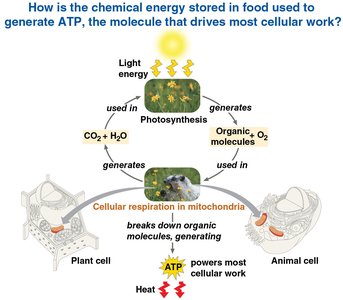
Cellular respiration is the process by which cells extract energy from organic molecules, primarily glucose, to produce ATP, the main energy currency of the cell. This process occurs in both plant and animal cells and involves a series of metabolic pathways that convert chemical energy in food into usable cellular energy.
ATP (adenosine triphosphate) powers most cellular work.
Some energy is lost as heat during the process.
Catabolic Pathways and Types of Respiration
Overview of Catabolic Pathways
Catabolic pathways break down organic molecules and release energy. The main types include:
Fermentation: Partial degradation of sugars without oxygen.
Aerobic respiration: Consumes organic molecules and O2, yielding ATP.
Anaerobic respiration: Similar to aerobic, but uses a final electron acceptor other than O2.
Overall Reaction of Cellular Respiration
The general equation for aerobic cellular respiration is:
Carbohydrates, fats, and proteins can all serve as fuels, but glucose is the most commonly traced substrate.
Photosynthesis vs. Cellular Respiration
Photosynthesis and cellular respiration are complementary processes in the biosphere:
Photosynthesis: Converts light energy into chemical energy stored in glucose (endergonic, ).
Cellular respiration: Converts chemical energy in glucose into ATP and heat (exergonic, ).
Matter cycles between the two processes, while energy flows in as light and out as heat.
Redox Reactions in Cellular Respiration
Redox Basics
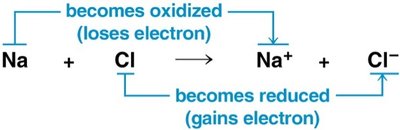
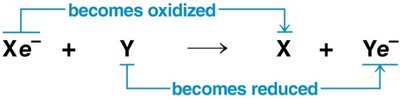
Redox (reduction-oxidation) reactions involve the transfer of electrons between molecules, releasing energy stored in organic compounds.
Oxidation: Loss of electrons from a substance.
Reduction: Gain of electrons by a substance.
Redox in Cellular Respiration
During cellular respiration, glucose is oxidized and oxygen is reduced:
Electrons move from glucose (less electronegative) to oxygen (more electronegative), releasing energy.

NAD+ and Electron Carriers
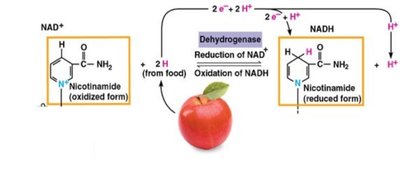
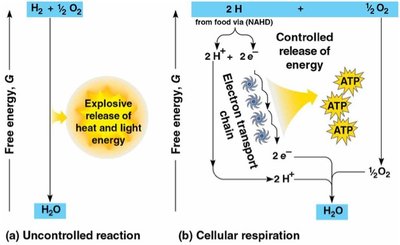
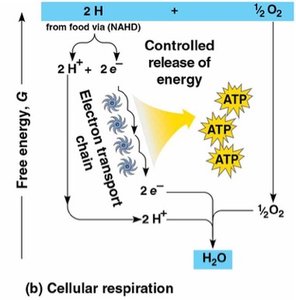
NAD+ (nicotinamide adenine dinucleotide) acts as an electron carrier, shuttling electrons from food to the electron transport chain (ETC).
NAD+ is reduced to NADH as it accepts electrons and a proton (H+).
NADH stores energy that will be used to generate ATP.
Electron Transport Chain (ETC)
The ETC is a series of protein complexes in the inner mitochondrial membrane that transfer electrons from NADH and FADH2 to oxygen, releasing energy in small steps.
O2 is the final electron acceptor, forming H2O.
The energy released is used to regenerate ATP.
Stages of Cellular Respiration
Three Main Stages
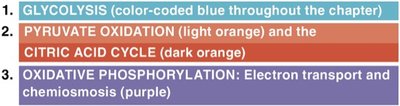
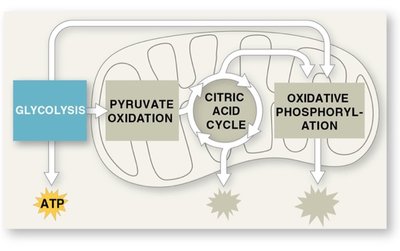
Cellular respiration consists of three main stages:
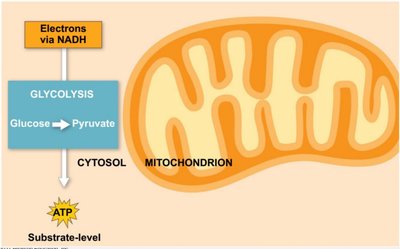
Glycolysis (cytosol): Glucose is split into two pyruvate molecules.
Pyruvate oxidation and the Citric Acid Cycle (mitochondrial matrix): Pyruvate is oxidized to acetyl CoA, which enters the citric acid cycle, completing the breakdown of glucose to CO2.
Oxidative phosphorylation (inner mitochondrial membrane): Electron transport and chemiosmosis generate most of the ATP.
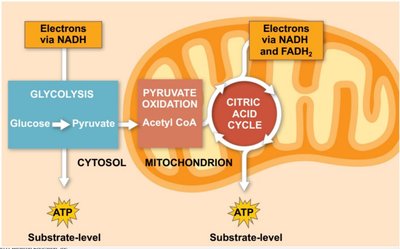
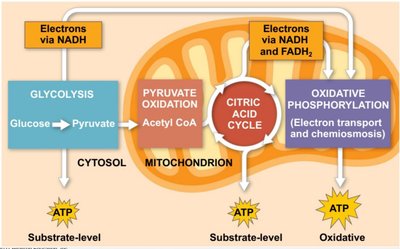
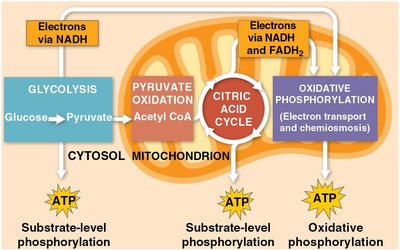
ATP Production: Substrate-Level vs. Oxidative Phosphorylation
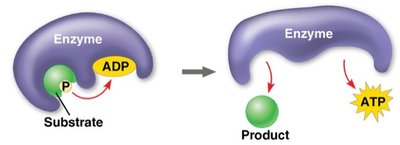
Substrate-level phosphorylation: Enzyme transfers a phosphate group directly from a substrate to ADP (occurs in glycolysis and the citric acid cycle).
Oxidative phosphorylation: ATP is generated using energy from redox reactions in the ETC (accounts for ~90% of ATP produced).
Glycolysis
Location and Overview
Glycolysis occurs in the cytoplasm and does not require oxygen. It splits one glucose molecule into two pyruvate molecules, producing a small amount of ATP and NADH.
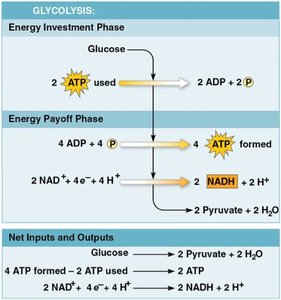
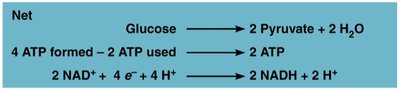
Net products: 2 pyruvate, 2 ATP (net), 2 NADH, and 2 H2O.
Phases of Glycolysis
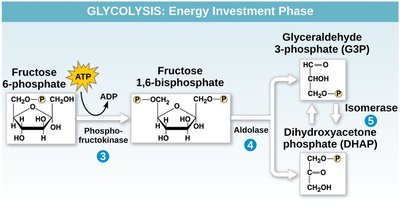
Energy investment phase: 2 ATP are used to phosphorylate glucose and split it into two 3-carbon sugars.
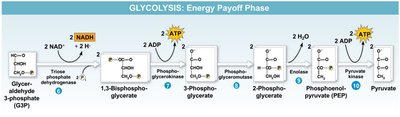
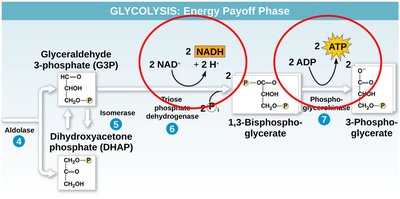
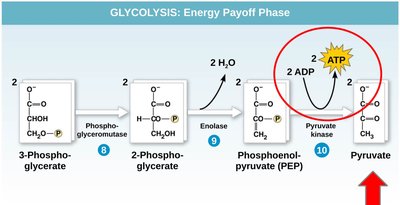
Energy payoff phase: 4 ATP are produced (net gain of 2 ATP), 2 NAD+ are reduced to 2 NADH, and 2 pyruvate are formed.
Energy Investment Phase Steps
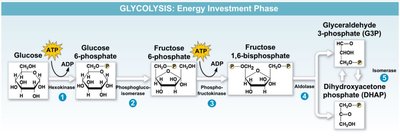
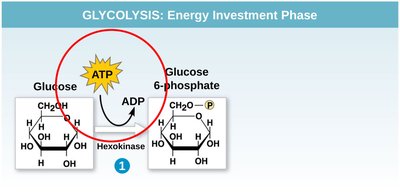
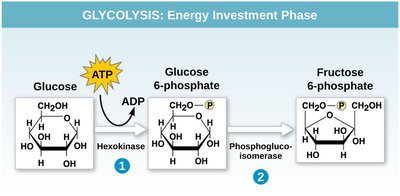
Hexokinase uses ATP to phosphorylate glucose to glucose 6-phosphate.
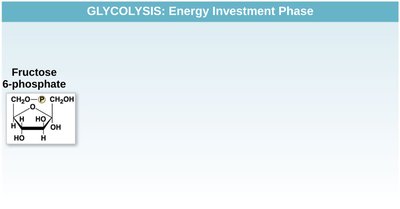
Phosphoglucoisomerase rearranges glucose 6-phosphate to fructose 6-phosphate.
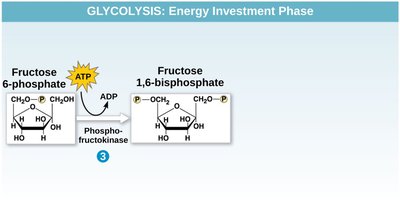
Phosphofructokinase uses another ATP to form fructose 1,6-bisphosphate.
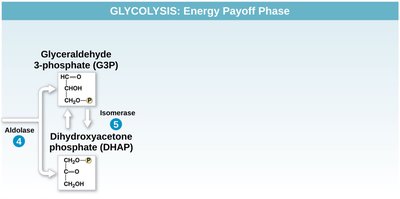
Aldolase splits fructose 1,6-bisphosphate into G3P and DHAP.
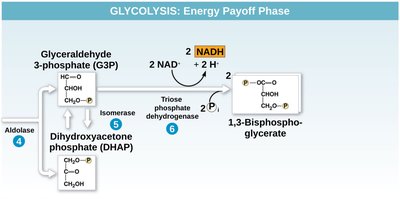
Isomerase converts DHAP to G3P.
Energy Payoff Phase Steps
G3P is oxidized, reducing NAD+ to NADH and forming 1,3-bisphosphoglycerate.
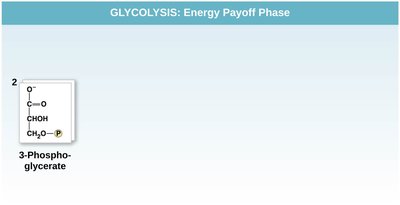
Phosphoglycerokinase transfers a phosphate to ADP, forming ATP and 3-phosphoglycerate.
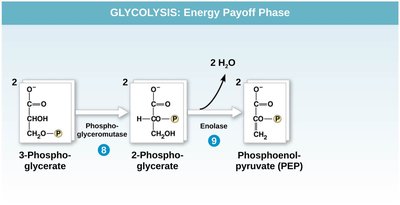
Phosphoglyceromutase rearranges 3-phosphoglycerate to 2-phosphoglycerate.
Enolase removes water, forming phosphoenolpyruvate (PEP).
Pyruvate kinase transfers a phosphate from PEP to ADP, forming ATP and pyruvate.
Net Reaction of Glycolysis
The overall reaction for glycolysis is:
Pyruvate Oxidation and the Citric Acid Cycle
Pyruvate Oxidation
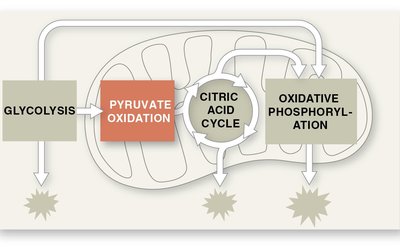
In the presence of oxygen, pyruvate enters the mitochondrion (in eukaryotes) and is converted to acetyl CoA, which links glycolysis to the citric acid cycle.
Pyruvate dehydrogenase catalyzes the reaction, releasing CO2, reducing NAD+ to NADH, and attaching the remaining two-carbon fragment to coenzyme A.
The Citric Acid Cycle (Krebs Cycle)
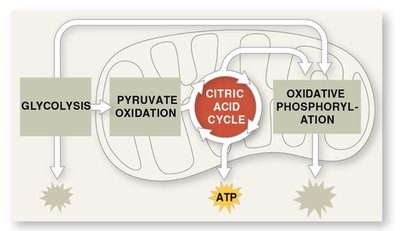
The citric acid cycle completes the oxidation of glucose by breaking down acetyl CoA to CO2 in the mitochondrial matrix.
Each turn of the cycle yields 1 ATP, 3 NADH, 1 FADH2, and 2 CO2.
Two turns per glucose molecule (one per pyruvate).
Summary Table: Glycolysis, Pyruvate Oxidation, and Citric Acid Cycle
Stage | Main Location | Main Inputs | Main Outputs | ATP Produced |
|---|---|---|---|---|
Glycolysis | Cytosol | Glucose, 2 NAD+, 2 ATP | 2 Pyruvate, 2 NADH, 2 ATP (net) | 2 (substrate-level) |
Pyruvate Oxidation | Mitochondrial matrix | 2 Pyruvate, 2 NAD+, 2 CoA | 2 Acetyl CoA, 2 NADH, 2 CO2 | 0 |
Citric Acid Cycle | Mitochondrial matrix | 2 Acetyl CoA, 6 NAD+, 2 FAD, 2 ADP | 4 CO2, 6 NADH, 2 FADH2, 2 ATP | 2 (substrate-level) |
*Additional info: The above table summarizes the main steps and products of the first three stages of cellular respiration, providing a clear overview for exam preparation.*
