 Indietro
Cellular Respiration and Fermentation: Pathways of Energy Harvest
Guida di studio - Note intelligenti
 Appunti personalizzati basati sui tuoi materiali, ampliati con definizioni chiave, esempi e contesto.
Cellular Respiration and Fermentation
Overview of Cellular Respiration
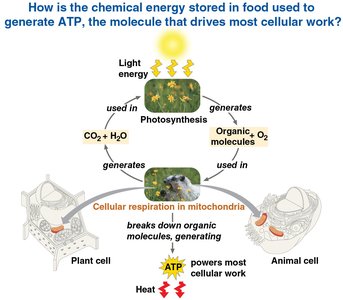
Cellular respiration is the process by which cells extract energy from organic molecules, primarily glucose, to produce ATP, the main energy currency of the cell. This process occurs in both plant and animal cells and involves a series of metabolic pathways that break down glucose and other fuels, releasing energy that is captured in ATP.
ATP (Adenosine Triphosphate): The molecule that stores and transfers energy for most cellular processes.
Catabolic Pathways: Metabolic routes that break down molecules and release energy.
Energy Transformation: Chemical energy in food is converted to chemical energy in ATP, with some energy lost as heat.
Catabolic Pathways: Types of Respiration
Cells can break down organic fuels in three main ways, depending on the presence or absence of oxygen:
Fermentation: Partial degradation of sugars without oxygen.
Aerobic Respiration: Consumes organic molecules and oxygen, yielding the most ATP.
Anaerobic Respiration: Uses electron acceptors other than oxygen.
Summary Equation for Cellular Respiration
The overall chemical reaction for aerobic cellular respiration is:
Glucose is oxidized to carbon dioxide.
Oxygen is reduced to water.
Comparison: Photosynthesis vs. Cellular Respiration
Photosynthesis and cellular respiration are complementary processes in the global carbon and energy cycles:
Photosynthesis: Converts light energy to chemical energy stored in glucose. Occurs in chloroplasts. Endergonic process ().
Cellular Respiration: Converts chemical energy in glucose to ATP and heat. Occurs in cytosol and mitochondria. Exergonic process ().
Redox Reactions: Water is oxidized and CO2 is reduced in photosynthesis; glucose is oxidized and O2 is reduced in respiration.
Redox Reactions in Cellular Respiration
Redox Basics
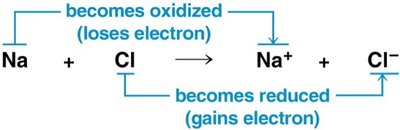
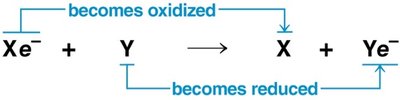
Redox (reduction-oxidation) reactions involve the transfer of electrons between molecules, releasing energy that can be used to make ATP.
Oxidation: Loss of electrons from a substance.
Reduction: Gain of electrons by a substance.
Redox in Respiration
During cellular respiration, glucose is oxidized and oxygen is reduced. Electrons lose potential energy as they move toward more electronegative atoms, such as oxygen.

Electron Carriers: NAD+ and NADH
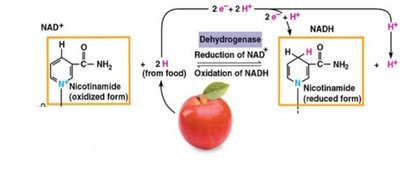
Electrons from glucose are transferred to electron carriers, primarily NAD+, which becomes reduced to NADH. NADH stores energy and donates electrons to the electron transport chain (ETC).
NAD+ (Nicotinamide Adenine Dinucleotide): An oxidizing agent that accepts electrons and becomes NADH.
NADH: A reduced form that carries electrons to the ETC.
Electron Transport Chain (ETC)
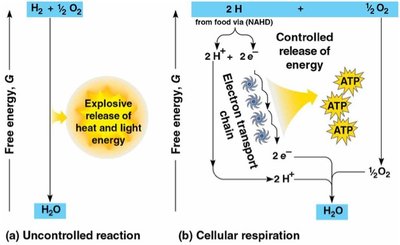
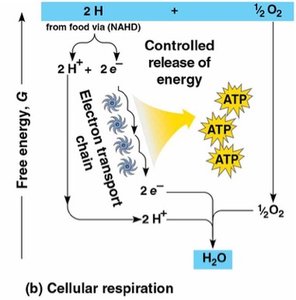
The ETC is a series of protein complexes in the inner mitochondrial membrane that transfer electrons from NADH and FADH2 to oxygen, releasing energy in small steps to produce ATP.
Oxygen: The final electron acceptor, forming water.
Energy Release: Controlled, stepwise release prevents explosive energy loss.
Stages of Cellular Respiration
Three Main Stages
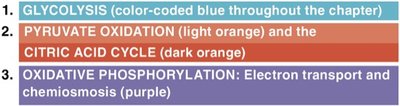
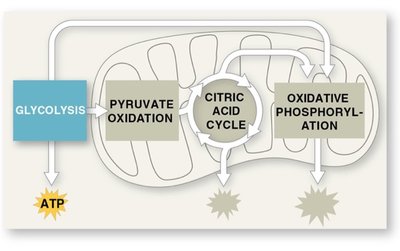
Cellular respiration consists of three main stages, each with distinct roles in energy extraction:
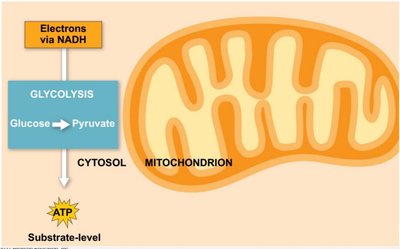
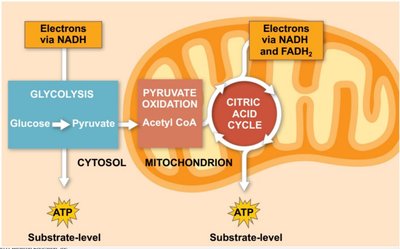
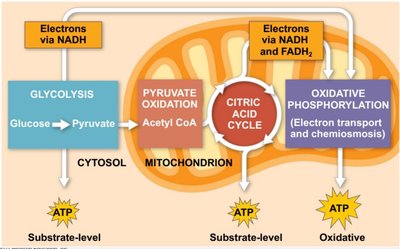
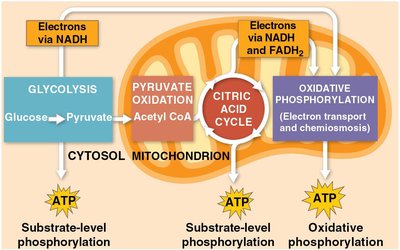
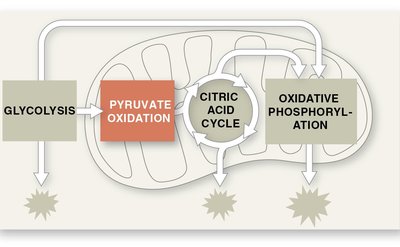
Glycolysis: Occurs in the cytosol; breaks glucose into two pyruvate molecules.
Pyruvate Oxidation and Citric Acid Cycle: Occur in the mitochondrial matrix; complete the breakdown of glucose to CO2.
Oxidative Phosphorylation: Includes the ETC and chemiosmosis; produces most ATP.
ATP Production: Substrate-Level vs. Oxidative Phosphorylation
ATP is generated by two mechanisms:
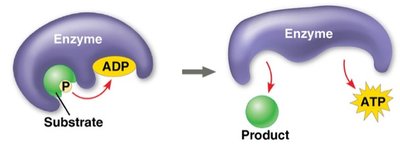
Substrate-Level Phosphorylation: Direct transfer of a phosphate group to ADP by an enzyme (occurs in glycolysis and the citric acid cycle).
Oxidative Phosphorylation: ATP synthesis powered by redox reactions in the ETC (accounts for ~90% of ATP production).
Glycolysis
Location and Overview
Glycolysis is the first stage of cellular respiration and occurs in the cytoplasm. It splits one glucose molecule (6 carbons) into two pyruvate molecules (3 carbons each), producing a small amount of ATP and NADH.
No Oxygen Required: Glycolysis occurs with or without oxygen.
No CO2 Released: All carbon remains in pyruvate.
Phases of Glycolysis
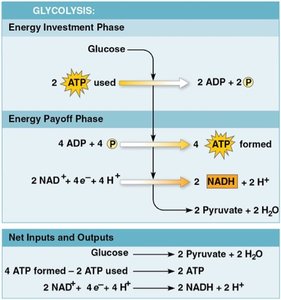
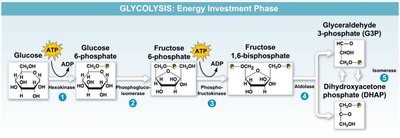
Glycolysis consists of two phases:
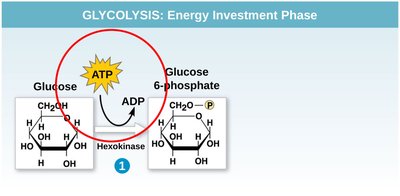
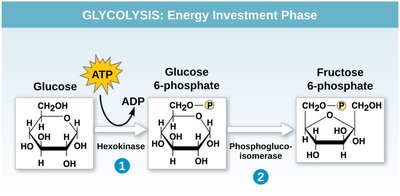
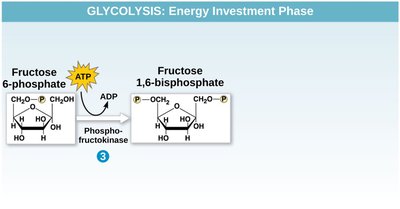
Energy Investment Phase: 2 ATP are used to phosphorylate glucose and its intermediates.
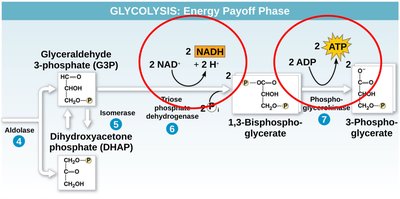
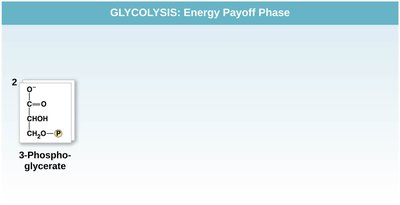
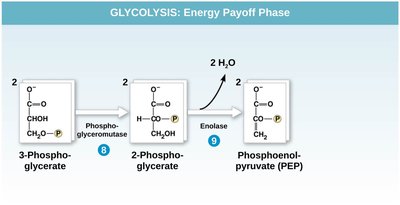
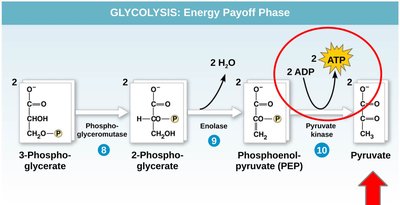
Energy Payoff Phase: 4 ATP are produced (net gain of 2 ATP), 2 NAD+ are reduced to 2 NADH, and 2 pyruvate + 2 H2O are formed.
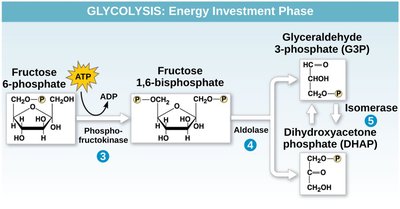
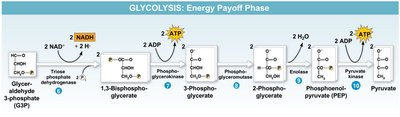
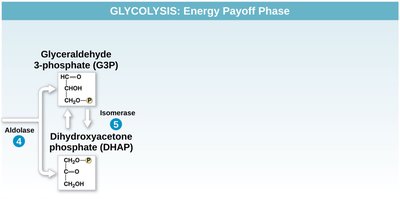
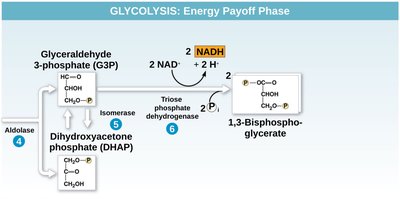
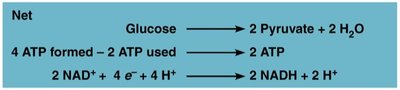
Net Reaction of Glycolysis
Input | Output |
|---|---|
Glucose | 2 Pyruvate + 2 H2O |
4 ATP formed – 2 ATP used | 2 ATP (net) |
2 NAD+ + 4 e- + 4 H+ | 2 NADH + 2 H+ |
Pyruvate Oxidation and the Citric Acid Cycle
Pyruvate Oxidation
After glycolysis, pyruvate is transported into the mitochondrion (in eukaryotes) and converted to acetyl CoA, which enters the citric acid cycle.
Pyruvate Dehydrogenase: Catalyzes the conversion of pyruvate to acetyl CoA, producing CO2 and NADH.
Citric Acid Cycle (Krebs Cycle)
The citric acid cycle completes the oxidation of glucose by breaking down acetyl CoA to CO2. It occurs in the mitochondrial matrix and generates ATP, NADH, and FADH2.
Per Turn (per acetyl CoA): 1 ATP, 3 NADH, 1 FADH2, 2 CO2
Two Turns per Glucose: Since each glucose yields two pyruvate, the cycle runs twice per glucose molecule.
Oxidative Phosphorylation
Electron Transport Chain and Chemiosmosis
Oxidative phosphorylation is the final stage of cellular respiration, where most ATP is produced. Electrons from NADH and FADH2 pass through the ETC, driving the active transport of protons (H+) across the inner mitochondrial membrane. The resulting proton gradient powers ATP synthase, which synthesizes ATP from ADP and inorganic phosphate.
Proton-Motive Force: The H+ gradient across the membrane, which drives ATP synthesis.
ATP Yield: About 32 ATP per glucose molecule (actual yield may vary).
Fermentation and Anaerobic Respiration
ATP Production Without Oxygen
When oxygen is not available, cells can produce ATP by fermentation or anaerobic respiration:
Anaerobic Respiration: Uses an ETC with a final electron acceptor other than oxygen (e.g., sulfate).
Fermentation: Extends glycolysis by regenerating NAD+ from NADH, allowing glycolysis to continue. Two common types are alcohol fermentation (producing ethanol and CO2) and lactic acid fermentation.
ATP Yield: Only the 2 ATP from glycolysis are produced.
Connections and Regulation
Metabolic Integration
Many types of organic molecules can enter the cellular respiration pathway at various points:
Proteins: Broken down to amino acids, which can be deaminated and enter glycolysis or the citric acid cycle.
Fats: Glycerol enters glycolysis; fatty acids are converted to acetyl CoA.
Regulation of Cellular Respiration
Cellular respiration is tightly regulated by feedback mechanisms, primarily through the control of key enzymes. High levels of ATP inhibit catabolic pathways, while low ATP levels stimulate them, ensuring energy production matches cellular demand.
