 Indietro
Cellular Respiration and Fermentation: Structure, Function, and Regulation
Guida di studio - Note intelligenti
 Appunti personalizzati basati sui tuoi materiali, ampliati con definizioni chiave, esempi e contesto.
Cellular Respiration and Fermentation
Overview of Cellular Respiration
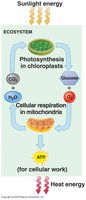
Cellular respiration is a fundamental metabolic pathway that converts the chemical energy stored in glucose and other macromolecules into ATP, the energy currency of the cell. This process involves a series of redox reactions and is tightly linked to breathing, which supplies oxygen and removes carbon dioxide.
Key Equation:
Energy Transformation: Photosynthesis stores energy in glucose; cellular respiration releases this energy for cellular work.
ATP Production: Occurs via substrate-level and oxidative phosphorylation.
Fermentation: Regenerates NAD+ to allow glycolysis to continue in the absence of oxygen.
Macromolecules and Energy
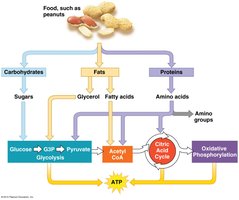
Food provides energy in the form of macromolecules, which are broken down into subunits for energy release and biosynthesis.
Carbohydrates, fats, and proteins are metabolized to produce ATP.
Subunits: Sugars, fatty acids, and amino acids enter different points in the cellular respiration pathway.
Breathing and Cellular Respiration
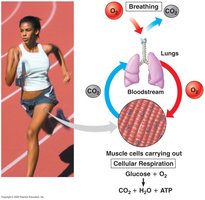
Breathing supplies oxygen for cellular respiration and removes carbon dioxide, linking external respiration to internal metabolic processes.
Oxygen: Required for the final steps of cellular respiration.
Carbon Dioxide: Produced as a waste product.
Summary of Cellular Respiration
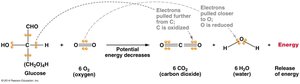
Cellular respiration involves redox reactions, where electrons are transferred from glucose to oxygen, releasing energy.
Redox Reactions: Oxidation (loss of electrons) and reduction (gain of electrons).
Electron Carriers: NAD+ and FAD are reduced to NADH and FADH2.
ATP: Synthesized using released energy.
Redox Reactions and ATP Generation
Redox reactions transfer electrons and energy, driving ATP synthesis.
Oxidation: Loss of electrons.
Reduction: Gain of electrons.
ATP Structure: ATP consists of adenine, ribose, and three phosphate groups.
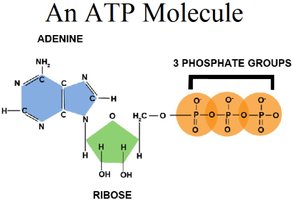
Energetic Coupling
Energetic coupling links exergonic and endergonic reactions, allowing energy released from one reaction to drive another.
Redox reactions: Key examples of energetic coupling in metabolism.
Electron Transfer in Redox Reactions
Electrons are transferred or shift within covalent bonds, often accompanied by protons.
Reduction: Gain of electrons and hydrogen; increases potential energy.
Oxidation: Loss of electrons and hydrogen; decreases potential energy.
OIL RIG: Oxidation Is Loss, Reduction Is Gain.
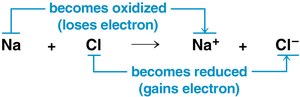
Electron Sharing and Oxygen
Oxygen, being highly electronegative, pulls electrons closer, releasing energy as electrons move toward oxygen.
Electron movement: Closer to oxygen releases energy.
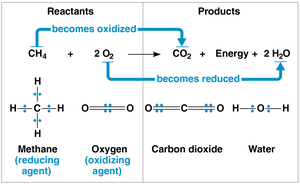
NAD+ and NADH
NAD+ is reduced to NADH, which acts as an electron carrier and provides reducing power for cellular reactions.
NAD+: Electron acceptor.
NADH: Electron donor in metabolic pathways.
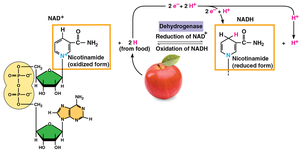
Glucose Oxidation
Glucose is oxidized to carbon dioxide, and oxygen is reduced to water, releasing energy for ATP synthesis.
Controlled redox reactions: Drive ATP production.

Steps of Cellular Respiration
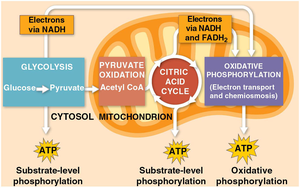
Cellular respiration consists of three main steps: glycolysis, pyruvate oxidation and citric acid cycle, and electron transport with chemiosmosis.
Glycolysis: Glucose to pyruvate.
Pyruvate oxidation & Citric acid cycle: Pyruvate to acetyl-CoA to CO2.
Electron transport & chemiosmosis: Oxidation of reduced compounds produces most ATP.
Glycolysis
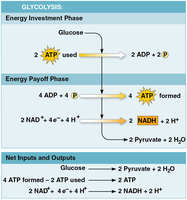
Glycolysis occurs in the cytoplasm and consists of two phases: energy investment and energy payoff.
Energy Investment: 2 ATP used to split glucose.
Energy Payoff: 4 ATP produced, 2 NAD+ reduced to NADH, 2 pyruvate formed.
Net Gain: 2 ATP via substrate-level phosphorylation.
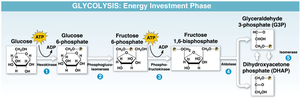
Energy Investment Phase
Glucose is phosphorylated twice, producing fructose-1,6-bisphosphate.
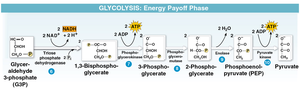
Energy Payoff Phase
Sugar is split into two pyruvate molecules.
2 NAD+ reduced to 2 NADH.
4 ATP produced by substrate-level phosphorylation.
Substrate-Level Phosphorylation
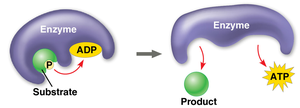
Substrate-level phosphorylation occurs when an enzyme transfers a phosphate group directly from a substrate to ADP, forming ATP.
Occurs in: Glycolysis and citric acid cycle.
Differs from: Oxidative phosphorylation, which uses the electron transport chain.
Pyruvate Processing
Pyruvate from glycolysis is transported into the mitochondrial matrix and converted to acetyl-CoA by pyruvate dehydrogenase.
Products: 1 CO2 released, 1 NADH produced per pyruvate.
Regulation: Inhibited by high ATP; stimulated by high CoA or NAD+, or low ATP.
Citric Acid Cycle
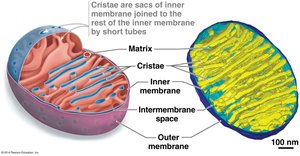
The citric acid cycle occurs in the mitochondrial matrix, oxidizing acetyl-CoA to CO2 and producing NADH, FADH2, and ATP.
Cycle runs twice per glucose.
Outputs: CO2, NADH, FADH2, ATP (via GTP).
Regulation: Feedback inhibition; slows when ATP or NADH is abundant.
Electron Transport Chain (ETC) and Chemiosmosis
The ETC is located in the inner mitochondrial membrane and consists of four protein complexes and mobile electron carriers.
NADH and FADH2: Donate electrons to the chain.
Final electron acceptor: Oxygen, forming water.
Proton Gradient: Energy released pumps protons into the intermembrane space, creating a proton-motive force.
Chemiosmosis and Oxidative Phosphorylation
Protons flow down their gradient through ATP synthase, driving ATP production from ADP and Pi.
Most ATP: Produced by oxidative phosphorylation (26–28 of 30–32 total ATP).
Efficiency: About 34% of glucose’s energy is converted to ATP; the rest is lost as heat.
Catabolic Pathways and Metabolic Control
Cellular respiration is flexible, accepting carbohydrates, proteins, and fats as fuel.
Feedback inhibition: Regulates enzyme activity and prevents wasteful production.
Metabolic control: High ATP inhibits respiration; low ATP stimulates it.
ATP Production Without Oxygen: Fermentation
In the absence of oxygen, cells use fermentation to regenerate NAD+ and allow glycolysis to continue.
Alcohol Fermentation: Pyruvate is converted to acetaldehyde and CO2, then to ethanol and NAD+.
Lactic Acid Fermentation: Pyruvate is reduced directly to lactate.
Evolutionary Significance of Glycolysis
Glycolysis is the most widespread metabolic pathway, likely used by early prokaryotes before oxygen was present. It serves as a central hub connecting catabolic and anabolic pathways. Additional info: Glycolysis is considered a metabolic heirloom, highlighting its evolutionary importance in cellular metabolism.
