 Indietro
Cellular Respiration and Fermentation: Structured Study Notes
Guida di studio - Note intelligenti
 Appunti personalizzati basati sui tuoi materiali, ampliati con definizioni chiave, esempi e contesto.
Cellular Respiration and Fermentation
Overview of Cellular Respiration
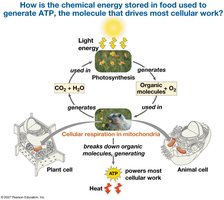
Cellular respiration is a fundamental metabolic process by which cells extract energy from organic molecules, primarily glucose, to produce ATP, the main energy currency of the cell. This process occurs in both plant and animal cells and is essential for cellular work.
ATP (Adenosine Triphosphate): The molecule that powers most cellular activities.
Energy Transformation: Chemical energy in food is converted to chemical energy in ATP, with some energy lost as heat.
Location: Cellular respiration occurs in the mitochondria of eukaryotic cells.
Photosynthesis vs. Cellular Respiration: Photosynthesis stores energy in organic molecules; cellular respiration releases it for cellular use.
Example: A marmot obtains energy for its cells by feeding on plants, which are processed through cellular respiration.

Catabolic Pathways and ATP Production
Catabolic pathways break down complex molecules to release stored energy, which is used to synthesize ATP. Cellular respiration includes aerobic and anaerobic processes, as well as fermentation.
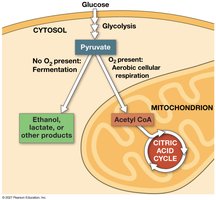
Fermentation: Partial degradation of sugars without oxygen.
Aerobic Respiration: Consumes organic molecules and oxygen, yielding ATP.
Anaerobic Respiration: Similar to aerobic, but uses compounds other than oxygen as electron acceptors.
ATP Regeneration: Cells constantly regenerate ATP from ADP and phosphate.
Redox Reactions: Oxidation and Reduction
Redox reactions are central to cellular respiration, involving the transfer of electrons between molecules. These reactions release energy stored in organic molecules.
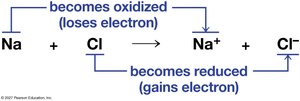
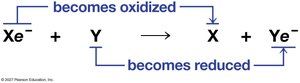
Oxidation: Loss of electrons from a substance.
Reduction: Gain of electrons by a substance.
Reducing Agent: Electron donor.
Oxidizing Agent: Electron acceptor.
Example: Sodium (Na) is oxidized, chlorine (Cl) is reduced in the reaction:
Redox Reactions in Cellular Respiration
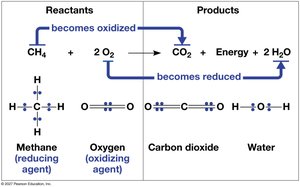
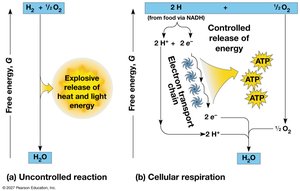
Cellular respiration involves the oxidation of glucose and the reduction of oxygen, releasing energy for ATP synthesis.
Glucose Oxidation: Transfers electrons from glucose to oxygen.
Energy Release: Electrons move from high-energy states in glucose to lower-energy states in oxygen.
Example: Methane combustion as a redox reaction:

Electron Carriers and the Electron Transport Chain
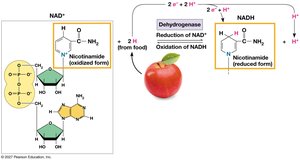
Electrons from food molecules are transferred to electron carriers, such as NAD+, which shuttle electrons to the electron transport chain for ATP production.
NAD+ (Nicotinamide Adenine Dinucleotide): A coenzyme functioning as an electron carrier.
NADH: The reduced form, stores energy used to synthesize ATP.
Dehydrogenases: Enzymes that remove hydrogen atoms from substrates and transfer them to NAD+.
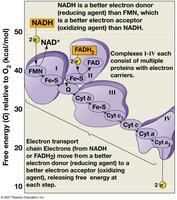
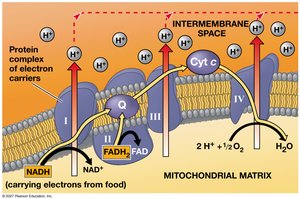
Electron Transport Chain: Series of molecules in the mitochondrial membrane that transfer electrons in energy-releasing steps.

Stages of Cellular Respiration
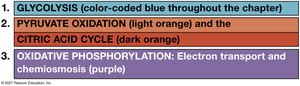
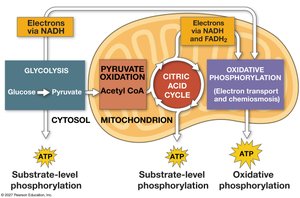
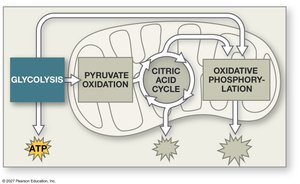
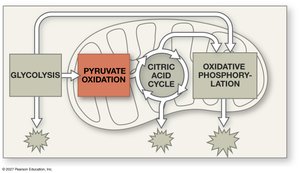
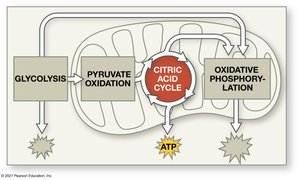
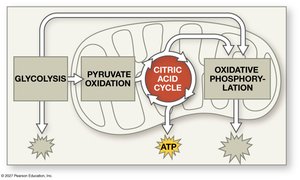
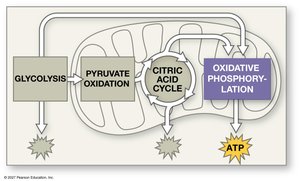
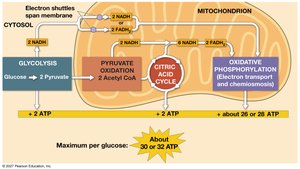
Cellular respiration consists of three main stages: glycolysis, pyruvate oxidation and the citric acid cycle, and oxidative phosphorylation.
Glycolysis: Breaks down glucose into two pyruvate molecules in the cytosol.
Pyruvate Oxidation and Citric Acid Cycle: Completes glucose breakdown in the mitochondria.
Oxidative Phosphorylation: Electron transport chain and chemiosmosis produce most ATP.
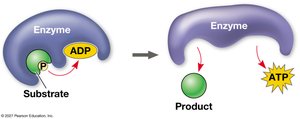
Substrate-Level Phosphorylation: Enzyme transfers phosphate group directly to ADP.
ATP Yield: Up to 32 ATP per glucose molecule.
Glycolysis
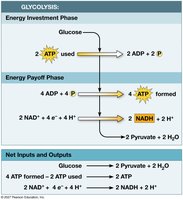
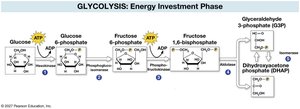
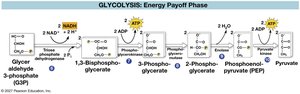
Glycolysis is the first stage of cellular respiration, occurring in the cytoplasm. It consists of two phases: energy investment and energy payoff.
Energy Investment Phase: 2 ATP are used to split glucose.
Energy Payoff Phase: 4 ATP are synthesized, NAD+ is reduced to NADH, and pyruvate is formed.
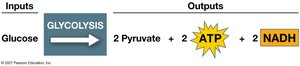
Net Yield: 2 ATP and 2 NADH per glucose.
Occurs: With or without oxygen.
Pyruvate Oxidation
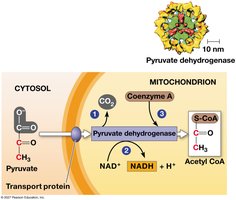
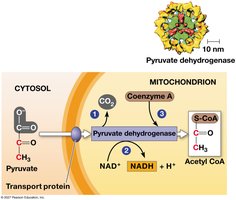
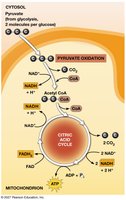
After glycolysis, pyruvate is transported into the mitochondria and converted to acetyl CoA, which enters the citric acid cycle.
Pyruvate Dehydrogenase: Catalyzes oxidation of pyruvate, reduction of NAD+ to NADH, and formation of acetyl CoA.
CO2 Release: First CO2 of cellular respiration is released.
Citric Acid Cycle (Krebs Cycle)
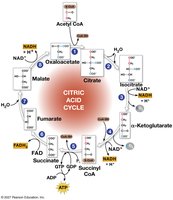
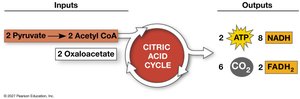
The citric acid cycle completes the breakdown of glucose, generating ATP, NADH, FADH2, and CO2 as waste.
Eight Steps: Each catalyzed by a specific enzyme.
Inputs: Acetyl CoA and oxaloacetate.
Outputs: ATP, NADH, FADH2, and CO2.
Cycle Runs Twice: Per glucose molecule.
Oxidative Phosphorylation and Chemiosmosis
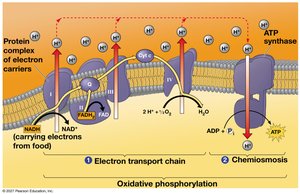
Oxidative phosphorylation is the process by which most ATP is generated, coupling electron transport with ATP synthesis via chemiosmosis.
Electron Transport Chain: Embedded in the inner mitochondrial membrane; electrons are passed through carrier molecules.
Free Energy Drop: Electrons lose energy as they move down the chain, finally reducing oxygen to water.
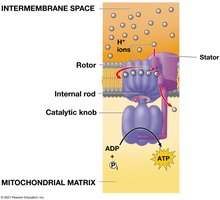
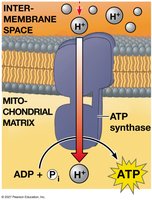
Chemiosmosis: Energy from electron transport pumps protons (H+) across the membrane, creating a gradient.
ATP Synthase: Protons flow back through ATP synthase, driving ATP production.
Proton-Motive Force: The gradient's capacity to do work.
ATP Yield from Cellular Respiration
Cellular respiration transfers about 34% of the energy in glucose to ATP, producing up to 32 ATP per glucose molecule. The rest is lost as heat.
ATP Yield: Varies due to coupling efficiency, electron shuttling, and use of proton-motive force for other work.
Fermentation and Anaerobic Respiration
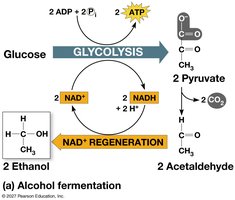
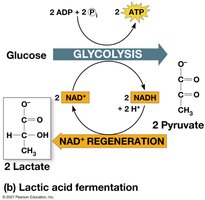
Cells can produce ATP without oxygen through fermentation or anaerobic respiration. Fermentation extends glycolysis by regenerating NAD+ using organic molecules as electron acceptors.
Anaerobic Respiration: Uses electron transport chain with final electron acceptor other than oxygen (e.g., sulfate).
Fermentation: Two common types: alcohol fermentation and lactic acid fermentation.
Alcohol Fermentation: Pyruvate converted to ethanol; CO2 released.
Lactic Acid Fermentation: Pyruvate reduced to lactate; no CO2 released.
Comparing Fermentation, Anaerobic, and Aerobic Respiration
All three processes use glycolysis to oxidize glucose buts32 differ in electron acceptors and ATP yield.
Fermentation: Organic molecule as final electron acceptor; 2 ATP per glucose.
Anaerobic Respiration: Non-oxygen electron acceptor; variable ATP yield.
Aerobic Respiration: Oxygen as final electron acceptor; up to 32 ATP per glucose.
Obligate Anaerobes: Cannot survive in presence of oxygen.
Facultative Anaerobes: Can use fermentation or respiration.
Metabolic Pathways and Regulation
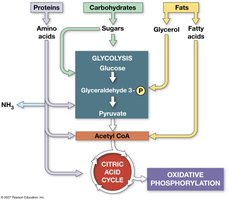
Glycolysis and the citric acid cycle connect to many other metabolic pathways, allowing cells to use various fuels and regulate energy production.
Catabolic Versatility: Carbohydrates, proteins, and fats can all be used as fuel.
Deamination: Removal of amino groups from proteins before entering respiration.
Beta Oxidation: Fatty acids broken down to acetyl CoA, NADH, and FADH2.
Biosynthesis: Small molecules from food used to build macromolecules.
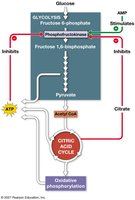
Feedback Inhibition: Regulates cellular respiration based on ATP concentration.
Summary Tables
Key concepts of glycolysis, citric acid cycle, electron transport chain, and ATP synthase are summarized in the following tables:
Process | Inputs | Outputs |
|---|---|---|
Glycolysis | Glucose | 2 Pyruvate, 2 ATP, 2 NADH |
Citric Acid Cycle | 2 Acetyl CoA, 2 Oxaloacetate | 2 ATP, 8 NADH, 2 FADH2, 6 CO2 |
Electron Transport Chain | NADH, FADH2, O2 | ATP, H2O |
Key Equations
Cellular Respiration Overall Equation:
Alcohol Fermentation:
Lactic Acid Fermentation:
Additional info:
Glycolysis is an ancient metabolic pathway, used by early prokaryotes before oxygen was present in the atmosphere.
Regulation of cellular respiration is crucial for energy efficiency and homeostasis.
