 Indietro
Cellular Respiration and Fermentation: Study Guide for General Biology
Guida di studio - Note intelligenti
 Appunti personalizzati basati sui tuoi materiali, ampliati con definizioni chiave, esempi e contesto.
Cellular Respiration: Overview
Introduction to Cellular Respiration
Cellular respiration is a fundamental metabolic process in both plant and animal cells, responsible for breaking down organic molecules to release energy stored in chemical bonds. This energy is transformed into ATP, the primary energy currency of the cell, with some energy lost as heat.
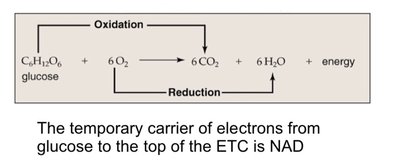
Cellular respiration uses O2 and organic molecules to produce ATP, CO2, and H2O as waste products.
The overall reaction:
Glucose is oxidized; oxygen is reduced.
NAD+ acts as a temporary electron carrier, transferring electrons from glucose to the electron transport chain (ETC).
Stages of Cellular Respiration
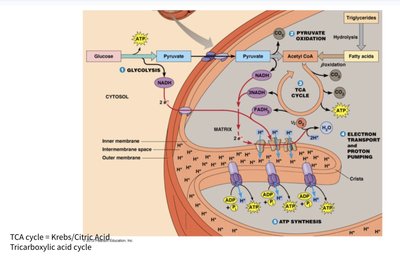
Energy is harvested from glucose in three main stages:
Glycolysis (cytosol)
Pyruvate oxidation and the Citric Acid Cycle (mitochondrial matrix)
Oxidative phosphorylation (inner mitochondrial membrane)
Types of Phosphorylation
Phosphorylation Mechanisms
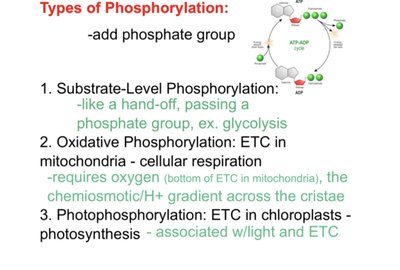
Phosphorylation refers to the addition of a phosphate group to a molecule, a key step in ATP production.
Substrate-Level Phosphorylation: Direct enzymatic transfer of a phosphate group to ADP, occurs in glycolysis and the citric acid cycle.
Oxidative Phosphorylation: ATP production powered by electron transport and chemiosmosis across the inner mitochondrial membrane; requires oxygen.
Photophosphorylation: Light-driven ATP production in chloroplasts during photosynthesis.
Glycolysis
Process and Products
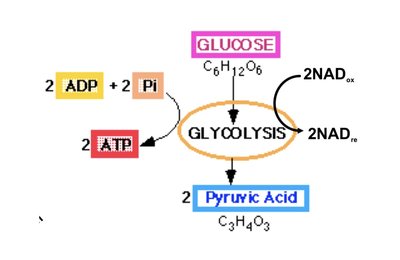
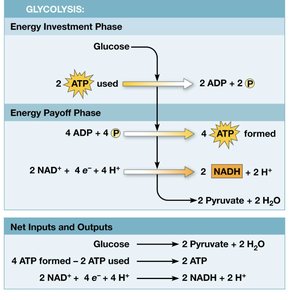
Glycolysis is an ancient pathway occurring in the cytosol, converting one glucose molecule into two pyruvate molecules without requiring oxygen.
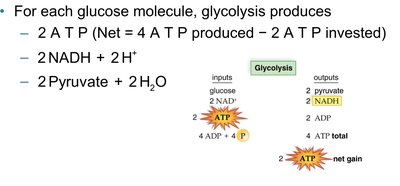
Energy Investment: 2 ATP are used to activate glucose.
Energy Payoff: 4 ATP are produced, 2 NAD+ are reduced to NADH, and 2 pyruvate are formed.
Net gain per glucose: 2 ATP, 2 NADH, 2 pyruvate.
Fermentation
Types and Purpose
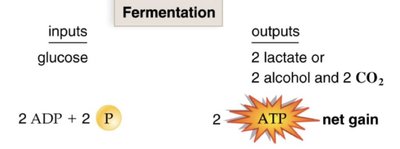
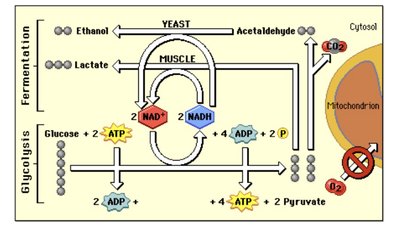
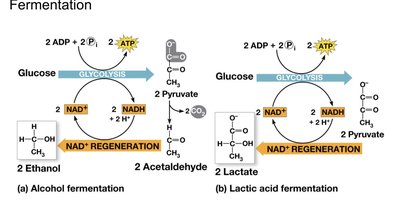
Fermentation is an anaerobic process that allows glycolysis to continue by regenerating NAD+ from NADH, producing either lactate or alcohol/CO2 depending on the organism.
Alcoholic fermentation: Yeast produces ethanol and CO2.
Lactic acid fermentation: Bacteria, fungi, and animal cells produce lactic acid.
Net ATP yield: 2 ATP per glucose (from glycolysis).
Fermentation is less efficient than aerobic respiration.
Mitochondrial Structure and Function
Key Components
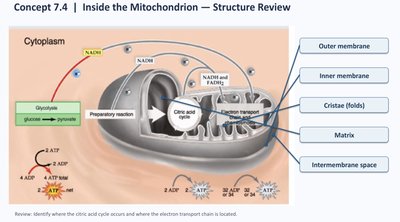
The mitochondrion is the site of aerobic respiration, with specialized structures for different stages:
Intermembrane space: Where H+ accumulates during electron transport.
Matrix: Contains enzymes for pyruvate oxidation and the citric acid cycle.
Cristae: Folds of the inner membrane, increasing surface area for the ETC and ATP synthase.
Pyruvate Oxidation (Preparatory Reaction)
Connecting Glycolysis to the Citric Acid Cycle
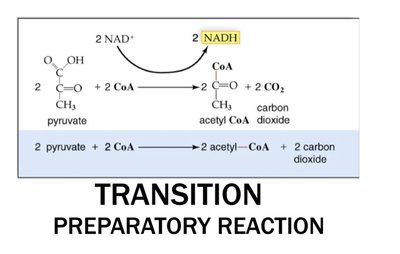
Pyruvate oxidation links glycolysis to the citric acid cycle by converting pyruvate to acetyl CoA.
Each pyruvate loses one carbon as CO2.
NAD+ is reduced to NADH.
Coenzyme A attaches to the 2-carbon acetyl group.
No ATP is produced directly during this step.
Citric Acid Cycle (Krebs Cycle)
Cycle and Products
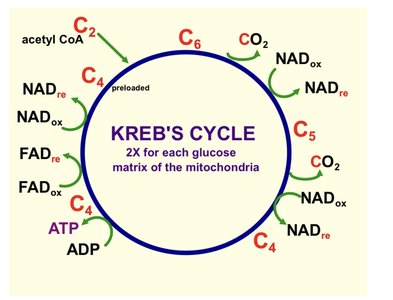
The citric acid cycle completes the oxidation of glucose-derived carbon skeletons, producing reduced coenzymes and ATP.
Acetyl CoA combines with oxaloacetate to form citric acid.
Through redox reactions, CO2 is released, NAD+ and FAD are reduced.
Per glucose (two turns): 4 CO2, 6 NADH, 2 FADH2, 2 ATP.
ATP is produced by substrate-level phosphorylation.
Electron Transport Chain (ETC) and Chemiosmosis
Mechanism and ATP Production
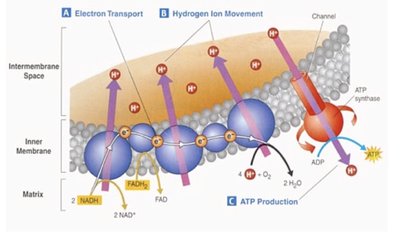
The ETC is located in the inner mitochondrial membrane and uses electrons from NADH and FADH2 to create a proton gradient, driving ATP synthesis.
NADH and FADH2 are oxidized, donating electrons to the ETC.
Energy released pumps H+ into the intermembrane space.
O2 is the final electron acceptor, forming water.
H+ flows back through ATP synthase, powering ATP production (chemiosmosis).
NADH yields more ATP than FADH2 due to entry at a higher-energy point.
Energy Yield Accounting
ATP Production Summary
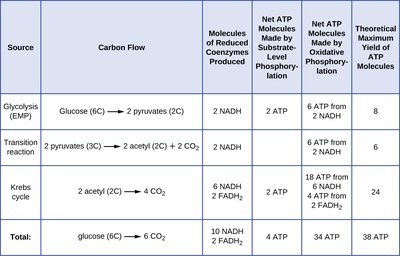
ATP is produced by both substrate-level and oxidative phosphorylation, with the majority generated during oxidative phosphorylation.
Source | Carbon Flow | Molecules of Reduced Coenzymes Produced | Net ATP Molecules Made by Substrate-Level Phosphorylation | Net ATP Molecules Made by Oxidative Phosphorylation | Theoretical Maximum Yield of ATP Molecules |
|---|---|---|---|---|---|
Glycolysis | Glucose (6C) → 2 pyruvates (2C) | 2 NADH | 2 ATP | 6 ATP from 2 NADH | 8 |
Transition reaction | 2 pyruvates (2C) → 2 acetyl (2C) + 2 CO2 | 2 NADH | 0 ATP | 6 ATP from 2 NADH | 6 |
Krebs cycle | 2 acetyl (2C) → 4 CO2 | 6 NADH, 2 FADH2 | 2 ATP | 18 ATP from 6 NADH, 4 ATP from 2 FADH2 | 24 |
Total | glucose (6C) → 6 CO2 | 10 NADH, 2 FADH2 | 4 ATP | 34 ATP | 38 ATP |
Metabolism: Catabolism and Anabolism
Metabolic Pathways
Metabolism encompasses both catabolic (degradative) and anabolic (biosynthetic) pathways. Catabolism releases energy, while anabolism requires energy input.
Cellular respiration can utilize proteins and fats as fuel.
Fats are broken into glycerol and fatty acids; fatty acids become acetyl CoA.
Proteins are broken into amino acids; after deamination, their carbon skeletons enter glycolysis or the citric acid cycle.
Pyruvate is a key metabolic junction, entering aerobic respiration or fermentation depending on O2 availability.
Regulation of Cellular Respiration
Negative Feedback: Phosphofructokinase (PFK)
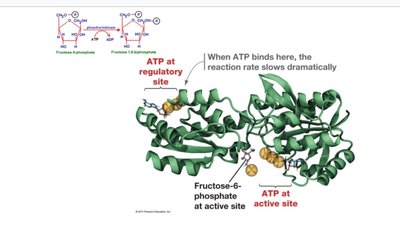
Phosphofructokinase (PFK) is an allosteric enzyme that regulates glycolysis. High ATP levels inhibit PFK, slowing glycolysis and cellular respiration.
PFK acts as the pacemaker of respiration.
Negative feedback ensures energy is not wasted when ATP is abundant.
Biological Variation and Fitness
Variation in Biological Molecules
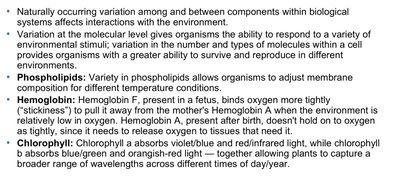
Variation among biological molecules affects fitness and adaptation to environmental conditions.
Phospholipid composition affects membrane properties under different temperatures.
Hemoglobin F (fetal) has higher oxygen affinity than Hemoglobin A (adult), aiding fetal oxygen uptake.
Different forms of chlorophyll absorb different wavelengths, broadening light utilization in photosynthesis.
Comparison: Chloroplasts vs. Mitochondria
Key Differences
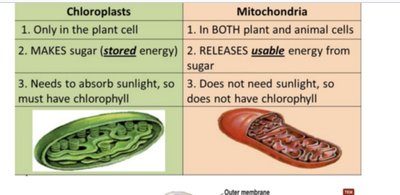
Chloroplasts and mitochondria are organelles with distinct roles in energy metabolism.
Chloroplasts: Only in plant cells, make sugar (stored energy), require sunlight and chlorophyll.
Mitochondria: In both plant and animal cells, release usable energy from sugar, do not require sunlight or chlorophyll.
Additional info: The study notes above expand on brief points with academic context, definitions, and examples to ensure completeness and clarity for exam preparation.
