 Indietro
Cellular Respiration and Photosynthesis: Energy Harvesting and Metabolism
Guida di studio - Note intelligenti
 Appunti personalizzati basati sui tuoi materiali, ampliati con definizioni chiave, esempi e contesto.
Metabolism: An Overview
Catabolism and Anabolism
Metabolism encompasses all physical and chemical processes in the body that convert or use energy. It is divided into two main types:
Catabolism: The breakdown of complex molecules into simpler ones, releasing energy.
Anabolism: The synthesis of complex molecules from simpler ones, requiring energy input.
Catabolic reactions provide the energy needed for anabolic processes, often through the production and utilization of ATP. 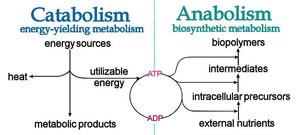 Key Point: Catabolism releases energy, which is captured in ATP and used for anabolic biosynthetic reactions. Example: Glucose breakdown (catabolism) provides energy for protein synthesis (anabolism).
Photosynthesis and Cellular Respiration: Energy for Life
Energy Flow in Ecosystems
Life requires energy, which in most ecosystems originates from the sun.
Photosynthesis: Sunlight energy is used to rearrange atoms of carbon dioxide and water, producing organic molecules and releasing oxygen.
Cellular Respiration: Organic molecules are broken down, oxygen is consumed, and energy is captured as ATP.
Key Point: Photosynthesis and cellular respiration are interconnected processes that sustain life by cycling energy and matter.
Cellular Respiration: Harvesting Energy
Stepwise Energy Harvesting
Cellular respiration is an exergonic process that transfers energy from glucose to ATP, capturing about 34% of the energy originally stored in glucose; the rest is lost as heat. Energy is harvested gradually, with each step making small changes to chemical structures and releasing energy for ATP synthesis. 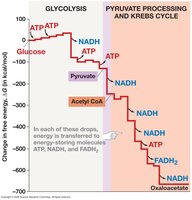
Key Point: Energy is not released all at once, but in a series of steps, allowing efficient ATP production.
ATP: Adenosine Triphosphate
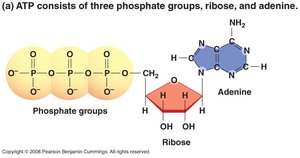
ATP is the primary energy carrier in cells, consisting of three phosphate groups, ribose, and adenine.
Structure: The high-energy bonds between phosphate groups are the source of usable energy.
Function: ATP is used to drive cellular processes, and is regenerated from ADP and inorganic phosphate.
Example: Muscle contraction, active transport, and biosynthesis all require ATP.
Electron Transport and Oxidative Phosphorylation
Cells extract energy from fuel molecules by transferring electrons in redox reactions.
Electrons are removed from fuel molecules (oxidation) and transferred to NAD+ (reduction).
NADH passes electrons to the electron transport chain, where energy is released as electrons "fall" to oxygen.
Oxygen's high electronegativity makes it an efficient final electron acceptor.
Stages of Cellular Respiration
Cellular respiration occurs in three main stages:
Glycolysis: Occurs in the cytosol, breaks down glucose into two pyruvate molecules, yields 2 ATP and 2 NADH.
Pyruvate Oxidation and Citric Acid Cycle: Occur in mitochondria, complete glucose breakdown to CO2, produce NADH and FADH2.
Oxidative Phosphorylation: Electron transport and chemiosmosis generate most ATP, electrons are passed to oxygen, forming water.
Key Point: Each stage is essential for efficient energy extraction and ATP production.
Fermentation: Anaerobic Energy Harvesting
Fermentation Processes
Fermentation enables cells to produce ATP without oxygen, using glycolysis.
Lactic Acid Fermentation: Pyruvate is reduced to lactate, recycling NADH.
Alcohol Fermentation: Pyruvate is converted to alcohol and CO2, recycling NADH.
Example: Muscle cells and yeast perform fermentation under anaerobic conditions.
Photosynthesis: Powering Life
Photosynthetic Organisms
Photoautotrophs: Plants, algae, and some bacteria produce food using sunlight.
Heterotrophs: Consumers that feed on producers or decompose organic material.
Chloroplast Structure and Function
Chloroplasts are the site of photosynthesis, containing thylakoids and stroma. Chlorophyll absorbs light and converts solar energy to chemical energy.
Photosynthesis as a Redox Process
H2O is oxidized, CO2 is reduced.
Redox reactions are central to both photosynthesis and cellular respiration.
Stages of Photosynthesis
Photosynthesis occurs in two stages:
Light Reactions: Occur in thylakoids, produce ATP and NADPH.
Calvin Cycle: Occurs in stroma, uses ATP and NADPH to fix carbon and synthesize sugars.
Light Reactions: Converting Solar Energy
Sunlight is absorbed by pigments (chlorophyll, carotenoids).
Photosystems capture solar energy and transfer electrons.
Electron transport chain pumps H+ into thylakoid space, driving ATP synthesis via chemiosmosis.
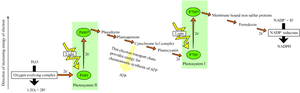 Key Point: Light reactions generate ATP and NADPH, which power the Calvin cycle.
The Calvin Cycle: Sugar Synthesis
The Calvin cycle uses carbon from CO2, electrons from NADPH, and energy from ATP to construct G3P, which is used to build glucose and other organic molecules.
Steps: Carbon fixation, reduction, release of G3P, regeneration of RuBP.
Example: Glucose synthesis in plants.
Summary Table: Comparison of Cellular Respiration and Photosynthesis
Process | Location | Reactants | Products | Main Purpose |
|---|---|---|---|---|
Cellular Respiration | Mitochondria | Glucose, O2 | CO2, H2O, ATP | Energy extraction |
Photosynthesis | Chloroplasts | CO2, H2O, Light | Glucose, O2 | Energy storage |
Additional info: The notes expand on brief points with academic context, definitions, and examples to ensure completeness and clarity for exam preparation.
