 Indietro
Cellular Respiration and Redox Reactions: Energy Harvesting in Cells
Guida di studio - Note intelligenti
 Appunti personalizzati basati sui tuoi materiali, ampliati con definizioni chiave, esempi e contesto.
Cellular Respiration: Overview
Definition and Importance
Cellular respiration is a fundamental process by which cells extract chemical energy from food molecules, primarily glucose, through a series of oxidative reactions. This process is essential for maintaining life, as it provides the energy required for cellular activities. - Respiration refers to both the physiological exchange of gases (O2 and CO2) in organisms and the cellular process of energy extraction. - Aerobic cellular respiration uses oxygen to harvest energy and produces carbon dioxide as a waste product. - Cellular respiration is a catabolic pathway, breaking down large molecules to release energy. 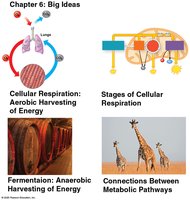
Gas Exchange in Respiration
- Lungs facilitate the intake of O2 and release of CO2 in animals. - Cells use O2 to oxidize food molecules, releasing energy and producing CO2.
Redox Reactions in Cellular Respiration
Oxidation and Reduction
Redox reactions are central to energy transformation in cells, involving the transfer of electrons between molecules. - Oxidation: Loss of electrons (often accompanied by gain of oxygen or loss of hydrogen). - Reduction: Gain of electrons (often accompanied by gain of hydrogen or loss of oxygen). - OIL RIG: Oxidation Is Loss, Reduction Is Gain.
Identifying Redox Changes
- In biological reactions, oxidation often involves gaining oxygen or losing hydrogen. - Reduction often involves gaining hydrogen. - Example: In the reaction , sodium is oxidized.
Electron Carriers
Coenzymes such as NAD+, NADP+, and FAD play a crucial role in shuttling electrons between metabolic pathways. - NADH, NADPH, and FADH2 are the reduced forms of these carriers. - These carriers are repeatedly oxidized and reduced during cellular respiration.
Applying Redox Concepts to Cellular Respiration
Overall Equation of Cellular Respiration
The process of cellular respiration can be summarized by the following equation: - Glucose is oxidized to carbon dioxide. - Oxygen is reduced to water. 
Redox Changes in the Equation
- Glucose loses hydrogen atoms (oxidized). - Oxygen gains hydrogen atoms (reduced). 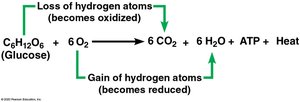
Energy for Life: Thermodynamics and Cellular Respiration
Laws of Thermodynamics
- First Law: Energy cannot be created or destroyed, only transferred or transformed. - Second Law: Every energy transfer increases the entropy of the universe; some energy is lost as heat. - Life maintains order by constantly importing energy, not by violating the second law.
Role of Cellular Respiration in Ecosystems
Cellular respiration is a key process in the energy flow of ecosystems. - Catabolic metabolism breaks down molecules, harvesting energy. - Anabolic metabolism uses harvested energy to build new molecules. - Energy carriers (like ATP) are produced and used for cellular work. 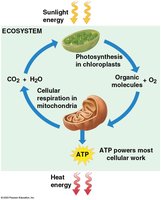
Summary of Key Concepts
- Respiration involves gas exchange at both organismal and cellular levels. - Cellular respiration oxidizes food molecules to harvest energy. - Reduction is the gain of electrons (often gain of hydrogen). - Oxidation is the loss of electrons (often gain of oxygen). - Photosynthesis and cellular respiration are complementary energy conversion reactions that sustain life and order. Additional info: The notes expand on the basic concepts of redox reactions, electron carriers, and the thermodynamic principles underlying cellular respiration, providing context for exam preparation.
