 Indietro
Cellular Respiration: ATP Generation, Electron Transport, and Metabolic Regulation
Guida di studio - Note intelligenti
 Appunti personalizzati basati sui tuoi materiali, ampliati con definizioni chiave, esempi e contesto.
Cellular Respiration and ATP Production
Overview of Cellular Respiration
Cellular respiration is the process by which cells extract energy from glucose and other organic molecules to produce ATP, the primary energy currency of the cell. This process involves several stages: glycolysis, pyruvate oxidation, the citric acid cycle, and oxidative phosphorylation. - Glycolysis occurs in the cytosol and produces a small amount of ATP and NADH. - Pyruvate oxidation and the citric acid cycle occur in the mitochondrial matrix, generating more NADH and FADH2. - Oxidative phosphorylation (electron transport and chemiosmosis) occurs at the inner mitochondrial membrane and produces the majority of ATP. 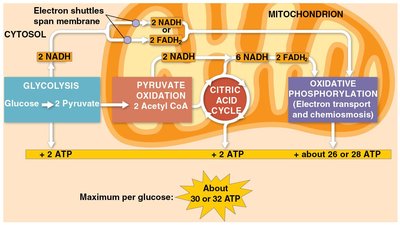
ATP Yield from Glucose Oxidation
The breakdown of one glucose molecule through cellular respiration yields approximately 30–32 ATP molecules in eukaryotic cells. - Glycolysis: Net 2 ATP + 2 NADH - Pyruvate oxidation: 2 NADH - Citric acid cycle: 2 ATP equivalents + 6 NADH + 2 FADH2 - Oxidative phosphorylation: About 26–28 ATP Note: Actual ATP yield varies due to electron shuttle systems, proton leakage, and other uses of the proton gradient.
Electron Transport Chain and Chemiosmosis
Mitochondrial Structure and Compartmentalization
The mitochondrion is organized into distinct compartments that facilitate energy transformation: - Outer membrane: Defines the organelle boundary. - Matrix: Site of pyruvate oxidation and citric acid cycle. - Inner membrane/cristae: Location of the electron transport chain and ATP synthase. - Intermembrane space: Protons accumulate here during electron transport. 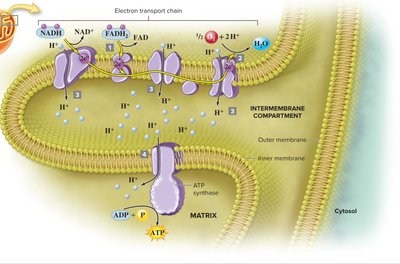
Mechanism of Electron Transport
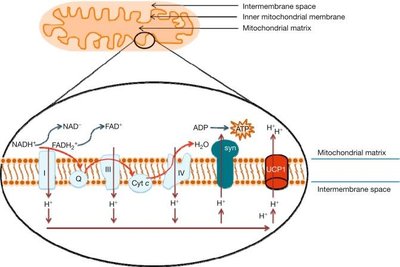
The electron transport chain (ETC) consists of protein complexes embedded in the inner mitochondrial membrane. - NADH and FADH2 donate high-energy electrons to the ETC. - Electrons move through successive oxidation–reduction reactions, releasing free energy in steps. - The final electron acceptor is oxygen (O2), which combines with protons to form water. 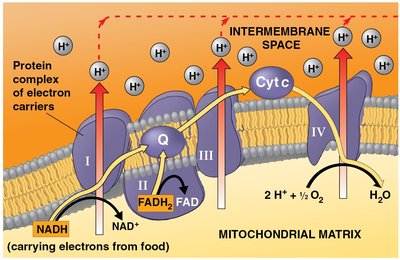
Proton Gradient and Chemiosmosis
- Energy released by electron transport is used to pump protons (H+) across the inner membrane, creating a concentration and electrical gradient (proton-motive force). - ATP synthase couples the flow of protons back into the matrix to the synthesis of ATP from ADP and inorganic phosphate. 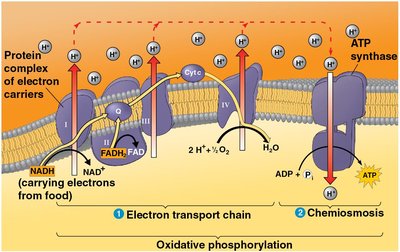
Oxidative Phosphorylation
- Electron transport chain: Transfers electrons and pumps protons. - Chemiosmosis: Protons flow through ATP synthase, driving ATP production. 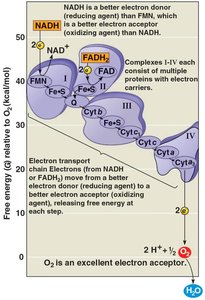
Substrate-Level vs. Oxidative Phosphorylation
Mechanisms of ATP Generation
- Substrate-level phosphorylation: An enzyme directly transfers a phosphate group to ADP. Occurs in glycolysis and the citric acid cycle. - Oxidative phosphorylation: Redox energy builds a proton gradient that drives ATP synthase. Occurs in the mitochondria. Comparison Table:
Mechanism | Location | ATP Yield |
|---|---|---|
Substrate-level phosphorylation | Cytosol, mitochondrial matrix | Small (2–4 ATP per glucose) |
Oxidative phosphorylation | Inner mitochondrial membrane | Large (26–28 ATP per glucose) |
Factors Affecting ATP Yield
Variability in ATP Production
- ATP yield is not a fixed constant; it depends on electron shuttle systems, proton leakage, and other uses of the proton gradient. - Whether electrons are passed to NAD+ or FAD is important for total ATP yield.
Energy Release as Heat
- Energy transformations are never perfectly efficient; some energy is released as heat. - Heat production is important for thermal balance and is not always a physiological disadvantage. 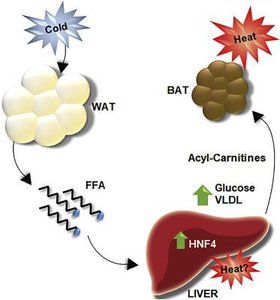
Brown Adipose Tissue and Uncoupling Proteins
Thermogenesis in Brown Fat
- Brown adipose tissue (BAT) contains mitochondria with uncoupling protein 1 (UCP1). - UCP1 allows protons to bypass ATP synthase, dissipating the proton gradient as heat instead of capturing it as ATP. - This mechanism is especially important for newborn mammals to maintain body temperature. 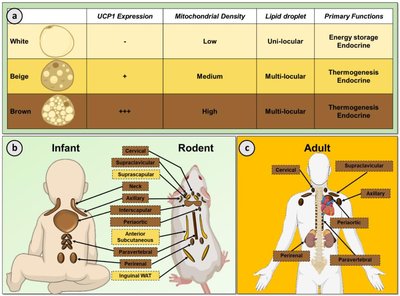
Comparison of Adipose Tissue Types
Type | UCP1 Expression | Mitochondrial Density | Lipid Droplet | Primary Functions |
|---|---|---|---|---|
White | None | Low | Uni-locular | Energy storage, endocrine |
Beige | + | Medium | Multi-locular | Thermogenesis, endocrine |
Brown | +++ | High | Multi-locular | Thermogenesis, endocrine |
Metabolic Capacity and Demand
Metabolic Regulation in Tissues
- Capacity: Determined by enzyme abundance, mitochondria, oxygen delivery, and fuel availability. - Demand: ATP needed for maintenance, transport, contraction, and biosynthesis. - Tissues with many mitochondria do not always operate at maximum output; regulation depends on physiological needs. 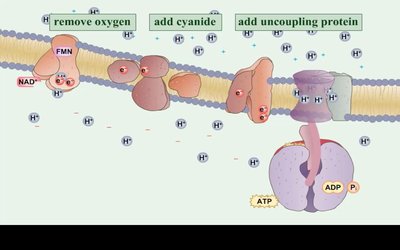
Summary and Key Mechanisms
Tracing Energy Flow
- Chemical energy in food is transferred to high-energy electrons in NADH/FADH2. - Electron transport creates a proton-motive force. - Proton flow through ATP synthase regenerates ATP. - ATP hydrolysis powers cellular work. 
Experimentation and Physiological Context
- Blocking electron transport affects NADH oxidation, proton pumping, and ATP synthesis. - Glycolysis can continue anaerobically, but sustained cellular activities become harder without oxidative phosphorylation. - Physiological regulation coordinates energy allocation among tissues, shaped by developmental context and environmental demands. Additional info: These notes expand on the original lecture slides and questions, providing definitions, mechanisms, and comparisons for a comprehensive understanding of cellular respiration and metabolic regulation.
